
Officials Find One of North America’s Rarest Fish in a River, and It Could Be a Sign of Something Else
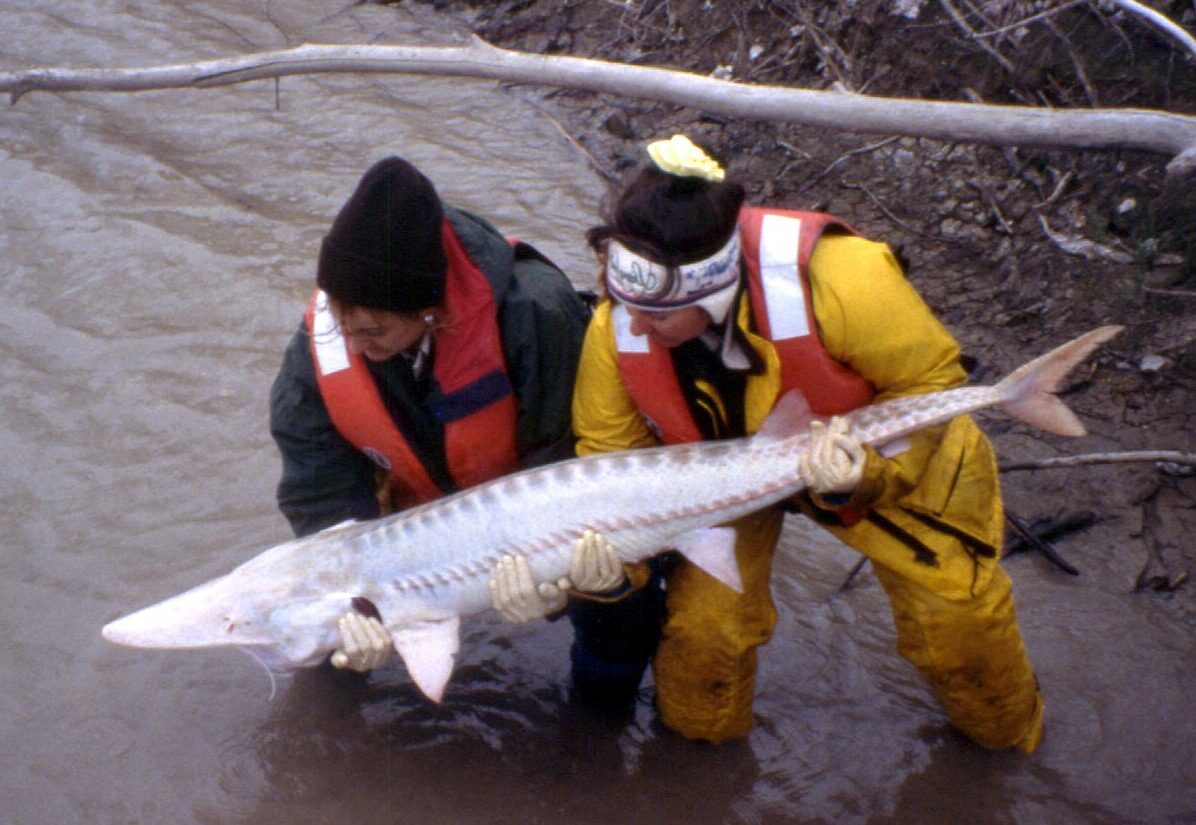
When Iowa Department of Natural Resources biologists pulled their nets from the lower Des Moines River this spring, they expected to find familiar species. Instead, they found something almost no one thought possible: a federally endangered pallid sturgeon.
The discovery marked the first-ever documented collection of a pallid sturgeon in that stretch of river . Even more surprising, a second pallid sturgeon was found in nearly the same location just a week later . For a species so rare that many biologists never encounter one in their careers, the back-to-back finds were extraordinary.
Officials described the moment as both thrilling and puzzling. Sampling in the Des Moines River has been conducted annually since 2014, and until now only shovelnose sturgeon and the occasional lake sturgeon had been documented. The pallid sturgeon simply wasn’t on their radar.
One of the Rarest Fish in North America
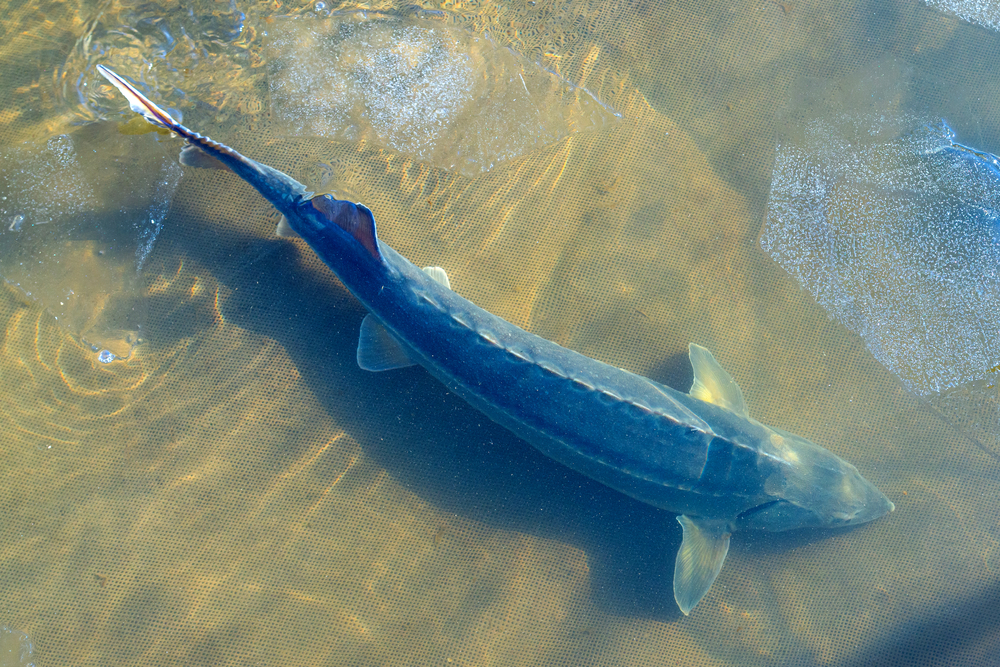
The pallid sturgeon is often called a “dinosaur fish.” According to the U.S. Fish & Wildlife Service, the sturgeon family dates back roughly 70 million years. Unlike most fish, pallid sturgeon have cartilage skeletons similar to sharks and bodies lined with bony plates called scutes .
They can grow up to six feet long and weigh around 80 pounds, and research shows they may live for decades — potentially 80 years or more. Built for life in large, deep, murky rivers, they migrate long distances and use barbels beneath their snouts to sense food along river bottoms .
Despite their prehistoric resilience, pallid sturgeon are now one of the rarest and most endangered species in North America. They were listed under the Endangered Species Act in 1990 after steep population declines across the Missouri and lower Mississippi River basins.
Why Their Decline Has Been So Severe

The collapse of pallid sturgeon populations is largely tied to human modification of rivers. Dams have disrupted natural flow patterns, blocked migration routes, and altered sediment and oxygen conditions critical for spawning and larval development .
These fish are migratory by nature, capable of traveling 100 miles or more to spawn. After hatching, larvae drift downstream for days, sometimes hundreds of miles, before settling and growing. When dams interrupt that drift, survival rates plummet.
The result has been decades of poor natural reproduction. Many of the pallid sturgeon found in portions of the Missouri River today were stocked from hatcheries rather than born in the wild. That’s what makes the Iowa discovery especially important.
A Potential “Game Changer”

According to Iowa DNR officials, the two fish collected in the Des Moines River were naturally reproduced, not hatchery-raised. For a species that has struggled to sustain wild populations, that detail could carry enormous weight.
Biologists described the moment as a “trifecta”: a federally endangered species, found where it wasn’t expected, and naturally produced. The presence of what are believed to be decades-old wild sturgeon in this river stretch suggests conditions may be supporting reproduction in ways scientists did not fully appreciate.
Still, officials caution against premature celebration. The overall wild population remains critically small and not self-sustaining. Two fish do not equal recovery. But they may signal something else — that habitat restoration, river management, or subtle environmental shifts are creating pockets of opportunity for one of North America’s rarest fish.
If that’s the case, the discovery could reshape how conservation agencies approach river systems beyond the Missouri River strongholds. For now, the two pallid sturgeon have been released back into the Des Moines River — quiet reminders that even in altered landscapes, resilience sometimes surfaces where no one expected it.
PetsFanatic Team
Pet Care Expert & Content Creator
Passionate about sharing knowledge and tips for better pet care. Writing about everything from pet health to training techniques.