
This Man’s Years of Microchipping Puppies Lead to a Surprising Discovery

Most people who work with animals never wonder what it feels like to be in their patients’ shoes. But one man who spent years microchipping puppies decided curiosity was reason enough to find out for himself.
Nearly a decade ago, the man behind the TikTok account @shrunky.dunks, worked in a role that involved microchipping puppies. Rather than simply performing the procedure, he chose to experience it firsthand by having the same type of microchip implanted into his own body.
At the time, it may have seemed like an unusual decision driven by curiosity, but it would eventually lead to an unexpected moment years later.
A Decade Later
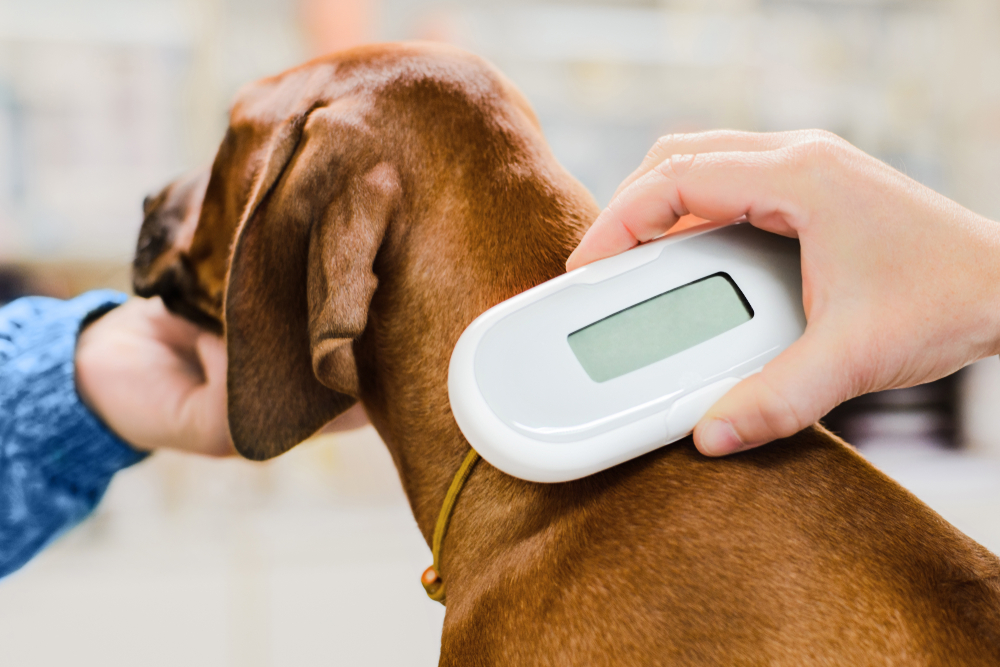
In a TikTok video posted in April, @shrunky.dunks visited a veterinary clinic to find out whether the chip was still detectable after all those years. Holding a Golden Retriever while a staff member scanned his back with a microchip reader, he put his decade-old experiment to the test.
The answer came quickly. The scanner picked up the chip, confirming that it was still there nearly 10 years after it had been implanted. The simple demonstration surprised many viewers, who were fascinated that such a small device could remain functional for so long beneath the skin.
One viewer jokingly dubbed him “the only true Golden Retriever boyfriend,” a playful nod to the social media term often used to describe an easygoing, devoted partner. Others were more curious about the procedure itself. When one commenter asked what getting microchipped felt like, @shrunky.dunks replied that it “honestly wasn’t too bad,” though he admitted he “might have had some liquid courage prior to injection.” His response prompted others to share their own experiences, including one commenter who wrote, “Hubby & I did each other. It felt somewhere between a dermal piercing and horsefly bite.”
The Technology Behind Millions of Reunions

While many were captivated by the human side of the story, the video also highlighted the purpose of microchips in the first place. For pet owners, the tiny devices serve as a permanent form of identification that can help reunite lost animals with their families.
Unlike collars or ID tags, which can fall off or become damaged, a microchip remains beneath the skin for the life of the animal. The chip itself stores a unique identification number that can be read by a scanner at a veterinary clinic, shelter, or rescue organization. That number is then linked to the owner’s contact information in a registration database.
Animal welfare organizations have long pointed to microchips as one of the most effective tools for recovering lost pets. Studies have found that microchipped dogs and cats are significantly more likely to be reunited with their owners than animals without them. The technology is simple, but its impact can be enormous when a pet goes missing.
Why Pet Microchips Are Designed to Last

Part of what made the video so surprising was the assumption that a tiny implanted device would eventually stop working. But longevity is one of the reasons microchips have become a standard form of identification for pets.
About the size of a grain of rice, pet microchips are implanted beneath the skin and contain a unique identification number that can be read by a scanner. Unlike GPS trackers, they do not actively transmit a pet’s location. Instead, they provide a permanent ID that shelters, veterinarians, and rescue organizations can use to connect lost animals with their owners.
Modern microchips are designed to last for decades, often for the lifetime of the animal. Nearly 10 years after deciding to experience what the puppies did, @shrunky.dunks discovered his chip was still doing exactly what it was designed to do.
PetsFanatic Team
Pet Care Expert & Content Creator
Passionate about sharing knowledge and tips for better pet care. Writing about everything from pet health to training techniques.