
“I Know What Mountain Lions Look Like and It Was a Mountain Lion,” Ohio Woman Says After Wildlife Officials Disagree

A tan animal slipping through an Ohio soybean field has sparked a debate reaching far beyond one small town. The video spread quickly online as viewers tried to identify the mystery animal. Lori Adams, who recorded the footage near Bucyrus, became convinced she had seen a mountain lion. State wildlife officials examined the evidence and reached a very different conclusion, leaving one question hanging over the entire encounter.
Adams first thought she was watching a dog moving across the field. The animal’s low, smooth stride changed her mind almost immediately. A longtime cat owner, she told 614Now that she recognized the movement as distinctly feline. She also described the animal as muscular, tan, and carrying a tail with a black tip, details she believed matched a mountain lion.
Adams remained certain even after sharing the footage publicly. “I know what mountain lions look like, and it was a mountain lion,” she said. Her confidence fueled online discussion as people debated whether a large predator had appeared in a state where mountain lions disappeared generations ago. Wildlife officers soon visited the location and searched for physical evidence that could settle the question.
Wildlife Officers Measured Tracks That Did Not Match a Mountain Lion
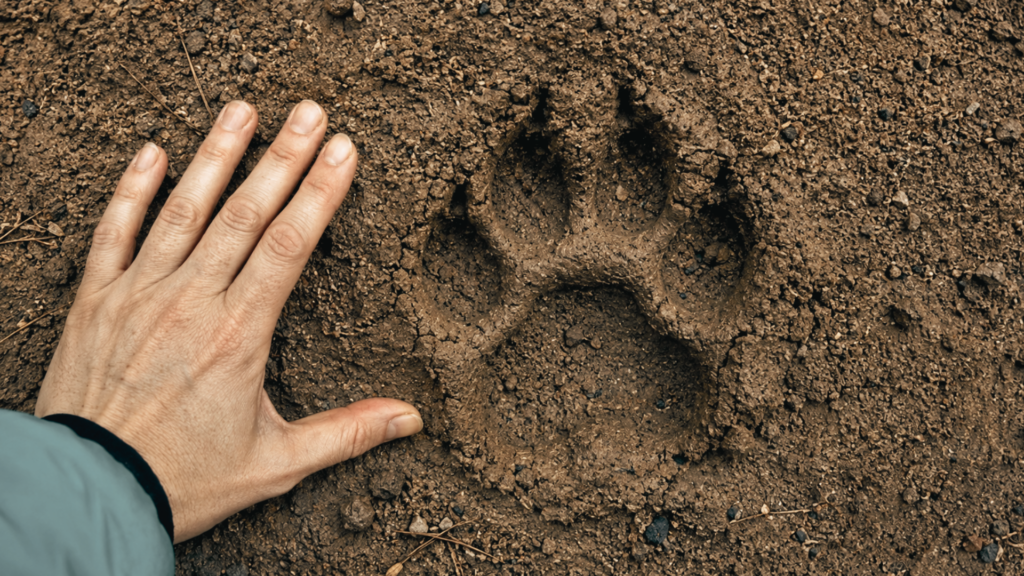
The Ohio Division of Wildlife focused on footprints left near the soybean field. Officers measured tracks between 1.4 and 1.6 inches long. According to the agency, mountain lion tracks typically measure between 2.8 and 3.1 inches. That difference became one of the strongest pieces of evidence supporting the state’s conclusion about the animal’s identity.
Officials also compared the animal’s apparent size with the surrounding soybean plants visible in the video. After reviewing both the footage and the tracks, the agency said the evidence pointed toward a large domestic cat rather than a wild cougar. The statement directly challenged the growing belief that the animal represented proof of mountain lions living in Ohio.
Even as the debate intensified, Adams urged people to stay calm. She said nobody should grab guns or organize groups to hunt the animal because it was simply trying to survive. Her appeal shifted attention away from fear and toward responsible wildlife behavior, regardless of whether viewers believed the animal was wild or domestic.
Ohio’s Mountain Lion History Keeps the Debate Alive

According to the Ohio Division of Wildlife, mountain lions were eliminated from the state by about 1850 and no breeding population exists there today. Wildlife experts acknowledge that individual cougars occasionally travel long distances across North America, but confirmed sightings in Ohio remain extremely rare and require strong physical evidence.
Adams believes occasional mountain lions still pass through Ohio as animals expand into former habitat. She said she has long believed the species migrates north and appears only rarely, making sightings difficult to document. Her interpretation reflects a view shared by some wildlife observers, although officials say verified evidence remains limited.
The story took another unexpected turn after Adams posted an update on Facebook. She wrote that authorities had contacted her and claimed the animal had been struck by a vehicle on U.S. Route 30. In her post, she declared, “He was a MOUNTAIN LION.” State wildlife officials have not publicly confirmed that claim.
One Video, Two Conclusions, and No Final Agreement

The disagreement highlights how difficult wildlife identification can be when video quality, distance, and perspective leave room for interpretation. Experienced observers may focus on body shape and movement, while wildlife agencies rely on measurable evidence such as footprints, scale, and physical documentation before confirming the presence of a rare species.
Cases involving possible mountain lion sightings appear across the United States every year. Many reports ultimately prove to involve bobcats, large house cats, dogs, or other animals viewed under unusual conditions. Wildlife agencies generally require photographs, DNA samples, carcasses, or other verifiable evidence before officially recognizing a cougar sighting.
The Bucyrus encounter remains memorable because neither side changed its position. Adams continues to believe she filmed a mountain lion, while Ohio wildlife officials maintain the available evidence supports a large domestic cat. The episode illustrates how eyewitness confidence and scientific investigation can produce different conclusions, especially when the only witness that cannot speak is the animal itself.
PetsFanatic Team
Pet Care Expert & Content Creator
Passionate about sharing knowledge and tips for better pet care. Writing about everything from pet health to training techniques.