
Wyoming Dinosaur ‘Mummies’ with Hoofed Feet Astonish Researchers

Two fossilized Edmontosaurus found in Wyoming stunned paleontologists with details rarely seen in dinosaurs. The adult stretched about forty feet long, while the younger one was half its size. Their bodies, preserved under a thin clay layer, showed skin and even hooves on their feet. Researchers say it’s the first evidence of hooves in any dinosaur, giving an unexpected peek at how these plant-eaters once roamed ancient North America.
Discovery in Wyoming’s Badlands
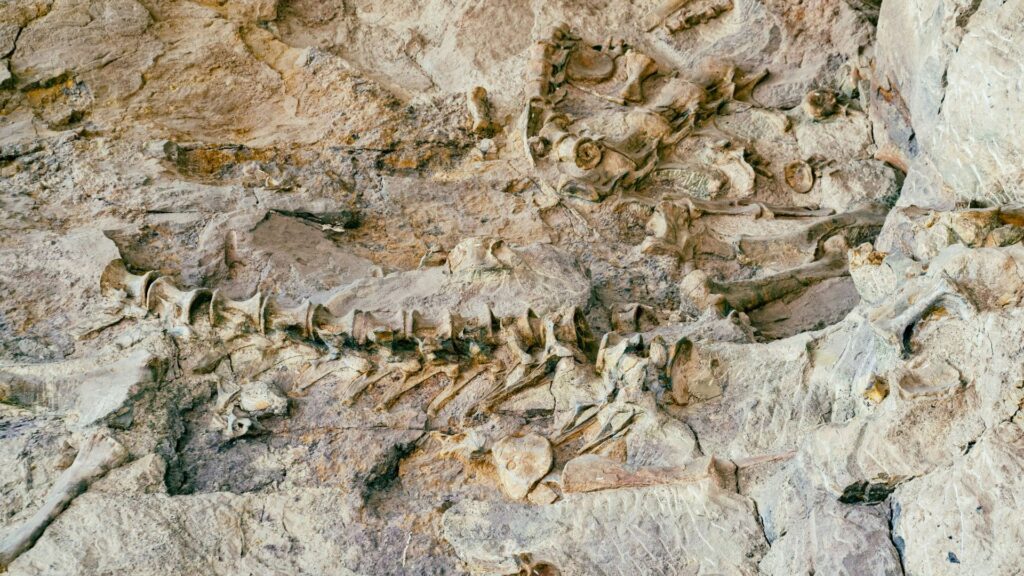
Scientists working in Wyoming’s badlands uncovered two remarkably preserved Edmontosaurus fossils. The discovery included an adult about forty feet long and a smaller juvenile. Both were found with a thin clay layer that captured the shape of their skin and body outlines. The fossils date back sixty-six million years, right before dinosaurs vanished. The discovery thrilled researchers since it offers a rare, almost lifelike view of creatures that once roamed North America’s prehistoric plains.
Remarkable Preservation Under Clay

A thin layer of clay covered the two dinosaurs after they died, keeping their outer shapes almost perfectly intact. The layer was barely thicker than a sheet of paper, yet it managed to preserve the skin’s texture and contours. Scientists were amazed to see how much detail survived under such delicate conditions. The clay acted like a natural mold, so the fossils still show the body outlines of the Edmontosaurus after millions of years.
A Look at the Dinosaur’s True Shape

Scientists studying the fossils said they finally got to see what an Edmontosaurus really looked like in life. The skin outlines and body curves revealed details that bones alone could never show. Paleontologist Paul Sereno shared that the fossils gave the full profile of the animal, offering a clear picture of its build. The preserved surface helped researchers visualize how the dinosaur stood, moved, and looked millions of years ago.
Why Scientists Call Them “Mummies”

The fossils were called “mummies” because their outer shapes looked wrapped and preserved, even though no actual tissue survived. The name stuck from earlier finds in the same area more than a century ago. Paleontologist Paul Sereno explained that what remains isn’t dried skin or DNA, but a thin clay mask that captured every curve. The term may sound dramatic, but it simply describes how closely the fossils resemble real bodies.
Life in the Final Days of the Cretaceous

The two dinosaurs lived about sixty-six million years ago, near the end of the Cretaceous Period. They shared their environment with famous neighbors like Tyrannosaurus, Triceratops, and Ankylosaurus. Edmontosaurus fed on plants using its wide, duck-shaped snout and likely moved in large herds across western North America. The area would’ve been filled with grazing herds and stalking predators, showing a busy ecosystem right before the asteroid that ended the age of dinosaurs.
Edmontosaurus Among Giants

Edmontosaurus was one of the largest plant-eaters of its time, stretching up to forty-two feet long. It shared its habitat with predators like Tyrannosaurus and other dinosaurs such as Triceratops and Ankylosaurus. Researchers say herds of Edmontosaurus likely filled the region, grazing together across the plains. Paul Sereno even compared it to the cow of its day, showing how common and widespread it was during the final years of the dinosaur era.
Evidence of Predators and Prey

Fossils of Edmontosaurus have been found with bite marks that match the teeth of Tyrannosaurus, showing how it was often hunted. The hadrosaur’s size made it a difficult catch, so only a predator as massive as T. rex could take it down. Researchers say the evidence paints a vivid picture of predator and prey sharing the same terrain, where large herds of plant-eaters and roaming hunters shaped the rhythm of life in prehistoric North America.
Evolutionary Surprise of Dinosaur Hooves

Researchers were stunned to find hooves on the feet of Edmontosaurus, something never seen before in any dinosaur. The feature helped the animal walk efficiently on solid ground, much like hoofed mammals that came millions of years later. Paleontologist Paul Sereno explained that the discovery shows how evolution can repeat itself in different species. The finding revealed a new connection between dinosaurs and modern animals that share similar ways of moving across land.
A Discovery That Keeps Scientists Curious

The discovery of Wyoming’s Edmontosaurus “mummies” opened a new window into dinosaur life. Their preserved shapes, skin patterns, and even hooves gave researchers a closer look at creatures that once ruled ancient plains. Every new detail adds to what scientists know about how dinosaurs lived, moved, and evolved. The fossils remind everyone that even after millions of years, the Earth still has stories waiting to be uncovered.
PetsFanatic Team
Pet Care Expert & Content Creator
Passionate about sharing knowledge and tips for better pet care. Writing about everything from pet health to training techniques.