
World’s Largest Spider Web Found in a Balkans Cave

Researchers have documented what appears to be the world’s largest spider web, stretching 1,140 square feet—about the size of a small home—along a narrow passage in Sulfur Cave on the Albanian-Greek border. The colony houses approximately 111,000 spiders from two species. The structure hangs in a permanently dark zone of the cavern, where a sulfur-rich stream and hydrogen sulfide gas create conditions inhospitable to most animals. The Czech Speleological Society first discovered the cavern in 2022, Live Science reported.
Two Species That Usually Prey on Each Other Coexist Peacefully

The colony includes about 69,000 Tegenaria domestica, known as barn funnel weavers, living alongside 42,000 Prinerigone vagans, according to research published in Subterranean Biology. Lead author István Urák and his team found that outside caves, barn funnel weavers eat the smaller P. vagans, but this doesn’t happen in Sulfur Cave. Blerina Vrenozi, a biologist at the University of Tirana in Albania, told The New York Times that darkness in the cave likely prevents the spiders from seeing each other.
Thousands of Individual Webs Form One Massive Structure

The colony consists of thousands of separate funnel-shaped webs joined together. The wider web stretches along the wall of a low-ceilinged passage near the cave entrance. When Vrenozi shone a light into the cave, the effect was striking. “Really bright with the light because of the dance of the silk on it, so you could see this surface with a lot of dots, like lights in the gigantic web,” she said.
More Than 2.4 Million Midges Support the Spider Population
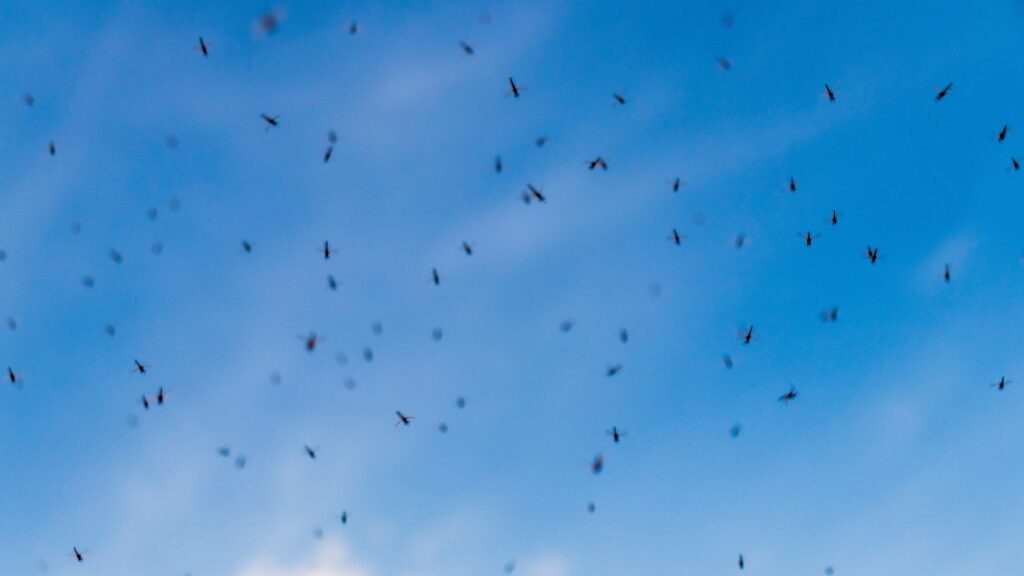
The spiders feed on more than 2.4 million non-biting midges in the cave. A team of scientists who studied the cave in 2024 found that midges consume white microbial biofilms from sulfur-oxidizing bacteria, according to research on the cave’s food web. A sulfur-rich stream fed by natural springs flows through Sulfur Cave, creating hydrogen sulfide that enables microbes to thrive. These microbes produce food that supports the midges, which in turn sustain the massive spider colony.
Sulfuric Acid Carved the Cave From Limestone Over Time

Sulfur Cave was hollowed out by sulfuric acid formed from the oxidation of hydrogen sulfide in groundwater. The Sarantaporos River created a series of rooms and tunnels through the limestone. The cave maintains temperatures around 80 degrees Fahrenheit year-round. The environment remains protected because the cave is difficult to access and contains hydrogen sulfide concentrations too high for most animals.
Accessing the Colony Requires Navigating Chest-High Water and Toxic Gas
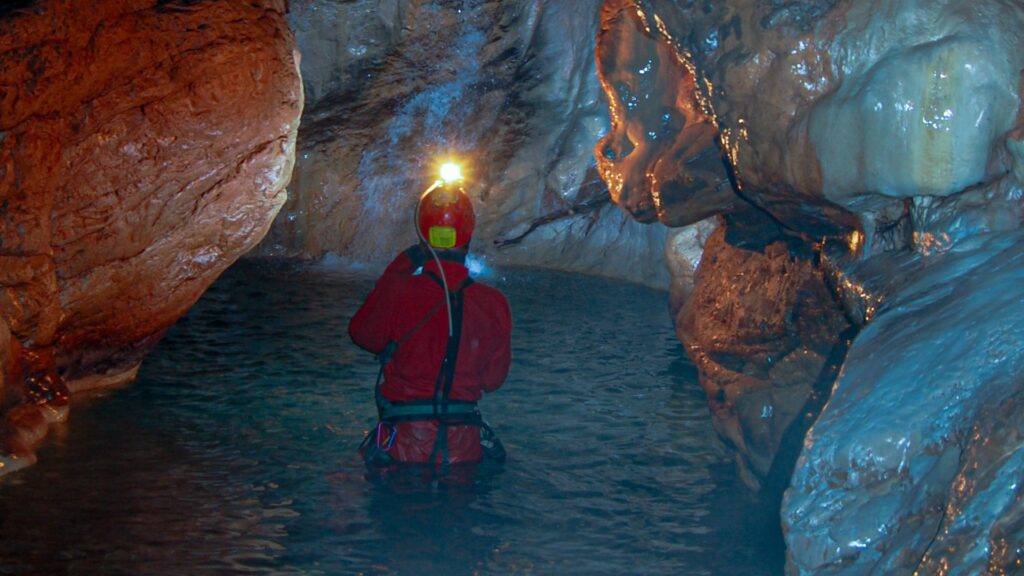
Vrenozi described reaching the cave as challenging, requiring wet suits, boots, and ropes while wading through chest-high water. The cave is filled with hydrogen sulfide gas, and most researchers wore masks. “All you could smell was sulfur hydrogen, and you cannot breathe,” she said. As researchers descended deeper, they adapted to what she described as the smell of spoiled eggs filling the cavern.
Cave Spiders Adapted Genetically to Their Extreme Environment

Molecular data showed that spiders inside the cave differ genetically from their relatives outside, suggesting environmental adaptation. Urák, an associate professor at Sapientia Hungarian University of Transylvania in Romania, told Live Science this marks the first documented case of these two species forming colonies together. Gut content analyses revealed the spiders’ sulfur-rich diet significantly reduces their microbiome diversity compared to relatives outside the cave.
The Web Collapses and Rebuilds in an Ongoing Cycle

Researchers found several layers of webbing stacked within the structure. Vrenozi said that sections of the web fall when they become too heavy to stay attached to the wall. “But this is a cycle which is repeated time after time,” she said. The cave’s remoteness means the spider colony could continue indefinitely, she added, with the web constantly renewing itself.
The Web Feels Surprisingly Soft and Bouncy to Touch

When Vrenozi touched the massive web, she found it surprisingly soft with a bouncy quality. She described it as “very spongy.” The texture reflects thousands of individual webs layered together. Dinesh Rao, a spider biologist at the University of Veracruz in Mexico who was not involved in the research, told The New York Times the estimated spider count was very large and the methodology appeared sound, though researchers may have overestimated the web’s overall size by including older, unused sections.
Scientists Plan Further Research on This Unique Colony

The cooperation between the two species will continue to be studied, Vrenozi told The New York Times, because neither is typically social. “I’ve been working for 18 years with spiders, and I’ve never seen such a community,” she said. Urák told Live Science he felt “admiration, respect, and gratitude” when seeing the web, adding that preserving the colony is important despite challenges from its location spanning two countries. Urák and his colleagues are working on another study that will reveal additional details about the cave’s spider community.
PetsFanatic Team
Pet Care Expert & Content Creator
Passionate about sharing knowledge and tips for better pet care. Writing about everything from pet health to training techniques.