
Wild Orcas Offer Food to Humans, Leaving Scientists Searching for Answers
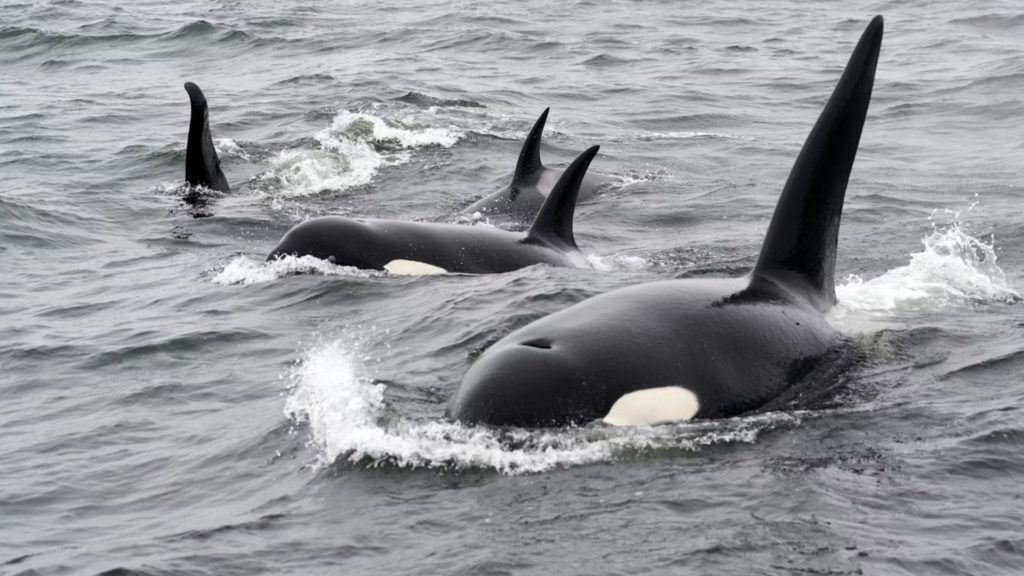
Encounters with wild animals often leave humans in awe, but some recent interactions with Orca, also known as killer whales, have surprised scientists in an entirely different way. Researchers studying wild orcas have documented a strange and unexpected behavior: the whales occasionally approach humans and appear to offer them food. These offerings can include fish, birds, stingrays, seaweed, and even pieces of larger prey. What makes the behavior so puzzling is that the whales voluntarily present the food and then pause, seemingly waiting for a reaction.
Scientists recently analyzed reports of this unusual behavior and discovered it has happened dozens of times across the globe. Over a 20-year period, researchers recorded 34 different incidents in which wild orcas approached swimmers, divers, or boats and dropped prey in front of them. These encounters have been documented in several oceans, including waters off California, New Zealand, Norway, and Patagonia. The wide geographic spread suggests the behavior isn’t limited to one group of whales but may appear in multiple populations.
In many of these encounters, the whales didn’t immediately swim away after presenting the food. Instead, they lingered nearby and sometimes tried again if the humans didn’t respond to the offering. Researchers say this pattern suggests the whales were intentionally trying to interact rather than simply dropping prey by accident. While the motivation behind these interactions remains unclear, the behavior highlights just how intelligent and socially complex orcas can be.
Why Orcas Might Be Sharing Their Food

One possible explanation for the behavior is that food-sharing is already a normal part of orca social life. Within their pods, orcas frequently share prey with relatives and companions as a way to strengthen social bonds and teach younger whales how to hunt. Researchers believe the whales might be extending this natural behavior toward humans, treating them as potential social partners or simply experimenting with interactions outside their species.
Another theory focuses on curiosity. Orcas are widely recognized as some of the most intelligent marine animals, capable of complex communication, cultural learning, and cooperative hunting strategies. Because of this intelligence, scientists believe the whales may be using the food offerings as a way to study human reactions. In many recorded encounters, the whales carefully watched how people responded after dropping the prey, suggesting they were observing and learning from the interaction.
Researchers also note that such cross-species generosity is extremely rare in the wild. While animals sometimes share food with members of their own species, offering prey to a completely different species, especially humans, is almost unheard of. This makes the behavior particularly intriguing to scientists who study animal cognition and social behavior. The interactions may reveal just how flexible and experimental orcas can be in their relationships with other creatures.
Could Orcas Be Trying to Communicate With Humans?
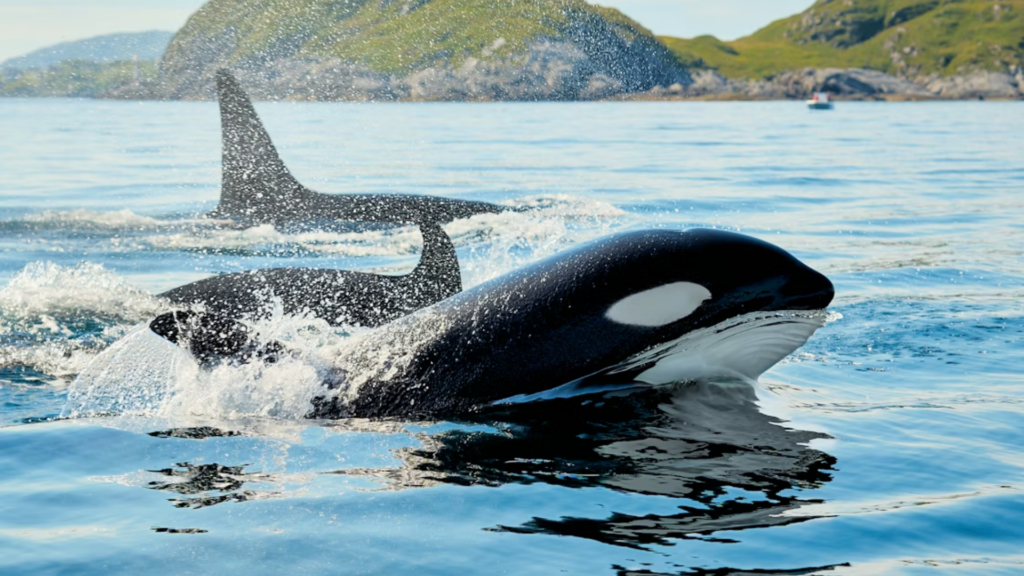
Some scientists believe the behavior might represent an early form of cross-species communication. Orcas are known for their sophisticated social systems, complex vocalizations, and unique cultural traditions passed down through generations. Offering food could be a way for the whales to initiate interaction with humans, similar to how they use shared meals to build relationships within their own pods.
Another possibility is that the whales are simply playing. Orcas are highly curious animals that often interact with objects in their environment, including seaweed, fish, and even boats. Presenting prey to humans might be part of exploratory or playful behavior rather than a deliberate attempt at communication. Some researchers describe the actions as comparable to how a pet cat might bring a captured bird to its owner.
There are also more cautious interpretations. A few scientists have suggested the whales might be testing human responses or experimenting with behavior they normally use in hunting or social interactions. However, despite these theories, there has been no evidence of wild orcas attacking humans, and the encounters documented so far appear to be curious and non-aggressive.
Orca’s Mysterious Behavior

The mysterious behavior of wild orcas offering food to humans has opened a fascinating new area of research for marine scientists. These unexpected encounters challenge long-held assumptions about how animals interact with other species and suggest that highly intelligent creatures like orcas may be more socially flexible than previously thought.
While researchers still don’t know the exact reason behind the behavior, the growing number of documented cases suggests it is not simply a coincidence. Whether driven by curiosity, social bonding, play, or communication, the whales appear to be intentionally engaging with humans in ways rarely seen in wild predators.
For now, the phenomenon remains one of the ocean’s most intriguing mysteries. As scientists continue to observe and document these encounters, each interaction with an orca offering a “gift” of food may bring researchers closer to understanding how these remarkable marine mammals think, and how they might view the humans who share their waters.
PetsFanatic Team
Pet Care Expert & Content Creator
Passionate about sharing knowledge and tips for better pet care. Writing about everything from pet health to training techniques.