
Data Reveals Why A Single Florida County Remains The Global Capital For Shark Encounters

Imagine wading into the ocean on a casual beach vacation, only to realize you are swimming in the absolute epicenter of global shark activity. A lone coastal region in Florida has officially retained its international title for human-shark interactions, logging approximately one-tenth of the entire planet’s unprovoked encounters. Volusia County documented six independent shark bites over a single twelve-month cycle. For American beachgoers, this specific geographical hotspot presents an unparalleled intersection of dense human recreation and active marine life.
University Scientists Verify Localized Marine Data

The striking density of these encounters is verified by rigorous data analysis from the International Shark Attack File, a scientific database maintained at the Florida Museum of Natural History. Operating under the Florida Program for Shark Research, marine biologists investigate and evaluate every reported shark-human interaction globally. Their annual data tracking provides an authoritative foundation for marine safety, confirming that while global shark encounters fluctuate significantly based on climatic variables, this individual county consistently registers at the very top of institutional lists.
Volusia County Drives Most State Shark Incidents

Global data show that sixty-five unprovoked shark encounters were recorded worldwide, with the United States leading all nations by accounting for thirty-eight percent of the international total. Out of twenty-five domestic encounters, Florida claimed eleven incidents, with Volusia County alone driving more than half of the state’s total with its six recorded bites. This hyper-localized cluster has pushed the county’s cumulative tally past three hundred documented shark interactions since formal reporting parameters began in 1882.
Local Hotspot Defies Regional Declining Average

The county’s baseline dominance remains unchallenged even though the actual number of annual encounters sits well below recent historical peaks. The six recorded incidents represent a clear drop from the region’s ten-year annual average of nine bites, and fall dramatically short of the volatile spike witnessed in 2021 when seventeen bites occurred. While shifting water distributions and changing seasonal temperatures have caused national proportions to decrease overall, the underlying ecological features of this specific environment keep it firmly positioned as the world’s primary encounter zone.
Tourism Officials Reframe Famous Predator Reputation
Rather than working to downplay or hide the county’s ominous title, regional travel administrators actively frame the phenomenon as a testament to local coastal health. Representatives from the New Smyrna Beach Area Visitors Bureau note that the regular presence of apex predators indicates a thriving, highly balanced marine ecosystem with exceptionally clean water. Local offices aggressively market the area’s robust waves, ensuring that a dedicated subculture of surfers and vacationers returns to the beaches every single year.
Marine Geography Pulls Baitfish Toward Shallows

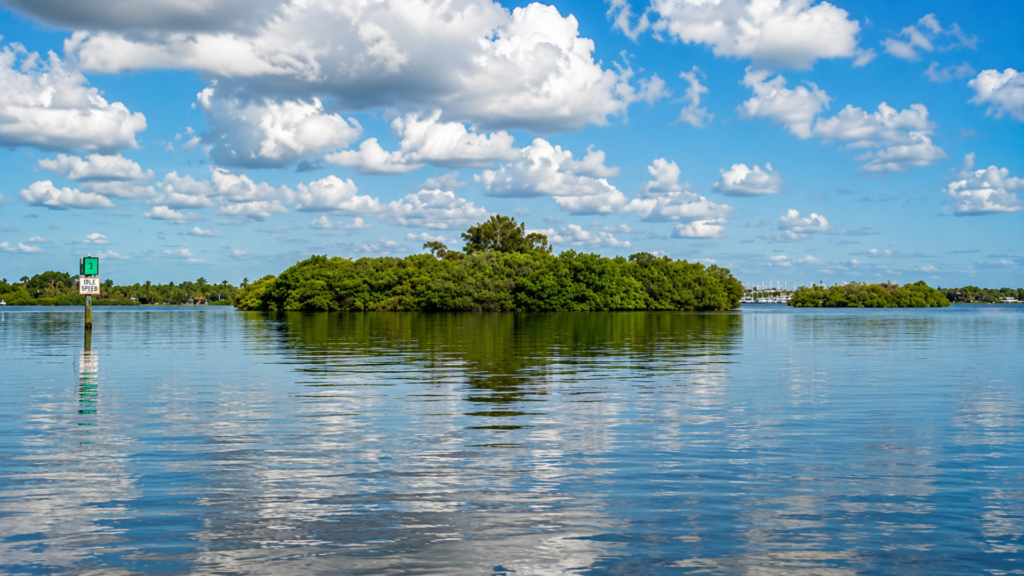
The driving force behind this consistent interaction rate is the unique geography of the Indian River Lagoon system, which opens directly into local coastal inlets. This expansive biodiverse lagoon contains more than twenty-two hundred distinct animal species, functioning effectively as a highly populated marine nursery that pulls massive schools of migratory baitfish right toward the breaking surf. When heavy crowds of swimmers and surfers share shallow, churning water with hunting predators, the reduced underwater visibility makes encounters likely.
Most Localized Shark Encounters Cause Minor Injury

The physical reality of these interactions contradicts popular cinematic depictions, as almost all recorded incidents involve small shark species executing quick, non-fatal nibbles. Spinner sharks and blacktip sharks dominate the area’s coastal shallows, typically fleeing the immediate scene the moment they realize they have accidentally bumped into a human instead of a fish. Local medical registries confirm that zero fatal encounters have occurred on these specific beaches, with the vast majority of cases requiring only basic first aid.
Biologists Outline Simple Beachgoer Safety Protocols

To preserve public safety without disrupting the local economy, wildlife researchers emphasize that avoiding encounters depends almost entirely on common sense behavioral modifications. The Florida Program for Shark Research advises individuals to swim exclusively in tight groups, avoid ocean waters during low-light hours at dawn or dusk, and stay completely away from active fishing piers. By altering basic habits, swimmers can drastically lower their statistical risk of a surprise interaction while enjoying the coast.
Shark Attack File Links Biology And Climate

“Shark bites are the consequence of the biology of the animals, the climatic conditions and the number of people in the water at the time of the incident. These global patterns change only slightly from one year to the other.” This formal perspective was delivered by Gavin Naylor, program director for the International Shark Attack File, during the institutional release of global encounter statistics.
Coastal Predators Shape Long Term Ocean Survival

Looking far beyond the immediate tourism cycles of the current decade, the continuous presence of these predators represents a critical baseline for the future survival of Atlantic marine ecosystems. Sharks occupy an irreplaceable role at the top of the food chain, regulating smaller fish populations and preventing catastrophic imbalances that could completely wipe out commercial fishing stocks. A decision to protect these highly sensitive coastal nurseries will outlast the current public debate over local beach safety.
PetsFanatic Team
Pet Care Expert & Content Creator
Passionate about sharing knowledge and tips for better pet care. Writing about everything from pet health to training techniques.