
Which Animals Should You Really Be Careful Around?

The animal most likely to put you in danger is not always the one that looks the most terrifying. Some threats come from animals people routinely underestimate, whether it is a bison that can outrun you, an alligator nearly invisible at the water’s edge, or a mosquito carrying disease. Others become dangerous mainly when people get too close, ignore warning signs, or assume a familiar-looking animal is harmless. The real lesson behind this list is simple: size, teeth, and reputation tell only part of the story.
Bison: Calm Until They Suddenly Aren’t

Bison often look slow, heavy, and almost indifferent to nearby visitors. That impression is dangerously misleading. Yellowstone National Park says bison have injured more people there than any other animal, and they can run about three times faster than a human. Visitors are required to stay at least 25 yards away, and warning behaviors can include head bobbing, pawing, bellowing, or raising the tail. If one charges, Yellowstone advises getting away rather than trying to stand your ground.
Moose: The Giant Herbivore People Underestimate

No claws, no fangs, no problem? Not quite. Moose can weigh up to about 1,600 pounds, and the National Park Service warns that they may charge, kick, or trample when they feel threatened. Females can become especially defensive around calves in spring and early summer, while males may become more aggressive during the fall mating season. Dogs can also trigger defensive behavior because a moose may perceive them as predators. Staying well back is far safer than trying to get the perfect close-up.
Alligators and Crocodiles: The Water’s Edge Is Their Territory

Still water can look perfectly peaceful while a large predator is almost invisible beneath the surface. Alligators and crocodiles are ambush hunters, and the safest encounter is one that happens from a substantial distance. In the United States, the Florida Fish and Wildlife Conservation Commission advises keeping at least 30 feet away from alligators, never feeding them, and keeping pets away from the water’s edge. Attacks remain uncommon, but swimming outside designated areas or approaching an animal for a photograph creates unnecessary risk. Crocodilians do not need to chase people around on land to be dangerous. Their advantage begins when someone gets too comfortable near the water.
Bees, Wasps, and Hornets: Tiny Animals With Serious Consequences

One sting is usually painful rather than life-threatening, but severe allergic reactions change the equation. CDC data show 788 U.S. deaths from hornet, wasp, and bee stings from 2011 through 2021, an average of 72 annually. That makes these insects a much more consequential hazard than their size suggests. People who know they have a serious allergy should follow their clinician’s emergency plan, while everyone else should avoid disturbing nests or swatting aggressively at stinging insects.
Venomous Snakes: Usually Survivable, Still Not Something to Test

Snakebite deaths in the United States are rare largely because medical treatment works, not because venomous snakes are harmless. CDC estimates that 7,000 to 8,000 people are bitten by venomous snakes in the U.S. each year, with roughly five deaths annually. Rattlesnake bites can leave lasting injuries in some victims, including loss of function or tissue damage. The safest response is simple: do not handle, corner, or attempt to move a snake yourself.
Bats: The Danger Can Be Easy to Miss

Bats rarely attack people, which is precisely why their biggest risk can be overlooked. CDC says bat contact is the leading source of human rabies deaths in the United States. A bite or scratch can be small enough to go unnoticed, yet rabies is nearly always fatal once symptoms begin. That is why possible direct contact with a bat should be taken seriously and assessed by a medical or public-health professional instead of ignored.
Mosquitoes: The Smallest Animal With the Biggest Reach

The animal responsible for some of the world’s most dangerous disease transmission weighs almost nothing. Mosquitoes can carry pathogens that cause malaria, dengue, yellow fever, Zika, West Nile virus, and other illnesses. The danger varies enormously by region, but the basic precaution is the same: reduce bites with repellents, protective clothing, window screens, and by removing standing water where mosquitoes breed. Unlike a bear or bison encounter, the risky interaction may be so ordinary that you barely notice it happened.
Bears: Dangerous, but Usually Not Looking for a Fight
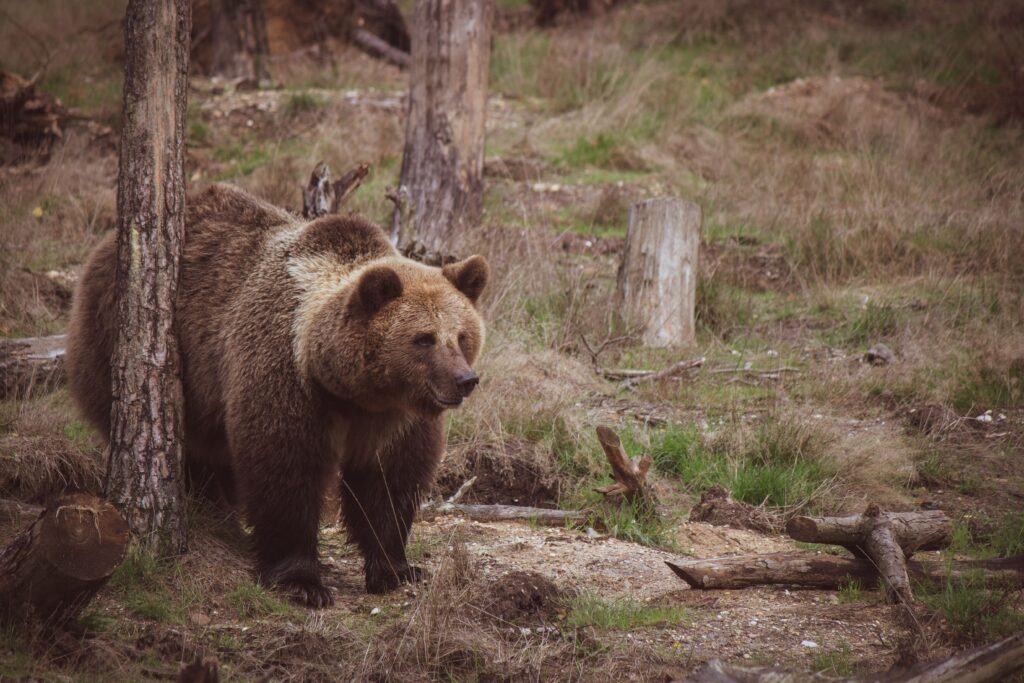
Bears deserve respect, although popular culture often exaggerates how eager they are to attack. The National Park Service notes that most bear encounters end without injury and that bears generally prefer to avoid people. Problems become more likely when a bear is surprised, feels threatened, or becomes accustomed to human food. Park guidance emphasizes distance, awareness, and avoiding surprise encounters rather than running toward a viewpoint for a photograph. There is no universal response for every bear encounter, so local park guidance matters.
The Best Wildlife Safety Rule Is Still Distance

The eight animals on this list are dangerous in very different ways. Bison and moose can injure people with sheer size and speed, crocodilians can strike from the water’s edge, snakes and stinging insects rely on venom, bats can transmit rabies, mosquitoes spread disease, and bears become especially risky when surprised or approached too closely. What ties most encounters together is human behavior. Giving wildlife space, respecting warnings, avoiding unnecessary contact, and knowing the risks in the place you are visiting will prevent far more trouble than trying to prove how brave you are around an animal that never asked you to come closer.
PetsFanatic Team
Pet Care Expert & Content Creator
Passionate about sharing knowledge and tips for better pet care. Writing about everything from pet health to training techniques.