
What’s Killing Nevada’s Golden Eagles? Tracking Study Reveals a Grim Pattern

Dry Lake Valley, a vast, sun-bleached expanse of cracked earth north of Las Vegas, was once a thriving breeding ground for golden eagles, the largest bird of prey in North America. Today, eagle carcasses litter the landscape. The valley has transformed into what researchers now call a “death vortex,” a swirling convergence of threats that is pulling one of the West’s most iconic raptors toward collapse.
Joe Barnes, a Reno-based biologist with the U.S. Fish and Wildlife Service, has spent 15 years studying this species. When he began piecing together what was happening in Dry Lake Valley, as Science News reported, there was no single culprit waiting to be named. Instead, he found a layered crisis built from drought, disease, starvation, lead poisoning, power lines, wildfire, and a rapidly changing landscape driven by human development.
Barnes and his team published their findings in the December issue of the Journal of Raptor Research, drawing on a decade of tracking data collected between 2014 and 2024. The population statistics, analyzed by ecologist Perry Williams, a professor at the University of Nevada, Reno, pointed to a decline stretching well beyond Dry Lake Valley. Nevada’s golden eagles, the data suggested, weren’t just struggling in one isolated pocket of desert; they were losing ground statewide.
A Decade of Tracking Data Exposes What Population Surveys Missed
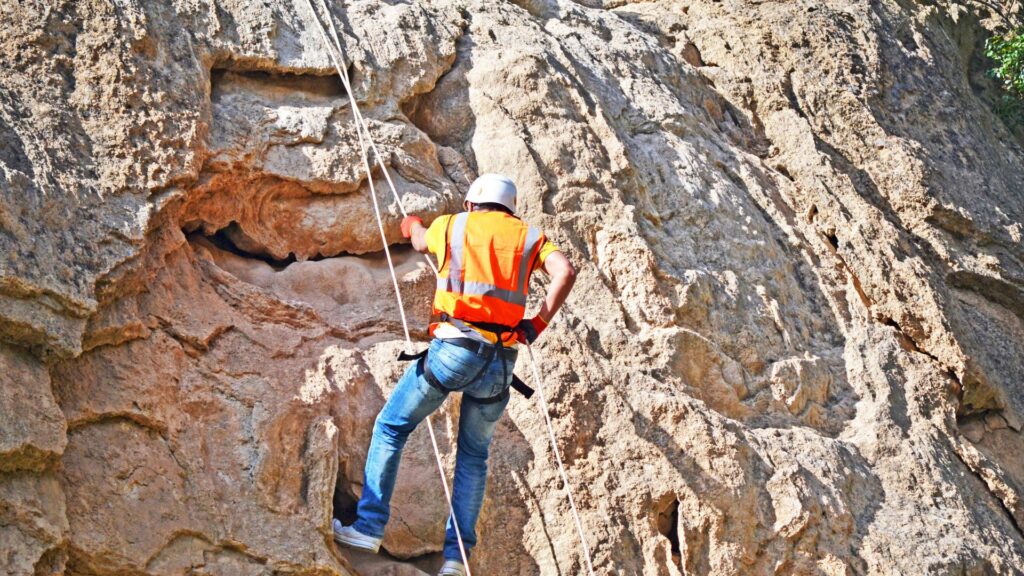
To understand the scale of the decline, Barnes’ team had to get close, literally. Researchers captured adults to attach transmitter backpacks before releasing them, and rappelled into cliffside nests to tag eaglets. “You’ve got to do it all under the cover of darkness,” Barnes said. “You don’t want to tip off the eagles. Everything’s got to be camouflaged.” Wildlife researcher James Golden, now at Colorado State University in Fort Collins, described the cliffside work as requiring “guts,” recalling winds so strong they feared young birds could be blown from the nest mid-tagging.
In total, the team tagged 43 adult golden eagles across Nevada. Of those, 30 have since died, mostly from what researchers classify as anthropogenic, or human-caused, factors. The transmitters delivered hourly data on each bird’s speed, direction, location, and altitude, allowing the team to map 18 distinct eagle territories within Dry Lake Valley alone, which Barnes described as encircling it “like a necklace.”
The tracking data also solved a puzzle that had long obscured the true scale of the crisis. Without transmitters, golden eagles are indistinguishable from one another. When a bird dies, and a new eagle moves in to claim its territory, population surveys register no change, masking the loss entirely. The data made Barnes realize, “holy cow, yes, they’re maintaining occupancy, but they’re obviously coming from somewhere else,” drawn in from surrounding regions only to die there too.
Rabbits, Solar Fields, and a Breeding Shutdown Might Be Deepening the Crisis

Among the pressures driving the decline, the collapse of the rabbit population has been particularly consequential, Barnes says. Over the last five years, a virus tore through Nevada’s rabbit populations, eliminating a primary food source for golden eagles. Rabbits, jackrabbits, and cottontails form the core of the golden eagle’s diet, and without them, many birds across the state have starved to death, compounding the stress already imposed by drought and wildfire.
That mounting stress has triggered an unusual survival response: the eagles have largely stopped reproducing. Barnes explained that golden eagles are “unique in that they will take years off,” with females simply refusing to lay eggs when conditions become bad enough, sometimes for half a decade at a stretch. With reproduction already slow under normal conditions, this behavioral shutdown means the population cannot replace itself fast enough to offset ongoing deaths.
Development pressure is adding to the strain. Developers have proposed a 104-square-kilometer solar energy field within Dry Lake Valley, though the project has yet to break ground after more than a decade of planning. Barnes acknowledged the risks directly, warning that land conversion done without ecological care “can have really serious local impacts to wildlife.” He has not opposed solar development outright, but called for it to proceed in a way that doesn’t disturb the eagles.
The Eagles Are Still There, But Barnes Puts the Odds at Just 2 Percent

At last count in 2017, Nevada’s golden eagle population stood at roughly 3,000 individuals statewide. Based on the new tracking data, Barnes estimates that 10 percent of that population has already been lost since 2014. More troubling is his projection for what comes next. He puts the odds of the population being stable and healthy at just 2 percent, with a 98 percent probability of continued and significant decline.
In ecological terms, Dry Lake Valley has become a population sink, a place where deaths consistently outpace reproduction, and where eagles from healthier neighboring regions are drawn in to fill vacated territories, only to face the same hazards. That cycle drains surrounding populations too, spreading the damage beyond the valley’s borders in ways that broad statewide surveys have historically failed to detect.
Barnes was back in the field in late January, looking for any sign that the birds were breeding and finding enough to eat. What he found was discouraging: virtually no courtship behavior, very low jackrabbit numbers, poor vegetation, and extremely dry conditions. And yet the eagles were still there. Barnes has not given up on them, but he has been clear about what the data shows. He puts the probability of a continued and significant decline at 98 percent, and he is already watching for signs of what comes next.
PetsFanatic Team
Pet Care Expert & Content Creator
Passionate about sharing knowledge and tips for better pet care. Writing about everything from pet health to training techniques.