
What If a Parasite Could Help Treat Disease Instead of Cause It? Scientists Test the Idea

For centuries, parasites have been viewed as organisms to avoid at all costs. They steal nutrients, spread disease, and infect hundreds of millions of people worldwide. Now, scientists are asking a question that once sounded more like science fiction than medical research: what if some parasites could actually be transformed into living drug factories that help treat disease instead of causing it?
Researchers at Washington University School of Medicine have taken a major step toward answering that question by genetically engineering hookworms to produce and release a therapeutic antibody inside a living host. The proof-of-concept study, published in Nature Communications, marks the first successful genetic modification of the human hookworm Ancylostoma ceylanicum for this purpose.
The work remains in its early stages and has only been tested in laboratory animals. Even so, researchers say the findings demonstrate that parasites, long regarded solely as pathogens, could someday become carefully controlled platforms for delivering medicines continuously inside the body—potentially reducing the need for repeated injections or daily medications.
Turning Hookworms Into Living Drug Factories

Hookworms are uniquely suited for this type of research because of how they survive. Once they establish themselves in the small intestine, they can remain there for years while secreting hundreds of molecules that help regulate inflammation and avoid triggering a strong immune response. Rather than fighting against those natural abilities, researchers wanted to add one more beneficial function.
Using CRISPR gene-editing technology, the team inserted DNA instructions into hookworm eggs, enabling the parasites to produce an antibody capable of partially neutralizing tetrodotoxin—a potent neurotoxin found in pufferfish that currently has no approved antidote. The modified worms were then introduced into hamsters, where they successfully released the antibody into the animals’ bloodstream.
Scientists described the experiment as an end-to-end demonstration that the worms could be genetically modified, manufacture a therapeutic protein, and secrete it into a host while remaining functional. Although the antibody only partially neutralized the toxin, researchers say the study validates the overall concept and provides a foundation for improving the technology in future work.
Why Researchers Believe the Approach Could Work
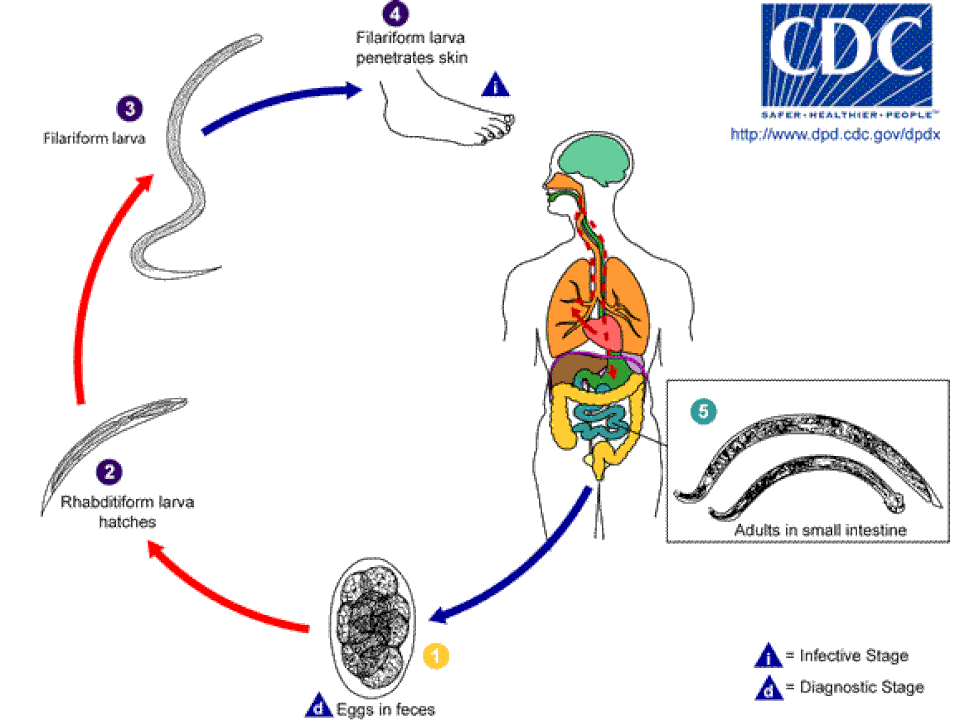
The appeal of using hookworms as medicine carriers lies in their biology. Unlike bacteria or viruses that can rapidly multiply inside the body, hookworms cannot reproduce within a host. Their eggs must leave the body and mature in soil before completing their life cycle, allowing researchers to carefully control the number of worms introduced during treatment.
Scientists also note that hookworm infections can already be eliminated using standard anti-parasitic medications if necessary. That built-in “off switch” could make the approach easier to control than some other long-term therapeutic systems. Previous research has also shown that controlled hookworm infections can be tolerated in carefully monitored clinical settings, though naturally acquired infections remain a serious health concern in many parts of the world.
Looking ahead, researchers envision engineering hookworms to deliver a wide variety of therapeutic molecules rather than just an antitoxin. Potential targets include inflammatory bowel disease, Crohn’s disease, ulcerative colitis, allergies, metabolic disorders, and other chronic conditions that may benefit from small, continuous doses of biologic medicines instead of repeated injections. The platform could even be adapted to release tiny amounts of food allergens to help gradually desensitize patients with allergies.
Promise Comes With Significant Challenges

Despite the excitement, researchers emphasize that engineered hookworms are far from becoming a treatment for patients. The study represents an early proof of concept conducted in hamsters, and many scientific hurdles remain before any human use could be considered.
One challenge is increasing the amount of therapeutic protein the worms can produce. In the current study, the antibody levels were enough to demonstrate biological activity but not sufficient to fully neutralize the deadly toxin. Researchers are also working to ensure the genetic modifications remain stable across generations of worms while preventing any unintended ecological or public health consequences. Proposed safeguards include engineering worms that cannot reproduce or adding built-in genetic controls that would limit their survival outside carefully controlled conditions.
The broader significance of the research extends beyond hookworms themselves. Successfully applying modern gene-editing tools to parasitic worms opens new opportunities to study parasite biology while exploring entirely different approaches to medicine. Whether engineered parasites ultimately become practical treatments remains uncertain, but the work reflects how biotechnology is increasingly finding value in organisms once viewed only as threats.
PetsFanatic Team
Pet Care Expert & Content Creator
Passionate about sharing knowledge and tips for better pet care. Writing about everything from pet health to training techniques.