
Volcano Erupts After 12,000 Years ‘Like A Sudden Bomb’ Without Warning

A volcano in Ethiopia’s Afar region erupted on Sunday, November 23, 2025, marking its first known eruption in nearly 12,000 years. The volcano sent thick plumes of smoke up to nine miles into the sky, the Toulouse Volcanic Ash Advisory Centre said. Located about 500 miles northeast of Addis Ababa near the Eritrean border, the volcano rises about 1,500 feet in altitude. It sits within the Rift Valley, where two tectonic plates meet in a zone of intense geological activity.
The Eruption Began at Midmorning Without Warning

Hayli Gubbi began spewing ash and volcanic gases at around 11:30 a.m. local time, 8:30 Universal Time, that day, marking its first documented explosive eruption. Ahmed Abdela, a resident in the earthquake-prone Afar region, told The Associated Press he heard a loud sound when the eruption started. “It felt like a sudden bomb had been thrown, with smoke and ash,” he said. The eruption lasted for several hours before subsiding by November 25, according to officials.
The Volcano Had No Record of Eruptions During the Holocene
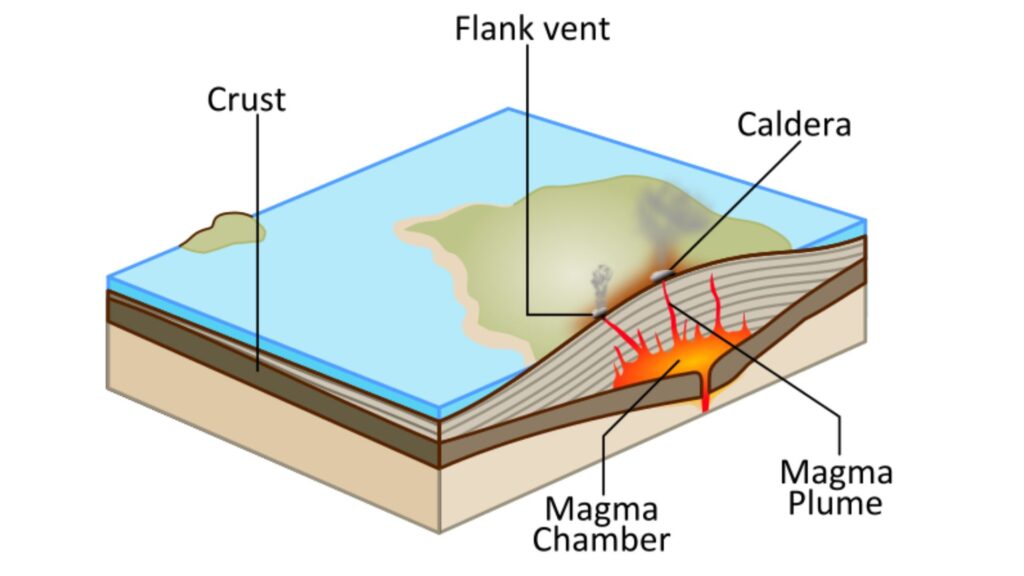
The Smithsonian Institution’s Global Volcanism Program said Hayli Gubbi has had no known eruptions during the Holocene, the current geological epoch that began around 11,700 years ago at the end of the last Ice Age. Hayli Gubbi is a shield volcano, characterized by gently sloping sides formed through successive layers of hardened lava. Simon Carn, a volcanologist and professor at Michigan Technological University, confirmed on Bluesky that Hayli Gubbi “has no record of Holocene eruptions.”
The Plume Reached 15 Kilometers Into the Upper Troposphere

NASA’s Aqua satellite acquired images of the eruption about four hours after it was first detected. Other satellite data indicated the plume reached 15 kilometers, nine miles, above sea level and contained approximately 0.2 teragrams, 220,000 tons, of sulfur dioxide, according to a Global Volcanism Program report. Another light-colored cloud, likely of pyroclastic material, was visible spreading to the north and appeared to be on or close to the ground, the report stated.
Ash Clouds Drifted Over 2,200 Miles Across Multiple Countries

Ash clouds from the volcano drifted over Yemen, Oman, India, and northern Pakistan, the Toulouse Volcanic Ash Advisory Centre said in a map of the ash cloud’s path. Carn confirmed on Bluesky that the ash cloud was “spreading rapidly east in the subtropical jet stream, over the Arabian Sea towards NW India and Pakistan.” Images from the Copernicus Sentinel-5P satellite on November 24 showed the plume extended more than 2,200 miles.
Airlines Canceled Dozens of Flights Due to Ash Plumes

Air India said on Tuesday it had canceled at least 11 flights, most of them international, on Monday and Tuesday due to the ash plumes, acting on a directive from India’s aviation safety regulator to inspect aircraft that may have flown over affected areas, Reuters reported. Akasa Air said it canceled flights to Middle East destinations such as Jeddah, Saudi Arabia, Kuwait, and Abu Dhabi in the United Arab Emirates. At least seven international flights at New Delhi’s airport were canceled on Tuesday.
Villages Were Covered in Ash, Threatening Livestock

Villages in the district of Afdera in the Afar region were covered in ash, officials said. Mohammed Seid, a local administrator, told The Associated Press there was no previous record of an eruption by Hayli Gubbi, and that he fears for residents’ livelihoods. “While no human lives and livestock have been lost so far, many villages have been covered in ash, and as a result, their animals have little to eat,” he said.
Medical Teams Were Dispatched for Respiratory Issues

Abedella Mussa, an official in charge of health in Afdera district, said residents were coughing, and mobile medical services from the larger Afar region had been launched in the remote area. “Two medical teams have been dispatched to the affected kebeles like Fia and Nemma-Gubi to provide mobile medical services,” he said. Nuur Mussa, an official in charge of livestock, said animals were unable to find clean water or grass.
The Eruption Created Two New Craters at the Summit

The summit area of the volcano took on a new appearance following the eruption. Detailed imagery acquired with the Operational Land Imager-2 on Landsat 9 on November 24, 2025, revealed significant changes to Hayli Gubbi’s peak. The blast widened the volcano’s main crater and formed two additional craters toward the southeast. Fresh ash blanketed the mountain’s flanks, covering ancient lava flows that had solidified on its slopes, NASA Earth Observatory reported.
Magma Movement From a Nearby Volcano Likely Triggered the Eruption

Hayli Gubbi lies about seven miles south-southeast of Ethiopia’s most active volcano, Erta Ale, where a lava lake has roiled for decades. After Erta Ale’s most recent eruption in July 2025, scientists tracked magma movement beneath the surface and found that magma propagated south from Erta Ale, passing beneath Hayli Gubbi. Arianna Soldati, a volcanologist at North Carolina State University, told Scientific American, “So long as there are still the conditions for magma to form, a volcano can still have an eruption even if it hasn’t had one in 1,000 years, 10,000 years.”
PetsFanatic Team
Pet Care Expert & Content Creator
Passionate about sharing knowledge and tips for better pet care. Writing about everything from pet health to training techniques.