
Utah Declares State Of Emergency Following Record-Warm Winter And Lowest Snowpack Since 1930

Utah Gov. Spencer Cox declared a statewide emergency after what officials described as the warmest winter on record and the weakest snow season in nearly a century. State leaders warned that dangerously low snowpack levels now threaten water supplies, agriculture, wildfire preparedness, and reservoir levels across Utah.
Officials said Utah’s snowpack peaked weeks earlier than normal and reached the lowest level recorded since 1930. Snowpack typically provides about 95% of Utah’s water supply, making the poor winter season especially alarming for communities that depend heavily on mountain runoff.
The drought emergency activates Utah’s Emergency Operations Plan and allows state agencies to coordinate drought response efforts more aggressively. Gov. Cox urged residents to conserve water immediately, warning that reservoir reserves are being depleted faster than officials expected.
Record-Low Snowpack Raises Serious Water Concerns
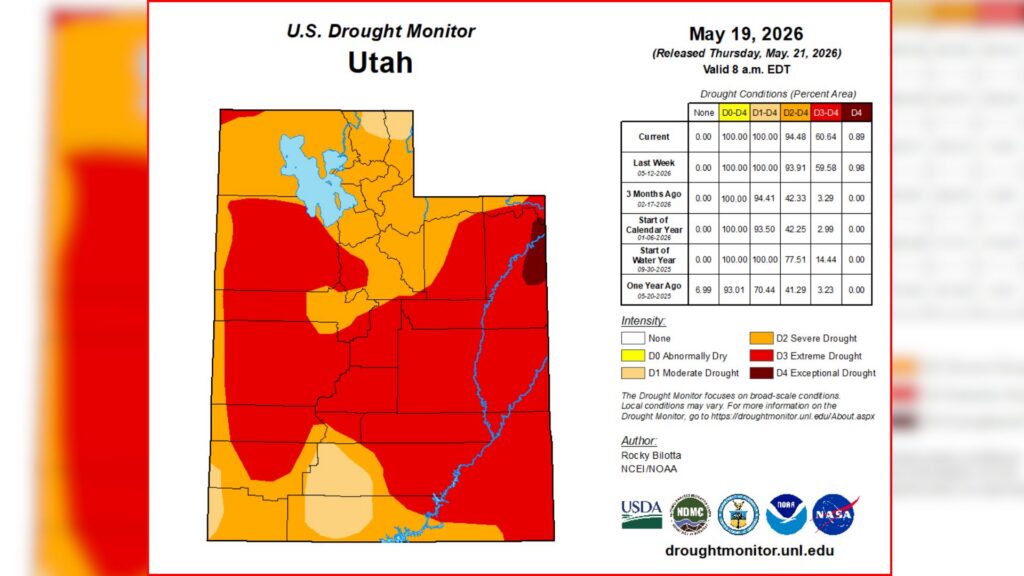
State officials said Utah’s April snowpack measured just 2.7 inches of snow water equivalent — far below the normal 14-inch average for this time of year. Experts explained that warmer temperatures caused much of the winter precipitation to fall as rain instead of snow, leaving mountain basins without enough long-term water storage.
Meteorologists also charged persistent warm weather patterns and a lack of cold Arctic air for preventing stronger snowstorms from developing across the region. According to drought monitors, every county in Utah is now experiencing severe drought conditions, while many areas have already entered extreme drought status.
Officials warned that reservoirs currently sitting around 70% capacity may not be enough if dry conditions continue through summer and into next winter. Water managers said Utah is now relying heavily on stored reserves because spring runoff has fallen dramatically short of expectations.
Farmers, Cities, And Wildlife Could Feel The Impact

The drought emergency could create major problems for farmers and ranchers already facing reduced irrigation supplies. State officials said some agricultural operations may only receive a single water allotment this season, putting crops and livestock production at risk across rural communities.
Cities are also preparing for stricter conservation measures as officials encourage residents to cut back on outdoor watering. Salt Lake City has already requested a 20% reduction in outdoor water use, while state leaders continue pushing for drought-resistant landscaping and smarter irrigation practices.
Environmental experts warned that prolonged drought could further damage the Great Salt Lake and increase wildfire risks throughout the region. Officials stressed that Utah’s drought problems are no longer isolated weather events but part of a growing pattern of hotter temperatures and increasingly unpredictable climate conditions.
Officials Push Conservation As Utah Braces For A Difficult Summer

Gov. Cox called on Utah residents to treat water conservation as an urgent statewide responsibility. Officials encouraged people to fix leaks, shorten showers, reduce lawn watering, and replace unused grass with water-wise landscaping to help stretch limited supplies.
Water leaders warned that Utah may face similar drought emergencies again in the future, especially as warmer winters become more common across the West. Experts said the current crisis highlights how dependent the region remains on mountain snowpack for drinking water, farming, and hydropower generation.
Despite the grim outlook, state officials said conservation efforts during previous drought years helped Utah avoid even worse shortages. Leaders now hope early action and public cooperation can help communities manage through another difficult and potentially dangerous dry season.
PetsFanatic Team
Pet Care Expert & Content Creator
Passionate about sharing knowledge and tips for better pet care. Writing about everything from pet health to training techniques.