
USGS Maintains Code Orange Alert as Kilauea Volcano Erupts With 600-Foot Lava Fountains

Hawaii’s Kilauea volcano completed its 37th lava fountaining episode on November 25, sending fountains up to 600 feet into the air for over nine hours, according to the U.S. Geological Survey. The eruption covered a large portion of Halemaʻumaʻu crater with fresh lava flows and released massive plumes of volcanic gas. USGS officials maintain an orange alert level for the volcano and say the summit magma reservoir is already repressurizing, indicating another eruptive episode is possible in the coming weeks.
Nine-Hour Eruption Sent Lava Across the Crater Floor
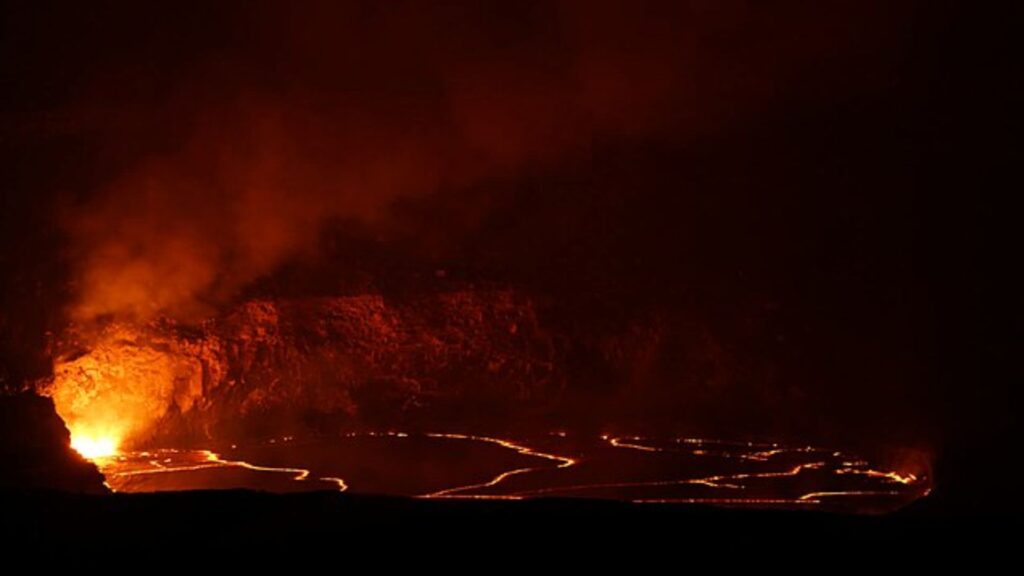
Episode 37 began at 2:30 p.m. on November 25 and continued until 11:39 p.m., with lava fountaining concentrated at the volcano’s north vent. The wide fountain reached heights between 500 and 600 feet, sending flows across a broad portion of the crater floor, according to Hawaiian Volcano Observatory reports. The south vent produced only weak spattering and persistent flaming throughout the event. Approximately 6 million cubic meters of lava were expelled during the episode, based on ground deformation measurements.
Eruptions Have Occurred Weekly Since December 2024

The current series of intermittent lava fountaining episodes began on December 23, 2024, making this one of Kilauea’s most sustained eruptive sequences in recent history. Episodes have occurred roughly once per week to once every several weeks throughout 2025, according to the Hawaiian Volcano Observatory. Scientists note this pattern of episodic lava fountaining hasn’t been seen in any Kilauea eruptions since the 1983 to 1986 episodic fountains at the beginning of the Puʻuʻōʻō eruption, USGS reports stated.
Earlier Episodes Produced Fountains as High as 1,500 Feet

While episode 37’s fountains peaked at 600 feet, some earlier eruptions in this sequence have been far more dramatic. Episode 35 produced the highest single fountain seen during this eruption so far, with lava reaching up to 1,500 feet into the air, according to USGS measurements. That eruption expelled so much lava that it blanketed nearly two-thirds of the Halemaʻumaʻu crater floor, which sits at the Kilauea summit inside the volcano’s caldera.
Sulfur Dioxide Emissions Surpass 50,000 Tonnes Daily

High levels of volcanic gas represent one of the major hazards of the ongoing eruption, with sulfur dioxide emissions often exceeding 50,000 tonnes per day during lava fountaining, according to USGS data. During episode 37, gas emissions increased significantly and the eruptive plume rose to over 14,000 feet above sea level. The sulfur dioxide reacts in the atmosphere to create visible haze known as vog, or volcanic smog, which spreads downwind of Kilauea and can cause respiratory and other health problems at high concentrations.
Volcanic Glass Strands Travel Over 10 Miles From the Vent

Another major hazard is fallout of Pele’s hair, volcanic glass strands produced by lava fountaining that can be carried well over 10 miles from the vent, according to USGS warnings. Once on the ground, Pele’s hair can cluster and tangle together, resembling tumbleweeds. The extent of Pele’s hair deposition depends on lava fountaining activity and wind conditions. Residents and visitors should minimize exposure to Pele’s hair and other glassy volcanic fragments, which can cause skin and eye irritation and contaminate catchment water supplies, officials said.
Volcanic Fragments Have Fallen on Highway 11

Hot glassy volcanic fragments, including volcanic ash, pumice, scoria, and reticulite, can fall within one to three miles of the eruptive vents, with the highest concentrations immediately downwind. Various volcanic fragments have landed on Highway 11, west of Hawaiʻi Volcanoes National Park, depending on wind and eruption conditions, according to USGS reports. Strong winds may carry light particles, including Pele’s hair, to even greater distances downwind of the volcano, extending the hazard zone beyond the immediate area.
The Summit Magma Reservoir Is Already Repressurizing

Following the end of episode 37, summit tiltmeters detected the abrupt onset of inflationary tilt, indicating the magma reservoir beneath Kilauea is refilling. About 1.5 microradians of inflationary tilt were recorded by the Uēkahuna tiltmeter within hours of the eruption ending, according to USGS data. This resumption of inflation suggests another eruptive episode is possible in the coming weeks, though scientists say more monitoring data is needed before an official forecast can be made. Preliminary models indicate the next episode is at least a week away.
The Eruption Area Has Been Closed Since 2007

The episodic eruption is occurring within a closed area of Hawaiʻi Volcanoes National Park. The Kīlauea caldera rim surrounding Halemaʻumaʻu crater has been off-limits to the public since late 2007 due to extreme hazards. Significant dangers remain from crater wall instability, ground cracking, and rockfalls that can be enhanced by earthquakes in the area, according to USGS warnings. During this eruption, lava flows have been confined to Halemaʻumaʻu crater and the southwest side of Kaluapele, the volcano’s summit caldera.
Observatory Maintains Close Watch for Next Episode
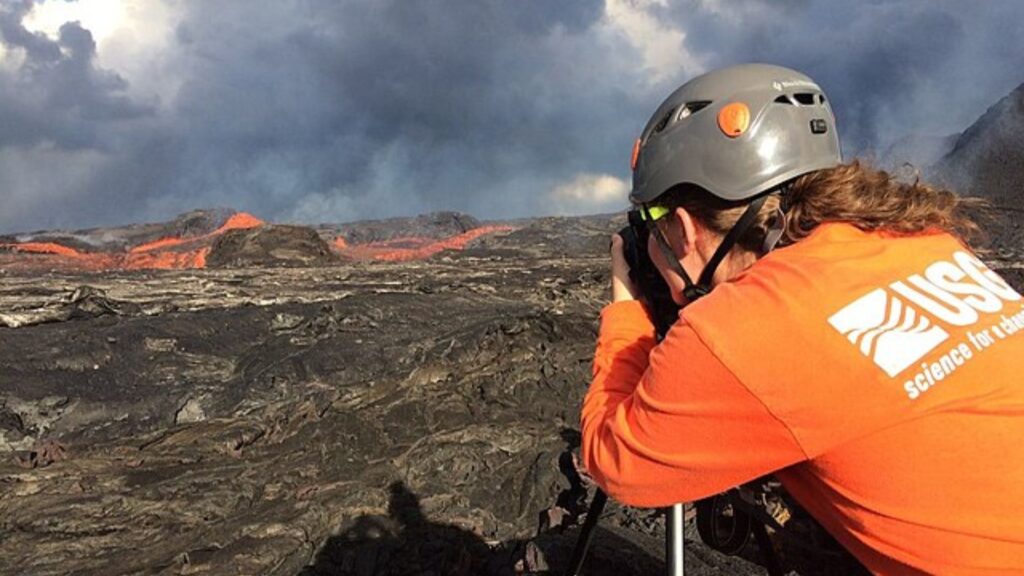
The Hawaiian Volcano Observatory continues monitoring Kīlauea closely and remains in contact with Hawaiʻi Volcanoes National Park and the Hawaiʻi County Civil Defense Agency about eruptive hazards. The USGS maintains a Code Orange alert level for the volcano, indicating heightened unrest with an increased potential for eruption. Kilauea, located in Hawaiʻi Volcanoes National Park on the Big Island, is one of the world’s most active volcanoes. USGS livestream cameras provide continuous views of the summit, allowing scientists and the public to track ongoing volcanic activity in real time.
PetsFanatic Team
Pet Care Expert & Content Creator
Passionate about sharing knowledge and tips for better pet care. Writing about everything from pet health to training techniques.