
An ‘Unknown Squid’ Species Just Pulled Off a Bizarre Disguise

Far below the ocean’s surface, where sunlight never reaches and life moves slowly to conserve energy, scientists witnessed something they had never seen before. A squid — an animal known for speed, agility, and open water — appeared to bury itself upside down in the seafloor, holding its tentacles stiff in the water like plant stalks. For a moment, it didn’t even look like an animal at all. It looked like part of the landscape. What researchers captured on camera wasn’t just a strange behavior. It was a reminder of how much of the deep ocean still operates by rules we don’t yet understand.
A Squid That Didn’t Behave Like a Squid

Squid are typically associated with open water, fast movement, and dramatic escapes. This one broke every expectation. At more than 13,000 feet below the surface, researchers spotted what appears to be an entirely undescribed species of whiplash squid almost completely buried in soft sediment. Instead of swimming away, it stayed perfectly still. Instead of blending with open water, it blended with the seafloor. And instead of facing upward like most animals, it positioned itself upside down.
Why the Upside-Down Position Matters

Burying behavior isn’t unheard of among ocean animals, but orientation matters. Octopuses and cuttlefish sometimes cover themselves with sand, yet always right-side up. No squid had ever been documented burying itself this way, especially not in the deep sea. Holding its siphon and two elongated tentacles upright while the rest of its body vanished into sediment was unprecedented. That orientation suggests the squid wasn’t hiding randomly. It was posing intentionally.
Disappearing in Plain Sight on the Seafloor

At first, researchers didn’t realize the squid was still there. On camera, only two pale shapes remained visible, resembling the stalks of glass sponges or tube worms that dot the abyssal plain. It took several moments before scientists understood what they were seeing. The squid hadn’t left. It had become something else, at least visually. In one of the most food-scarce environments on Earth, becoming invisible can be a survival advantage.
Masquerade: When Animals Pretend to Be Something Else
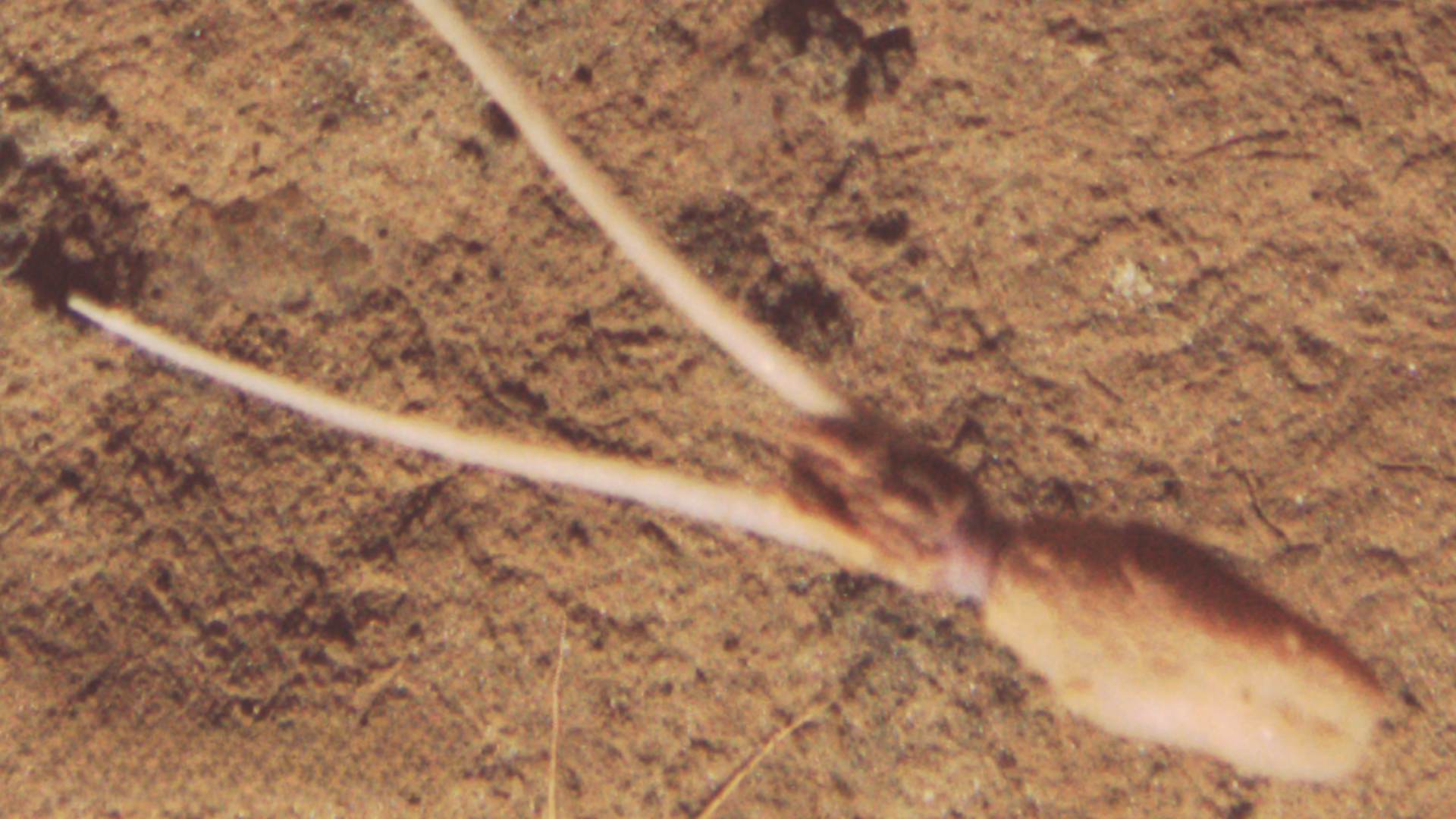
Biologists believe the squid may be using a tactic called masquerade. Unlike camouflage, which helps animals blend in, masquerade allows them to resemble objects predators ignore. In this case, the squid’s tentacles mimicked stationary seafloor organisms that predators would pass by without interest. The disguise wasn’t about hiding in shadows. It was about being mistaken for something inedible.
A Trap for Prey as Much as Protection

The disguise may serve two purposes at once. By imitating sponges or worms, the squid could be luring small crustaceans that typically crawl around those structures. Instead of chasing food — an energy-expensive task in the deep sea — the squid may simply wait. When prey approaches, the ambush happens instantly. In an environment where calories are scarce, patience can be more valuable than speed.
Why This Behavior Stayed Hidden for So Long

Abyssal plains cover enormous areas of the ocean floor, yet they remain among the least explored places on Earth. Even in regions that have seen research activity, sightings of squid are rare. During thousands of miles of robotic surveys in the same zone, scientists recorded only a few dozen cephalopod encounters. That scarcity explains why such a dramatic behavior could exist unnoticed for so long. It also suggests there may be many more tactics we’ve never witnessed.
The Discovery Raises Questions About Deep-Sea Mining

The squid was observed in the Clarion-Clipperton Zone, an area targeted for deep-sea mining due to its rich mineral deposits. Mining operations would disturb sediments across wide regions of the seafloor; the very environment this squid depends on for disguise and survival. Scientists warn that sediment plumes could erase habitats before we even understand what lives there. Discoveries like this highlight the risk of altering ecosystems we barely know exist.
What This Means for How We Study the Deep Ocean
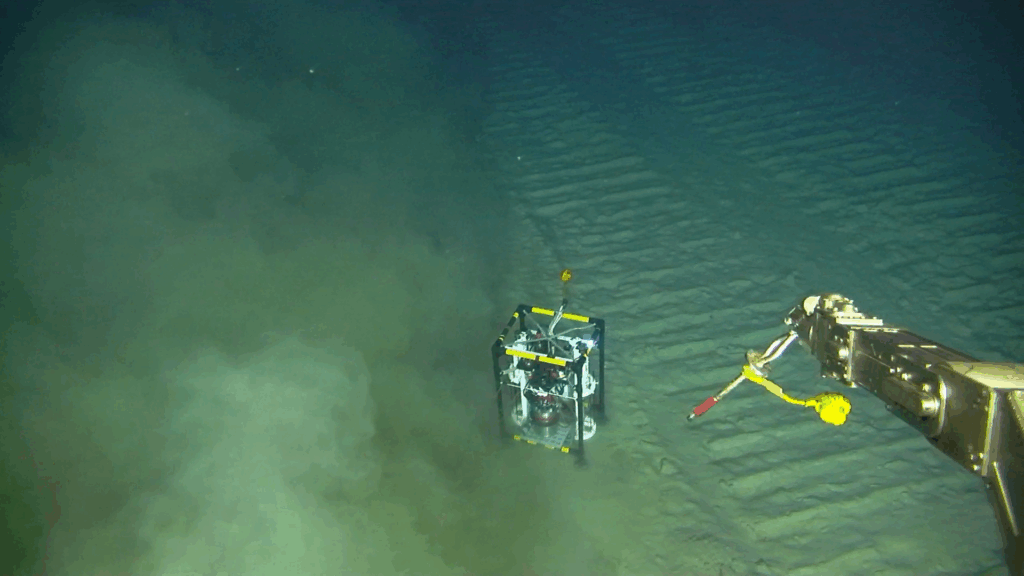
The squid’s behavior challenges assumptions about how deep-sea animals live, hunt, and hide. It also underscores a bigger issue: most deep-ocean research captures brief glimpses, not full behavioral repertoires. Squid are fast, alert, and often avoid cameras. If they reveal themselves only under specific conditions, scientists may have observed just a fraction of what they can do. Each rare encounter reshapes how researchers think about life at extreme depths.
A Reminder of How Much Is Still Unknown
This upside-down, mud-covered squid didn’t just surprise scientists; it reframed what we think is possible in the deep ocean. A creature known for movement chose stillness. A predator chose disguise. And an environment assumed to be simple revealed another layer of complexity. As human activity pushes deeper into the sea, discoveries like this raise an uncomfortable question: how many extraordinary survival strategies exist below us, waiting to be erased before we ever get the chance to understand them?
PetsFanatic Team
Pet Care Expert & Content Creator
Passionate about sharing knowledge and tips for better pet care. Writing about everything from pet health to training techniques.