
‘Unfortunately, Yes,’ Al Gore Says When Asked if His Warnings About Climate Change Are Coming True

Twenty years ago, a documentary about a slideshow nearly nobody wanted to watch became one of the most consequential films in American political history. An Inconvenient Truth turned former Vice President Al Gore into the world’s most prominent climate messenger and won two Academy Awards. Now, on its 20th anniversary, Gore is back with a three-word answer to the only question that matters: were the scientists right? “Unfortunately, yes,” he told ABC News.
Gore said that answer with the weight of a man who would have preferred to be wrong. Speaking to ABC News chief meteorologist and climate correspondent Ginger Zee at his family farm in Tennessee, Gore said the scientists “were dead right on all the important elements” of the film. He added that it “really is insane” that the world keeps releasing carbon into the atmosphere, comparing the daily heat being trapped to the energy released by 800,000 Hiroshima-class atomic bombs exploding every single day.
ABC News reviewed the documentary’s key scientific claims and found that the majority have come to fruition or are on track to. The most damning data point: the last 11 years, from 2015 through 2025, rank as the hottest on record, according to data compiled by NOAA, the Copernicus Climate Change Service, and the World Meteorological Organization. The planet’s fever is no longer a projection.
A Film That Predicted the Future, One Degree at a Time

When An Inconvenient Truth was released in 2006, atmospheric CO2 stood at roughly 380 parts per million. Gore warned in the film that emissions would climb toward 500 ppm within 50 years. Today, CO2 sits above 430 ppm, already more than 50% higher than pre-industrial levels, according to NOAA. The planet has not yet reached the 500 ppm threshold, and Gore credits one factor above all: the explosive growth of renewable energy.
The film also warned that warming oceans would produce more destructive hurricanes. That, too, has held. Climate scientists have built a substantial body of evidence showing that human-driven warming intensifies storms and accelerates the rapid strengthening of tropical cyclones just before they make landfall. What were once considered worst-case scenarios for hurricane intensity have become recurring headlines across the Atlantic and Pacific basins.
Critics of the film have long pointed to one specific claim as evidence of alarmism: Gore said the Arctic could be free of summer sea ice within five years of the film’s release. That deadline came and went without an ice-free Arctic. Gore called the criticism “cherry-picking.” The NOAA Arctic Report Card 2025 tells a more complex story: Arctic sea ice is still present, but the oldest and thickest ice has declined by more than 95% since the 1980s.
A Policy Retreat While the Planet Keeps Warming
The scientific scorecard may favor Gore, but the political one is more complicated. The current U.S. administration has rolled back pollution regulations, cancelled clean energy programs, and formally withdrawn from the Paris Agreement, the international treaty targeting a global temperature rise of no more than 1.5 degrees Celsius. The Trump administration framed these moves as reflecting American values and economic priorities, saying the agreements did not merit taxpayer funding.
Gore described those decisions as self-inflicted damage. “The U.S. is hurting,” he said. “We are hurting ourselves by pretending that it’s not real and that we don’t need to do anything about it.” The withdrawal from the Paris Agreement is particularly significant because the U.S. remains one of the world’s largest historical emitters, and its absence weakens the framework’s leverage on other major economies still ramping up fossil fuel use.
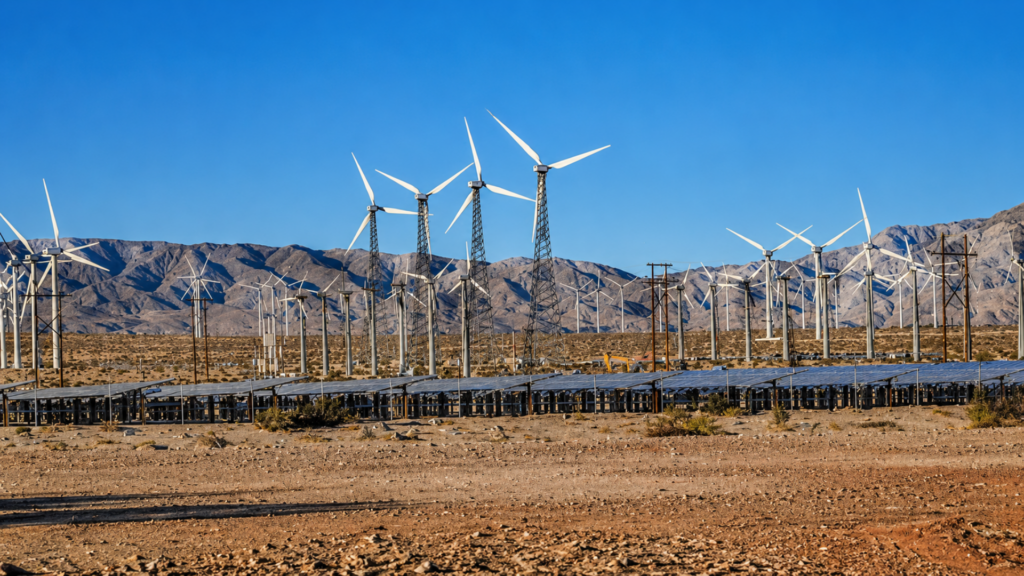
Meanwhile, the market has been moving in the opposite direction of federal policy. Renewable energy accounted for roughly 90% of new electricity generation in 2025. In May 2026, solar power generated more energy in the U.S. than coal for the first time in history, according to a report by Ember, a clean energy think tank. Gore noted that this shift has already changed economists’ projections for future fossil fuel use, calling it “very good news.”
The Moral Math of a Warming World

Gore still frames climate change as a moral issue, not a political one. Asked by Zee if he still believes that after 20 years, he said, “Absolutely,” placing it alongside the abolition of slavery and the fight for women’s suffrage as morally based challenges that humanity has had to confront. He was awarded the Nobel Peace Prize in 2007 alongside the IPCC for efforts to build public understanding of human-caused climate change.
On the question of AI, Gore offered a perspective that surprised some. While he described AI data centers as “a cause for deep concern,” he urged against panic, pointing out that their total emissions are dwarfed by those from uncovered landfills worldwide. He sees AI as a potential tool for cutting emissions by exposing what he called “inefficiencies that are invisible without AI,” treating the technology as a possible accelerant for solutions rather than just an added burden.
What the 20th anniversary of An Inconvenient Truth ultimately reveals is that the scientific debate Gore sparked was settled by the data long ago. The disagreements that remain are about speed, policy, and will, not about whether warming is happening. Gore won the argument. The planet, as he would be the first to acknowledge, is still paying the price for how long it took the rest of the world to listen.
PetsFanatic Team
Pet Care Expert & Content Creator
Passionate about sharing knowledge and tips for better pet care. Writing about everything from pet health to training techniques.