
U.S. Lands Its Major Win After Locating Multi-Million-Ton Critical Mineral Reserve in Nevada

A Nevada mineral system just delivered the largest known tungsten resource in the United States. 3 Proton Lithium confirmed an inferred resource of 1.78 million tons of tungsten at its Railroad Valley Minerals Project in Nye County, more than five times the size of the next largest US deposit, according to the company’s updated resource report. Its in-situ value comes in at roughly $152 billion.
This article was created with the assistance of AI and reviewed by our editorial team for accuracy and clarity.
The Find Lands as America Remains Dependent on Foreign Tungsten

The timing matters. The US stopped mining tungsten commercially in 2015 and now imports the metal while China controls about 80 percent of global supply. 3PL Chairman and CFO Kevin Moore called tungsten the discovery that surprised the company most, noting it is “a metal the United States stopped mining a decade ago and now imports while China controls and manipulates the global market.”
Railroad Valley Holds Four Critical Minerals in One System

Tungsten is not the only prize buried in the Railroad Valley salt complex. The deposit also contains measured resources of lithium, potash, and boron, drawn from the same evaporite basin roughly 100 miles east of Tonopah. 3PL says the combination of four critical minerals in a single system, all at world-class grade, is unusual enough that it changes how the site should be understood.
A Massive Lithium Resource Adds Strategic Weight to the Deposit

Lithium leads the secondary finds. The report documents 31 million tons of measured lithium carbonate equivalent inside a larger 118.9 million ton deposit, placing it among the largest lithium resources in North America. Lithium demand has climbed alongside battery and electric vehicle production, and a domestic resource of this size would reduce reliance on lithium imports from Australia, Chile, and China.
Potash Could Help Reduce a Major US Import Dependency

Potash adds another layer. 3PL reported 533 million tons of measured potash, a mineral the US imports at more than a 90 percent reliance rate. The US Geological Survey added potash to its critical minerals list in 2026, reflecting growing concern over supply concentration in Canada, Russia, and Belarus for a mineral central to fertilizer production and domestic food security.
Boron Pushes the Estimated In-Ground Value to $3.5 Trillion

Boron rounds out the mineral system with 87 million tons of measured borate minerals at concentrations 3PL describes as multiples larger than existing US boron projects. Combined, the tungsten, lithium, potash, and boron resources carry an estimated in-ground value of $3.5 trillion, a figure drawn from 3PL’s own resource report rather than an independent audit.
Extensive Drilling Suggests the Resource May Still Be Understated

The estimate rests on real drilling, not projection alone. 3PL based its report on four deep exploration wells, historical logs from 290 oil wells, more than 2,500 laboratory analyses, and about 42,000 feet of examined drill core and cuttings. Only 10 of the basin’s 37 identified geological layers have been fully evaluated, meaning the current figures likely undercount the total resource.
A NASA Land Withdrawal Now Stands in the Project’s Way

Development faces a real obstacle. NASA withdrew about 17 square miles of the project from mining and exploration in 2023 to protect a satellite calibration site, arguing that mining activity could interfere with instrument accuracy on the flat desert terrain. 3PL is now lobbying to reverse the withdrawal, arguing it predates the full scope of the tungsten discovery.
Solution Mining Could Extract the Minerals With a Smaller Footprint
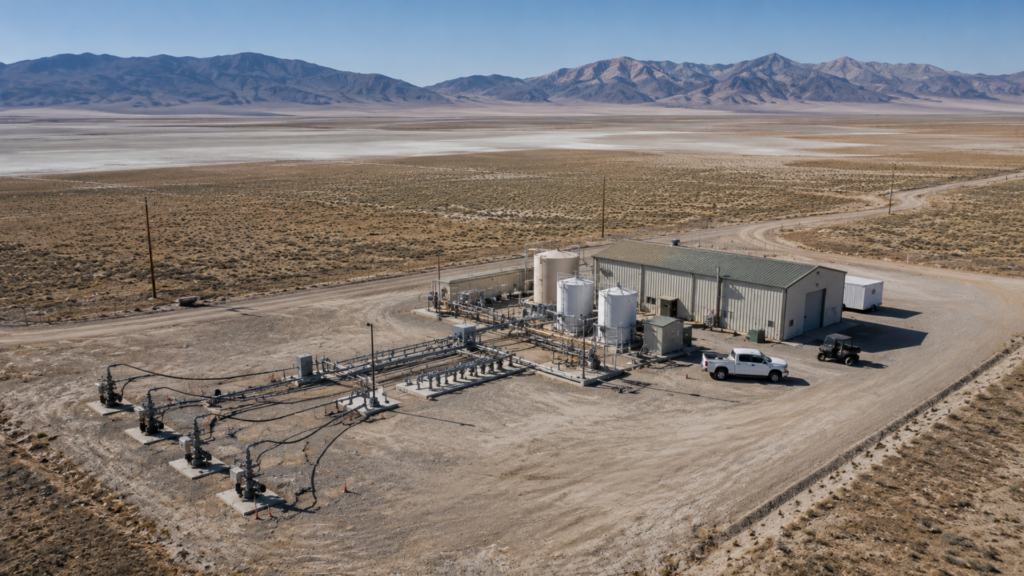
If cleared to proceed, 3PL plans to extract the minerals through solution mining rather than conventional excavation. The process pumps fluids underground to dissolve dissolved salts sitting between 1,200 and 2,800 feet deep, then brings them to the surface for processing. Surface facilities would cover about 80 acres, avoiding the open pits and waste rock storage typical of traditional mining.
Federal Fast-Track Status Puts National Security at the Center

The project holds a FAST-41 Transparency designation meant to speed federal permitting, though the NASA restriction remains unresolved and production is still years away. For Moore, the scale of what 3PL found reframes the entire project. “It is not a mining story,” he said. “It is a national security story.”
PetsFanatic Team
Pet Care Expert & Content Creator
Passionate about sharing knowledge and tips for better pet care. Writing about everything from pet health to training techniques.