
New Study Challenges Human Origins: ‘Two Species’ May Have Left Africa Together

For decades, the story seemed settled: one early human species left Africa and spread across the world. But a new study suggests that version may be far too simple. According to fresh research, at least two ancient human species may have migrated out of Africa together nearly 1.8 million years ago. If confirmed, the finding could rewrite one of the most familiar chapters in human evolution and change how scientists understand our earliest journeys.
The long-standing “Out of Africa” model typically credits Homo erectus as the sole pioneer. But discoveries over the last 25 years have complicated that picture. Fossils found outside Africa don’t always match neatly, raising questions about whether early humans traveled as a single group or as a diverse mix of close relatives exploring new territory at the same time.
A new study published in PLOS One adds weight to the idea that early human migration was more complex. By reexamining famous fossils from the Republic of Georgia, researchers argue that multiple human species may have been part of the first major expansion beyond Africa, not just one evolutionary trailblazer.
The Dmanisi fossils that sparked a scientific debate
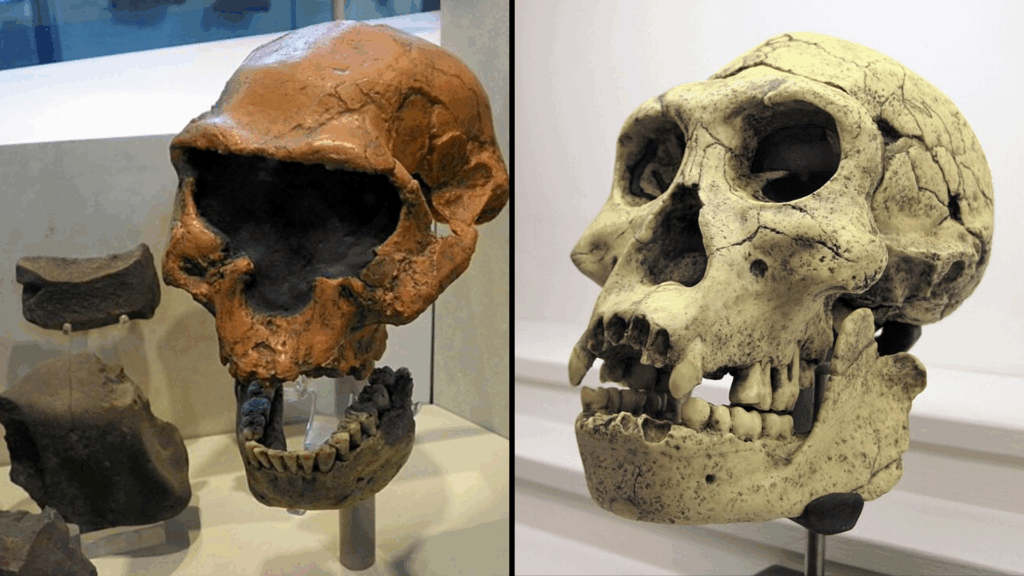
At the center of the debate are five skulls discovered at Dmanisi between 1999 and 2005. These remains represent some of the oldest known humans found outside Africa, but they don’t look alike. Some skulls are relatively small and human-like, while others are larger and more primitive, with pronounced jaws and faces. That variation has puzzled scientists for years.
One fossil in particular, known as Skull 5, stands out. It has a surprisingly small braincase paired with a large, protruding face. Some researchers have argued this could simply reflect male–female differences within one species. Others believe the contrasts are too extreme; hinting that multiple species may have lived together at Dmanisi.
Until now, much of the argument relied on skull shape alone. But skulls are fragile and often distorted over time, making them unreliable as the sole tool for identifying species. That uncertainty left the question unresolved: were these early humans part of one highly variable species, or separate branches of the human family tree?
Why teeth may hold the real answers
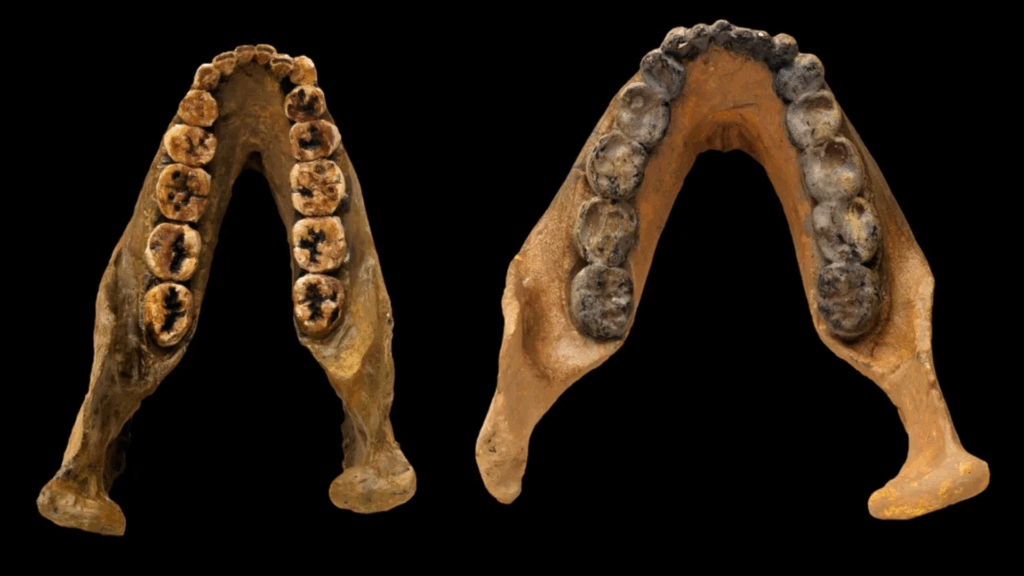
To get clearer answers, researchers led by Victor Nery at the University of São Paulo turned to teeth. Tooth enamel is the hardest substance the human body produces, meaning dental features often survive intact long after skull bones are damaged. Tooth size and shape can offer reliable clues about species differences that skulls sometimes obscure.
The team analyzed the back teeth — premolars and molars — from three Dmanisi individuals with well-preserved dental remains. They compared these to a massive database of 122 fossil specimens, including Australopithecus and multiple Homo species. In total, 583 teeth were examined using statistical mapping techniques.
The results showed a clear split. Teeth associated with Skull 5 clustered with more primitive, ape-like ancestors, while the other Dmanisi specimens grouped with more human-like fossils. The differences were too large to be explained by sex differences alone, even when compared to highly dimorphic animals like gorillas.
A migration story more complex than once believed

Based on the findings, the researchers propose recognizing two species at Dmanisi: Homo georgicus for Skull 5 and Homo caucasi for the more human-like remains. If correct, this would mean two closely related species lived, and likely migrated together during humanity’s earliest expansion beyond Africa.
That idea challenges the classic view of Homo erectus as a lone pioneer species. Instead, early human migration may have been a shared venture, with different species adapting in parallel as they spread into new environments. Such diversity could help explain why early fossils outside Africa look so varied.
While the study strengthens the case for multiple species leaving Africa together, the authors caution that more fossils will be needed to reach full consensus. Still, the research reshapes a familiar story, suggesting humanity’s first great journey may not have been led by one species alone, but by a small crowd of evolutionary cousins stepping into the wider world side by side.
PetsFanatic Team
Pet Care Expert & Content Creator
Passionate about sharing knowledge and tips for better pet care. Writing about everything from pet health to training techniques.