
Two of America’s Largest Reservoirs Just Hit Their Lowest Combined Level Since 1957
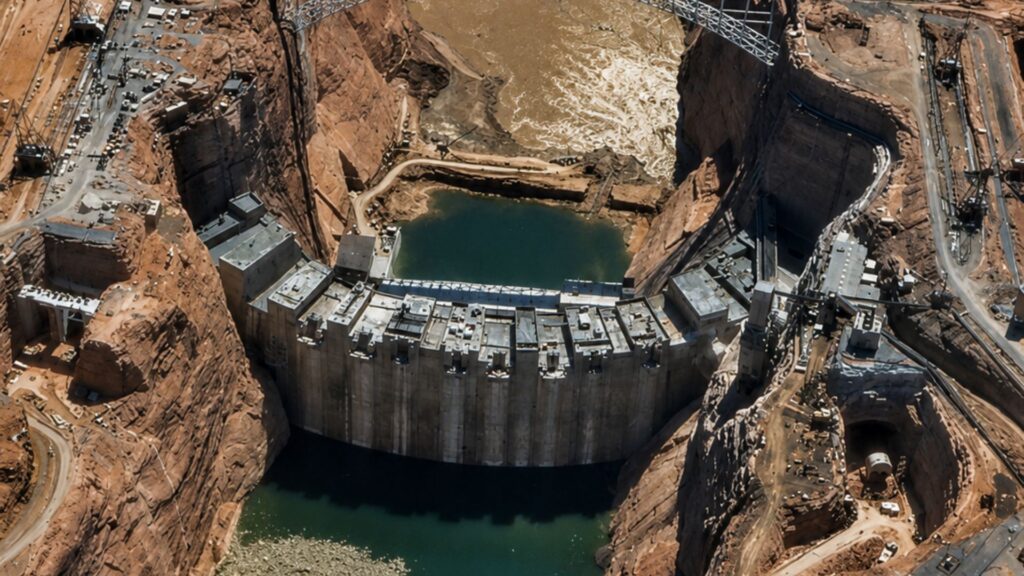
Lake Powell and Lake Mead now hold less water together than at any point since 1957, when Glen Canyon Dam was still under construction and Lake Powell did not yet exist. On July 12, the two reservoirs that anchor the Colorado River system dropped to a combined 12.67 million acre-feet, breaking a record set just two years earlier. Researchers tracking the decline call it a milestone in the river’s deepening crisis, one that threatens water and power for 40 million people across seven states.
Lake Powell Sits Just 34 Feet Above a Power Shutdown

As of mid-July, Lake Powell stood at roughly 3,524 feet above sea level, only about 34 feet above the point where Glen Canyon Dam can no longer generate hydropower. Lake Mead sat just under 1,043 feet. Both reservoirs are now less than a quarter full, with Powell at 23% capacity and Mead at 27%. Neither has recovered from years of shrinking inflows, and both keep dropping by nearly a foot each week.
The Last Time Storage Was This Low, Lake Powell Didn’t Exist

According to the Center for Colorado River Studies at Utah State University, combined storage hasn’t fallen this far since May 1957. Back then, all the water sat in Lake Mead, since Glen Canyon Dam was still being built and river diversion tunnels hadn’t yet closed. Lake Powell didn’t begin filling until 1963. Six decades later, the two reservoirs together hold barely more water than Mead alone held during that construction era.
A River That Powers 700,000 Homes Is Running Dry

The Colorado River irrigates more than 5 million acres of farmland, generates enough electricity for around 700,000 homes, and delivers water to 40 million people. Its headwaters begin in the Rocky Mountains, fed by melting snowpack, before the river crosses seven states and fills Lake Powell and Lake Mead on its way to the Gulf of California. Together, the two reservoirs hold nearly 60% of all water currently stored across the entire basin.
Nearly the Entire Basin Is Now in Drought

Water demand has climbed for 25 years while climate change has brought hotter, drier conditions and shrinking snowpack. Today, 95% of the Colorado River basin sits in drought. Snowpack normally acts as a natural reservoir, slowly releasing water through spring and summer. Last winter offered almost none of it. The western United States recorded one of its driest, warmest winters on record, leaving the region in what experts describe as a snow drought.
Researchers Expect a New Record Every Single Day Until Spring

Both lakes have kept falling since the record was first confirmed. Lake Powell is now at its lowest level ever recorded for the month of July and could hit an all-time low within weeks. Lake Mead sits less than a foot above its own record low, set in July 2022. The researchers predict Lake Mead and Lake Powell will set a new record low for their combined water storage every day from now until next spring, when snowmelt finally returns.
“Hope and Prayer Is No Way to Run a National Water System”

Jack Schmidt, director of the Center for Colorado River Studies and an author of the new analysis, called the decline a milestone that exposes how little water remains stored across the entire basin. He’s pressed for immediate investment in more efficient farm irrigation and smarter crop choices in the driest regions. His warning, detailed in the CNN report, was blunt: relying on winter snow to fix the crisis amounts to wishful thinking, not planning.
Seven States Have Blown Past a Deadline to Share the Shrinking River

Under the 1922 Colorado River Compact, four Upper Basin states split 7.5 million acre-feet a year while three Lower Basin states share another 7.5 million. That math no longer matches reality. A federally imposed February deadline for the seven states to agree on new cuts came and went without a deal. Sarah Porter, director of the Kyl Center for Water Policy at Arizona State University, says states must now sell painful cuts to their own residents.
Officials Promise New Rules as El Niño Offers a Sliver of Hope

Interior Secretary Doug Burgum met virtually with governors from all seven basin states, praising their commitment to finding solutions and pledging that his department “remains focused on establishing a new operating framework.” The Bureau of Reclamation plans to release updated operating guidelines within weeks. Forecasters note El Niño could bring more rain and snow to the Southwest this fall and winter, offering the first real chance at slowing the reservoirs’ decline.
Even Future Snow Can’t Solve It

Even a strong snowpack this winter won’t erase what four consecutive dry years have done to the Colorado River system. Porter warned that record-low storage may finally push states toward the deep, politically painful cuts they’ve avoided for over a year. Schmidt’s assessment cuts through the uncertainty: the basin cannot keep banking on future snow to solve a crisis playing out in real time. The reservoirs will keep falling until policy, not weather, changes course.
PetsFanatic Team
Pet Care Expert & Content Creator
Passionate about sharing knowledge and tips for better pet care. Writing about everything from pet health to training techniques.