
The Wild True Story of the Actress Who Slept Beside 70 Lions. Then One Day, They Mauled Her Family

Tippi Hedren became Hollywood’s golden girl after starring in Alfred Hitchcock’s The Birds. But behind her glamorous facade, she developed an obsession that would consume her life: living with lions. Not in cages—on her couch, in her bedroom, beside her daughter. It was a dangerous love affair with apex predators that nearly destroyed everything she held dear.
Discovered in a Commercial

Alfred Hitchcock spotted Tippi Hedren while watching a commercial on NBC’s Today show. The Minnesota-born model was poised, mysterious, and controlled—everything the director wanted. He sent a cryptic invitation with no audition required. Tippi, a divorced single mother, accepted. One day, she was anonymous; the next, she became America’s newest Hitchcock blonde. Her life would never be ordinary again.
The Making of The Birds
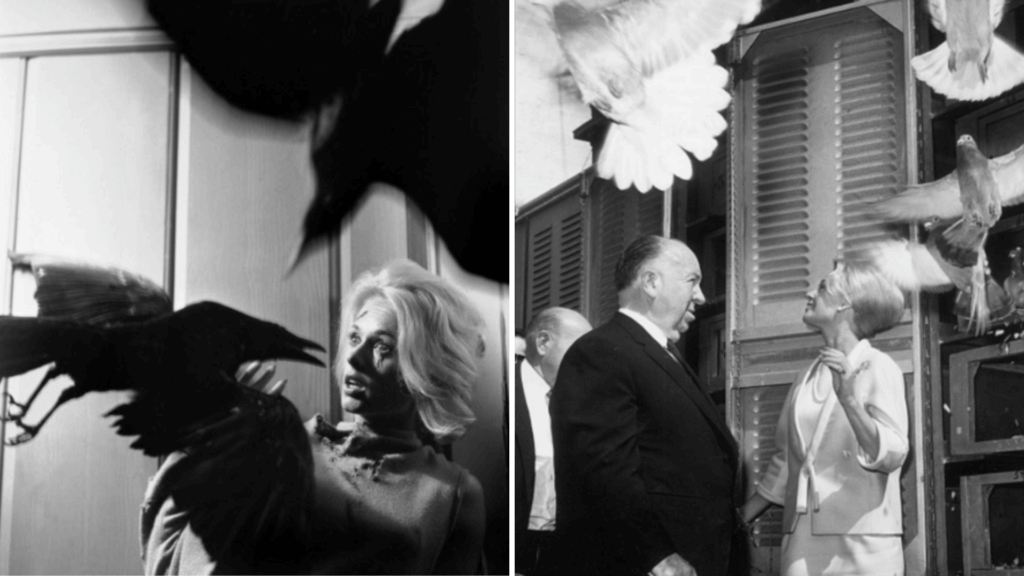
The final week of filming featured live birds—pecking, clawing, and drawing real blood. Tippi’s calm shattered under flapping wings. Between takes, she cried and wore sunglasses to hide bruises. When she collapsed from exhaustion, Hitchcock barely flinched. He wanted authenticity at any cost. Her trust in him—once absolute—was cracking beneath the cage. Something darker was emerging.
When Mentorship Became Obsession

After The Birds, Hitchcock cast her in Marnie, but he became increasingly controlling, even attempting to grab and violently kiss Hedren in the back of a car. He dictated her wardrobe, schedule, and studio interactions. When she refused his advances, consequences arrived quietly. Roles dried up. Phone calls went unreturned. Hollywood once again, loyal to its kingmaker, turned cold. She turned to smaller roles—TV movies, guest appearances, European films. She kept working, but the momentum was gone. She needed a wild redirection.
A Trip That Changed Everything
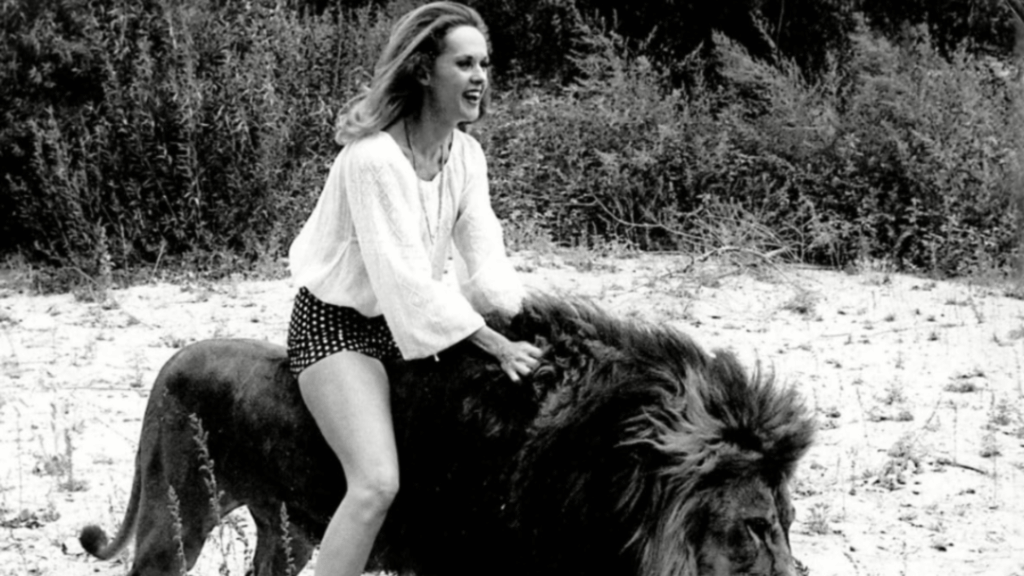
In 1969, Tippi and her husband, Noel Marshall, traveled to Mozambique for Satan’s Harvest and saw an abandoned house overrun by a pride of lions. They watched 30 lions roaming freely under moonlight, needing no fences or barriers. That moment burned itself into Tippi’s imagination. She didn’t just want to remember it—she wanted to recreate it. She wanted to bring that wild freedom home to California.
“Let’s Make a Movie with Real Lions”

Marshall and Hedren discussed making a film about humans living with lions, and their family—including Melanie Griffith—liked the idea and agreed to participate. But they needed authenticity. Real lions. They bought one, then another, then more. Soon, their Sherman Oaks home transformed into a sanctuary. Bedrooms had pawprints. The refrigerator held steaks for creatures with fangs. The line between family home and wildlife preserve disappeared completely.
The 400-Pound Roommate

Neil was their first lion—four hundred pounds of muscle and unpredictable moods. He liked sleeping on beds, licking Tippi’s neck, and knocking over lamps with casual indifference. Life magazine featured him lounging beside teenage Melanie, his head bigger than her torso. Viewers were captivated. Nobody questioned the danger. But lions aren’t pets. Even Neil, the “safe” one, had instincts sharper than any leash could control.
Breakfast with Predators

Morning routines became surreal. Tippi flipped pancakes while a leopard leapt onto the kitchen counter. Melanie brushed her teeth beside a lion licking the porcelain sink. Guests signed waivers. Broken furniture was replaced weekly. Despite the chaos, Tippi insisted they weren’t reckless—they were coexisting. Yet behind every playful pounce was power. They were guests in their own home, and the rules had changed forever.
Melanie’s Dangerous Childhood

Melanie did algebra while a lion lounged nearby, tail flicking, yellow eyes watching. She’d grown up with them, their growls as familiar as rainfall. One afternoon, a lion playfully nipped her ankle and drew blood. Her mother said he didn’t mean it. But the bandage said otherwise. The line between coexistence and danger blurred daily. It was a child who first realized how thin that line really was.
The Neighbors Finally Speak Up

The neighbors tolerated it for months until one lion escaped through a back gate and wandered near a local school. Phone calls flooded animal control. Authorities arrived, stunned but unable to shut them down—Tippi held permits. Officials left with warnings. No fines, no shutdown. But the neighborhood’s nerves were shredded. And the lions weren’t the only ones growing restless as the obsession deepened.
Filming Begins

Once filming began on Roar, no insurance company would cover a set with untrained predators. Tippi and Noel poured their own money into the project, risking everything—house, savings, reputation. Crew members quit. Others stayed until they got scratched, bitten, or hospitalized. There was no safety net, no backup plan. The family eventually accumulated over 150 big cats, including 71 lions, 26 tigers, leopards, and cheetahs.
Reacted Not Acted

Roar was supposed to promote conservation. But reality roared louder. The lions didn’t act—they reacted, and sometimes attacked. Scripts were rewritten around injuries. A scene would begin with hope and end in blood. In another incident, a lion bit Hedren’s neck, a wound that required 38 stitches. The film’s tagline would later read: “No animals were harmed in the making. 70 cast and crew members were”. And filming wasn’t even halfway done. The nightmare was just beginning.
Jan de Bont’s Scalp Nearly Lost

Cinematographer Jan de Bont had his scalp wholly torn off by a lion, requiring 220 stitches. The lion struck from above while he filmed low to the ground. De Bont recalled feeling warmth on his head, then everything went red. Tippi held his hand while waiting for the ambulance. Remarkably, he returned to work after healing. No lawsuits, no resentment. Everyone came back—even knowing it might happen again tomorrow.
No Warning
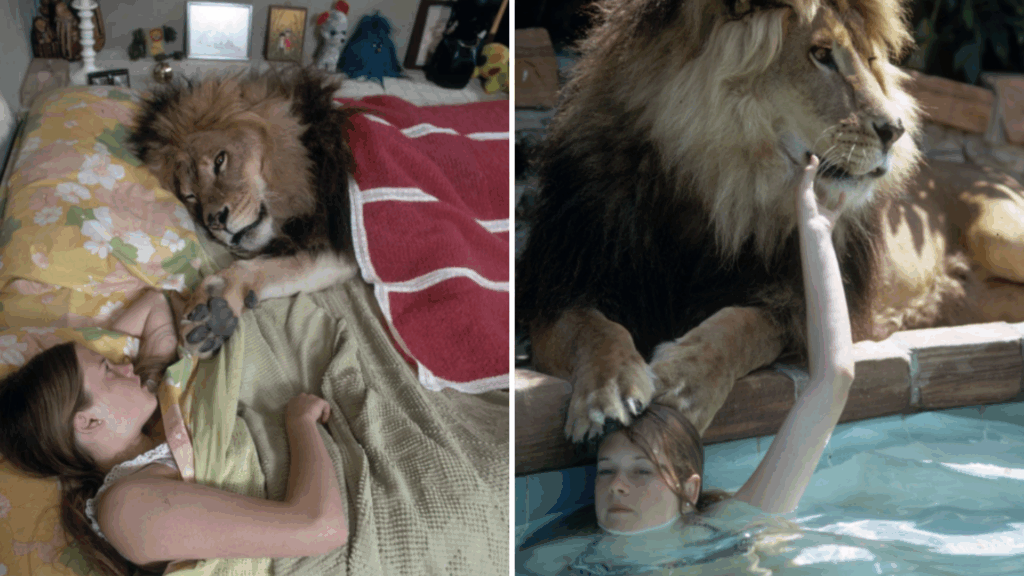
Melanie was mauled by a lion while filming, requiring over 50 stitches and facial reconstructive surgery. The lion lunged with no warning during a bedroom scene. Melanie later admitted, “It was so stupid what we were doing. No one had any idea how dangerous it really was”. She returned weeks later, stitched and shaken. Her stepbrothers, John and Jerry, also suffered serious injuries. The lions weren’t finished yet.
Production Halts, Then Resumes

Production halted when monsoon rains flooded the ranch, mudslides wiped out fences allowing lions to escape, and sheriff deputies shot and killed one of the star male lions. A feline disease decimated their cat population. Wildfires burned portions of the ranch. Financiers pulled out. Tippi and Noel sold everything they owned to keep filming. It took over a year to rebuild and resume. The obsession had become inescapable.
Five Years and 17 Million Dollars

Roar took five years to shoot and cost over $17 million, most from Tippi and Noel’s own pockets. Financial ruin loomed constantly. They had to choose between groceries and film stock. Friends stopped calling. Studios wanted nothing to do with them. Yet the lions still needed feeding. The dream still needed finishing. With every passing month, danger deepened—not just on screen, but everywhere around them.
Box Office Disaster

Released in 1981, Roar made less than $2 million against its $17 million budget. Audiences were confused. Critics were baffled. Roger Ebert called it a fearsome folly. One review joked they should have called it Maul of America. Tippi watched its failure quietly without crying. She was just relieved it was over. But the aftermath of her obsession was only beginning to reveal itself.
A Marriage Destroyed

The making of Roar didn’t just wound bodies—it fractured bonds. Years of financial strain, physical danger, and emotional turmoil ended when Hedren filed for divorce in 1982, citing abuse and securing a restraining order against Marshall. What began as a shared vision ended in separation. The lions remained; the partnership did not. Roar had demanded everything—home, marriage, safety, and left nothing untouched by its claws.
From Chaos to Conservation

In 1983, Tippi created The Roar Foundation and established Shambala Preserve, an 80-acre wildlife habitat in Acton, California. It was to legitimize care for the big cats left behind. She implemented strict no-contact rules for visitors. She told Hollywood Reporter, “We learned the hard way. These are wild animals, not playthings”. Tippi spent the next decades lobbying for animal welfare. She campaigned against exotic pet ownership and fought for federal protections. “No one should own a lion,” she stated firmly.
A Legacy Written in Scars

When asked if she’d do it again, Tippi told The Mirror, “I cringe when I see those pictures now. We were stupid beyond belief”. Yet at 90 years old, she still lives at Shambala with more than a dozen lions and tigers. Her body bears puncture scars and nerve pain. But she never walked away. The lions are distant now—protected, enclosed, respected. They no longer share her bed, but they forever share her story.
PetsFanatic Team
Pet Care Expert & Content Creator
Passionate about sharing knowledge and tips for better pet care. Writing about everything from pet health to training techniques.