
Thousands of Migrating Animals Are Forced to Cross This Dangerous Highway Every Year
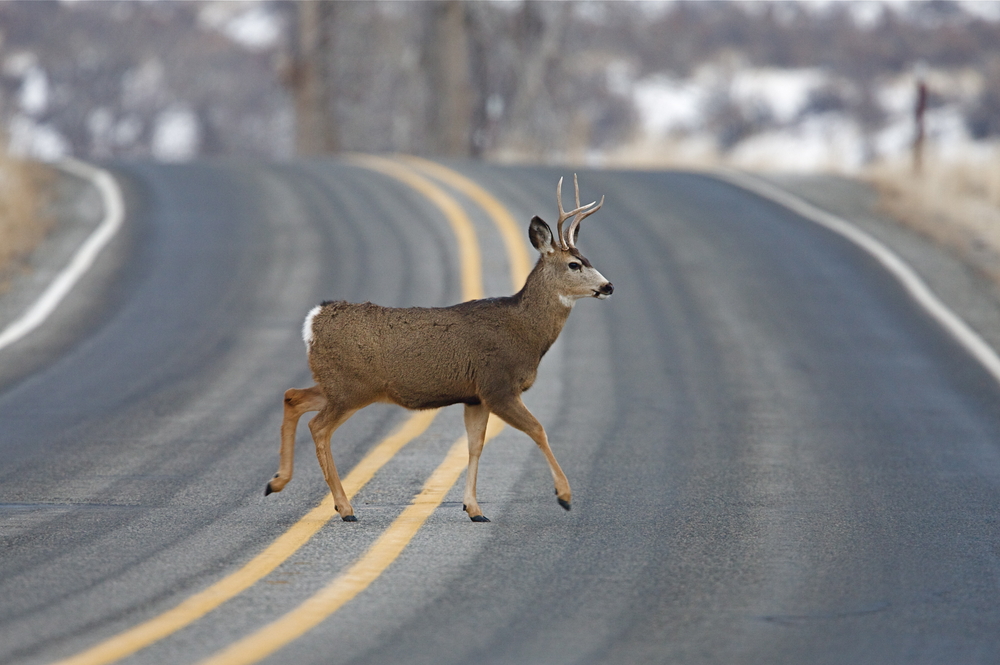
Every year, thousands of mule deer, pronghorn and elk attempt to cross Interstate 80 as they migrate between seasonal ranges in southern Wyoming. What looks like an ordinary stretch of highway to drivers is, for wildlife, a sprawling obstacle slicing through one of North America’s most important migration corridors. Interstate 80 crosses Wyoming through a wide high-desert gap between the northern and southern Rocky Mountains, precisely where animals have traveled for generations.
Wildlife researchers now describe I-80 as the single biggest barrier to big game animals in Wyoming and possibly the entire Northern Rockies. The road doesn’t just create isolated collision hotspots; it fragments an entire landscape. Decades of GPS collar data reveal how animals approach the interstate, hesitate, and often turn back or attempt a dangerous crossing.
The result is a migration bottleneck stretching roughly 400 miles. In some areas, long-distance migration routes that once flowed uninterrupted now functionally end at the highway. For species that rely on seasonal movement to find food and survive harsh winters, that disruption can mean the difference between life and death.
When Instinct Meets Asphalt

One mule deer, known as Deer 959, illustrates just how deadly this crossing can be. GPS data showed the young buck traveling parallel to Interstate 80 for more than 80 miles, deterred by fencing, pavement and traffic. Eventually, he made a run across the four-lane interstate. He survived that first attempt but later died trying to cross again.
His story isn’t unique. Interstate 80 carries heavy traffic across southern Wyoming, and wildlife-vehicle collisions are difficult even to track accurately because animals are often struck and removed quickly amid constant vehicle flow. Biologists have documented how pronghorn and deer pile up against fences during severe winters, unable to reach critical habitat on the other side.
In fact, the problem has been known since the highway’s construction in the early 1970s. During a winter comparable to the deadly 2022–23 season, large die-offs of pronghorn were documented as animals became trapped by fences and blocked from escape routes. What was once open range became a maze of wire and asphalt almost overnight.
The Science Behind the Standstill

It took advances in GPS collar technology to fully reveal how dramatically I-80 alters animal movement. Decades of research now show that the interstate severs habitats on a massive scale. Migration routes originating more than 100 miles away can be truncated when animals encounter the road.
In some places, wildlife still find “leakage points” such as machinery underpasses, bridges and culverts not originally designed for animals. At one site near mile marker 15, remote cameras detected nearly 1,500 mule deer crossings between 2021 and 2023, suggesting hundreds of individual animals still use that structure. These improvised crossings provide rare pockets of connectivity in an otherwise fragmented system.
But these opportunities are scattered and incomplete. Institutional knowledge of where animals cross has historically been fragmented among agencies. Researchers are now working to catalog and map these sites into a centralized handbook, combining architectural drawings, GPS data and real-time monitoring powered by artificial intelligence. The goal: identify where migration still occurs and where small improvements could make a big difference.
Can the Crossing Be Made Safer?
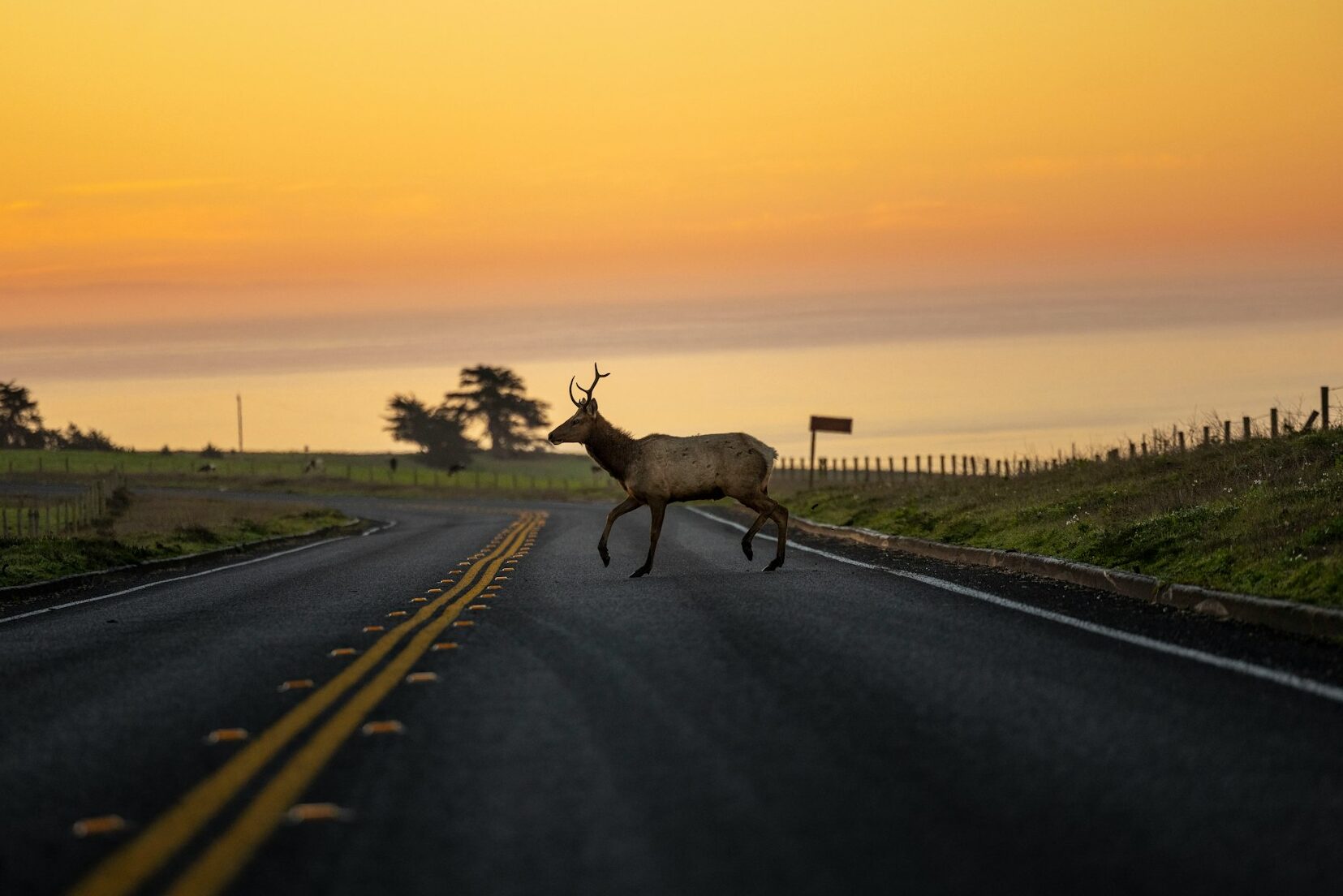
Fixing the entire I-80 barrier would be enormously complex and expensive. Large wildlife overpasses, like those built in other Western states, can cost tens of millions of dollars. One priority stretch near Halleck Ridge has long been identified as a high-need area, but funding remains a major hurdle.
In the meantime, researchers and transportation officials are pursuing smaller, more targeted fixes. Extending high fencing to funnel animals toward existing underpasses, modifying fencing to improve passage and enhancing structures animals already use are considered more attainable projects. These efforts aim to increase what scientists call “permeability”, the ability of wildlife to move across the landscape despite human infrastructure.
The stakes extend beyond individual animals. Migration is a learned behavior, passed down through generations. When connectivity is lost, entire routes can disappear. But if safe passage points are improved and animals “figure it out,” researchers believe some migrations could be reestablished. For thousands of animals each year, the future may depend on whether that narrow window of opportunity remains open.
PetsFanatic Team
Pet Care Expert & Content Creator
Passionate about sharing knowledge and tips for better pet care. Writing about everything from pet health to training techniques.