
These Marsupials Were Thought Extinct for 7,000 Years, Until Now
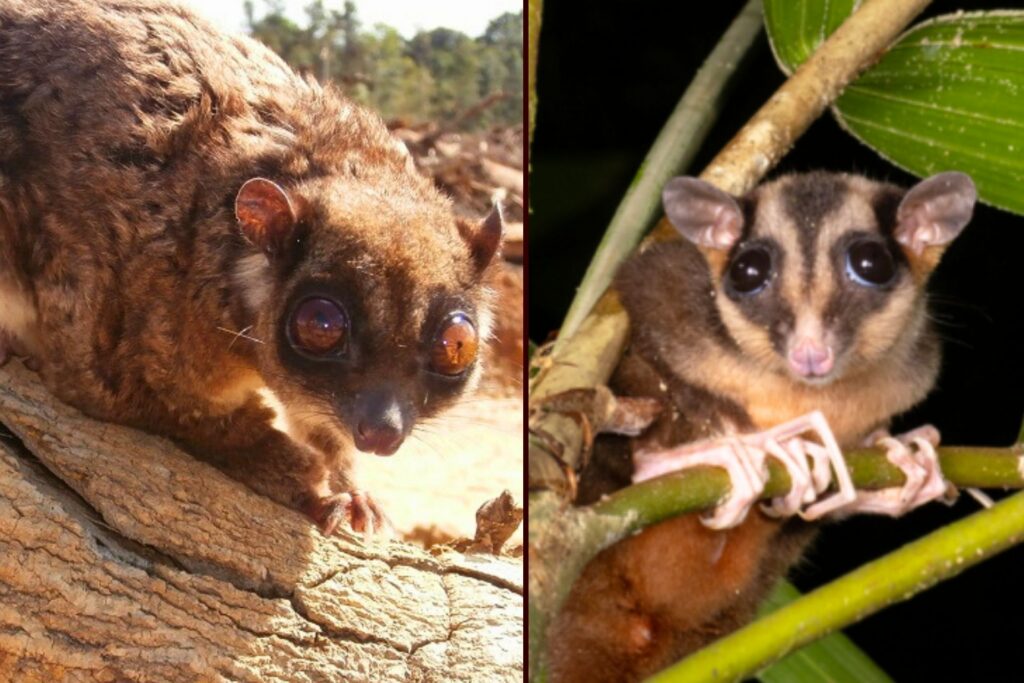
For decades, scientists believed these small forest mammals had vanished thousands of years ago, surviving only as fossil fragments buried in caves. Their names appeared in academic papers, museum drawers and extinction lists. Then, unexpectedly, they reappeared.
In early March 2026, researchers confirmed that two marsupial species once thought extinct for over 6,000 to 7,000 years are still alive in the remote rainforests of New Guinea. The pygmy long-fingered possum and the ring-tailed glider, known previously only from fossil remains, have now been documented as living animals.
The discovery is not just rare. It is extraordinary. Finding one so-called “Lazarus species” is uncommon. Confirming two at once has stunned scientists and sparked fresh hope that other species believed lost may still survive in overlooked corners of the world.
The Two Species That Came Back From the Dead

The first species is the pygmy long-fingered possum, a tiny striped marsupial weighing roughly 200 grams. It has a striking adaptation: one finger on each front paw is dramatically longer than the others. Scientists believe it uses this elongated finger to tap on bark and detect insects hidden beneath the surface.
The second species is even more surprising. The ring-tailed glider, now formally placed in a newly described genus called Tous, is a tree-dwelling marsupial that can glide between branches using a skin membrane. It has large forward-facing eyes, a strong prehensile tail and nests in tree hollows high in the rainforest canopy.
Both animals were originally identified in the 1990s from fossil teeth discovered during archaeological digs in western New Guinea. For decades, those fossil fragments were the only proof they had ever existed. Many researchers assumed the species had disappeared around the end of the last Ice Age.
A Photo, a Museum Jar and Indigenous Knowledge

The rediscovery did not happen overnight. Instead, it unfolded through a mix of careful research, chance encounters and community knowledge.
In one case, a plantation worker in Indonesian Papua photographed a strange gliding marsupial in 2015. That image later caught the attention of scientists, who recognized features that matched fossil remains. Separately, two preserved specimens of the pygmy long-fingered possum were found in a jar at the University of Papua New Guinea, suggesting the species had survived far more recently than previously believed.
Citizen scientists also played a role. Wildlife observer Carlos Bocos uploaded photos of the pygmy long-fingered possum to iNaturalist. Those images helped confirm the species’ continued existence and ultimately earned him co-authorship on the scientific study. At the same time, Indigenous communities in the Tambrauw and Maybrat regions provided critical knowledge about the animals’ behavior and habitat, helping researchers confirm what fossils and photographs alone could not.
Why This Discovery Matters for the Future

Scientists refer to these animals as “Lazarus species,” meaning organisms that reappear after being thought extinct. While there are famous examples, such as the coelacanth fish rediscovered in the 20th century, finding two mammals presumed gone for millennia is exceptionally rare.
The ring-tailed glider, now classified in the new genus Tous, represents a distinct evolutionary branch of the marsupial family tree. Establishing a new genus is an uncommon scientific event. It means this lineage has been separate for millions of years and survived quietly in forests that are now under increasing pressure from logging and agricultural expansion.
However, rediscovery does not guarantee safety. Both species appear to live in restricted rainforest habitats that face growing threats. Researchers have intentionally withheld precise locations to prevent wildlife trafficking. Conservationists now say the next chapter is protection. These animals survived thousands of years in hidden forests. Whether they survive the next few decades depends on how well those forests are preserved.
PetsFanatic Team
Pet Care Expert & Content Creator
Passionate about sharing knowledge and tips for better pet care. Writing about everything from pet health to training techniques.