
These Endangered Frogs Lost Their Poison, and Scientists Want to Bring It Back

Some of the world’s most endangered frogs share an unusual problem. Raised safely in captivity for conservation programs, many have lost the poison that once protected them in the wild. Species in the Atelopus genus, along with several poison dart frogs, no longer carry toxins that kept predators away. Scientists at multiple institutions are now working out how to bring that defense back before release.
It comes down to how these frogs get their toxins in the first place. Most amphibian poisons aren’t produced internally. Instead, frogs absorb them through diet, from ants, mites, and other invertebrates found in native habitats. Captive programs feed frogs a limited menu, usually crickets and fruit flies, to keep colonies healthy. Without those wild insects, frogs raised in zoos grow up harmless, even though their genetics never changed.
The trouble starts once conservationists try to release these frogs back into their original habitats. Bright warning colors that once signaled danger no longer match reality, so predators that evolved to avoid these frogs may eat them instead. For species already pushed toward extinction by disease and habitat loss, losing a built-in defense adds one more obstacle between captive breeding and a lasting return to the wild.
A Deadly Fungus Made the Missing Toxins Even More Urgent
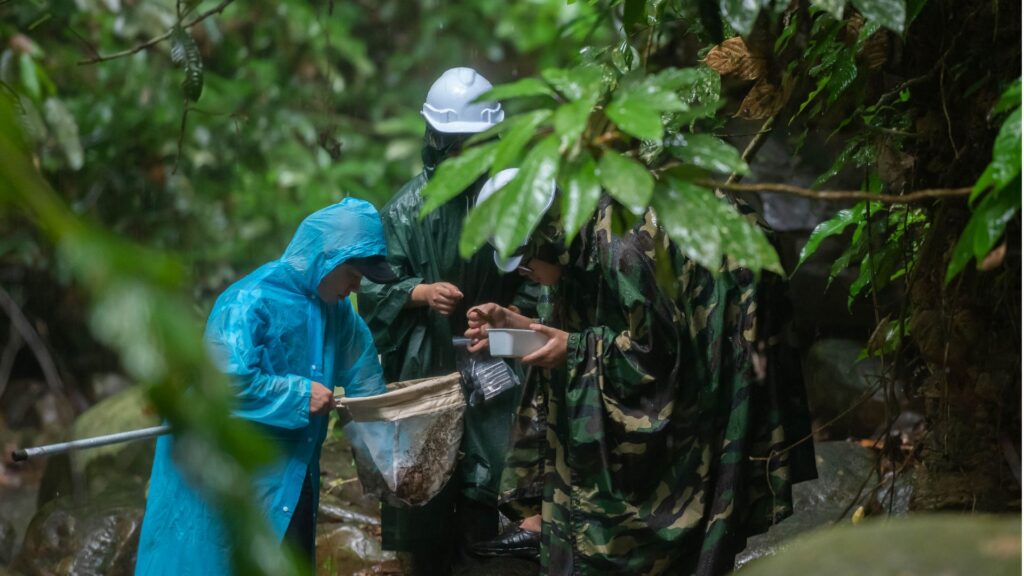
Panama’s harlequin frogs, part of the Atelopus genus, show what that looks like in practice. A fungal disease called Batrachochytrium dendrobatidis, or Bd, has caused at least 90 amphibian extinctions since the 1970s, including the Panamanian golden frog, unseen in the wild since 2009. Conservationists began collecting individuals decades ago to build insurance populations in zoos, hoping to reintroduce them once the disease threat eased.
In 2017, Brian Gratwicke, a Smithsonian conservation biologist working with the Panama Amphibian Rescue and Conservation Project, and his team released 83 captive-bred Limosa frogs to study how they’d fare outdoors. Several were eaten almost immediately by predators, including whip scorpions and fishing spiders, that rarely bother wild Atelopus. Chemical testing afterward explained why. The captive-raised frogs had lost tetrodotoxin, a potent neurotoxin also found in pufferfish and blue-ringed octopuses.
Chemist Phillip Jervis notes that tetrodotoxin appears in unrelated animals across the tree of life, and its exact source in these frogs remains unknown. Candelario Rodriguez, a chemist at Panama’s Coiba Scientific Station, has found the toxin concentrated in the skin, gastrointestinal tract, kidneys and liver, a pattern that points back to diet.
Researchers Are Testing Ways to Restore the Toxins

At the Smithsonian’s National Zoo and Conservation Biology Institute, postdoctoral researcher Luke Linhoff and his team took a more direct approach with two poison dart frog species, the Geminis’ and Vicente’s dart frogs. They began dosing crickets and fruit flies with decahydroquinoline, an alkaloid toxin, before feeding the insects to adult frogs every other day, hoping the animals would store the compound in their skin the way wild frogs naturally do.
To track results, researchers use a device called a transcutaneous amphibian skin stimulator, which delivers a tiny pulse that prompts a frog to release toxins through its skin. A small swab collects the sample without harming the animal, then it’s sent to Dr. Ralph Saporito at John Carroll University for mass spectrometry analysis. The same team is also studying whether toxin supplements given to mother frogs pass through to their tadpoles.
Gratwicke’s team has tried other methods with harlequin frogs. In one 2018 trial, they placed variable harlequin frogs in enclosed rainforest tents for 79 days. The frogs regained some natural gut bacteria, but tetrodotoxin still didn’t appear. In a separate attempt, the team legally imported synthetic tetrodotoxin and fed it to frogs through moth larvae, a test whose results are still under review.
Why the Search for a Lost Toxin Still Matters

For the Panamanian golden frog, restoration is especially complicated. Its signature toxin, zetekitoxin, was described in 2003, just years before the species disappeared from the wild. Because no living golden frogs carry it today, researchers can’t study a wild sample. Instead, Tim Cernak, a chemist at the University of Michigan, is examining frog specimens preserved since the 1960s, hoping decades-old tissue still holds traces of the missing compound.
That researcher believes zetekitoxin may be chemically related to saxitoxin, a more common natural compound, and is using computer modeling to trace how one might convert into the other. In August 2025, Gratwicke’s team released captive-bred golden frogs into a controlled Panama test site for the first time since 2009. Over 12 weeks, about 70 percent of the 100 frogs died from the fungal disease, but skin samples from survivors are now being analyzed for toxin clues.
Even with these experiments underway, much about these toxins remains unmapped. As Candelario Rodriguez, a chemist at Panama’s Coiba Scientific Station, puts it: “You cannot preserve if you don’t understand the system.” For now, most of these frog species survive only because of human care. Learning to restore their natural defenses may be what eventually lets them return to the wild for good.
PetsFanatic Team
Pet Care Expert & Content Creator
Passionate about sharing knowledge and tips for better pet care. Writing about everything from pet health to training techniques.