
The Mystery Behind the Massive 27‑Ton Sealed Black Sarcophagus and What Archaeologists Found Inside

A massive sealed black granite sarcophagus discovered in the Egyptian city of Alexandria has captured global attention due to its enormous size, age, and mystery surrounding its contents. The coffin, weighing an estimated 27 tonnes and dating back over 2,000 years to the early Ptolemaic era, has intrigued historians and archaeologists since its discovery during construction work in the Sidi Gaber district. Its intact condition, sealed for centuries, sparked speculation about the identity of whoever was buried inside and whether the tomb might contain treasures or clues about ancient rulers.
Rumors ran wild as news of the find spread, with social media and history enthusiasts conjecturing everything from lost pharaohs to mythical curses hidden within the sarcophagus. Some speculated it might even contain the remains of famous figures like Alexander the Great, whose final resting place has never been confirmed by historians. However, experts cautioned that such theories were unlikely without evidence, noting that sarcophagi of this scale were rare but not unheard of in elite burials of the period.
The discovery was significant not only because of its size, nearly 9 feet long, 5 feet wide and 6 feet tall but also because it appears to have remained untouched since its burial, providing a rare opportunity to study a sealed tomb from antiquity. Archaeologists took great care in accessing the interior to preserve whatever evidence remained, setting the stage for a remarkable revelation about the people interred within.
What Was Found Inside the Sarcophagus

When archaeologists finally opened the tomb with the help of Egyptian military engineers, they were met with a powerful odor that forced them to pause initial work before proceeding more fully. Inside, the massive sarcophagus contained three skeletal remains submerged in reddish‑brown liquid that had seeped in over the centuries, likely from old sewer contamination that breached the burial chamber. The skeletons were poorly preserved, with only bone remaining, but they offer valuable insight into burial practices and life during the Ptolemaic period.
Officials from Egypt’s Supreme Council of Antiquities said that the bones appeared to belong to three individuals, possibly a family, though further analysis will be needed to confirm their identities and relationships. One skull displayed signs of trauma that may indicate an arrow injury, suggesting at least one of the individuals could have died violently or in conflict. Although no inscriptions or artifacts were immediately apparent, the presence of skeletal remains in such a rare intact sarcophagus is itself a noteworthy archaeological find.
The foul smell upon opening and the lack of well‑preserved mummies dashed early hopes of finding extraordinary treasures or artifacts within, but archaeologists remain optimistic that careful study of the bones and any trace material could yield clues about their lives, health, and the society in which they lived. These findings will be conserved and studied further at the Alexandria National Museum, where researchers hope scientific analysis will provide more context about these individuals.
Why the Discovery Matters

The 27‑ton sarcophagus is the largest of its kind ever found intact in Alexandria, making it a rare and valuable archaeological discovery that sheds light on burial customs during the Ptolemaic period, when Greek and Egyptian cultures intersected. Its sheer size suggests that whoever was buried inside was of significant status, even though no inscriptions survive to identify them or explain their prominence. The absence of inscriptions or luxury goods also raises questions about the nature of the tomb and the people who commissioned it.
The find also debunks dramatic speculation about curses or hidden treasures, with officials emphasizing that no supernatural effects have occurred following the sarcophagus’s opening. Egypt’s antiquities authorities conducted the operation with caution and humor, noting that fears of ancient curses are unfounded and rooted more in popular myth than historical reality. While no treasures were immediately visible, the discovery still advances understanding of ancient burial practices and the diversity of interment styles in the ancient Mediterranean world.
As researchers continue to analyze the skeletal remains and surrounding material, they hope to gain insights into who these people were, how they lived, and why they were buried together in such a monumental coffin. Advanced techniques like DNA testing, isotope analysis, and radiocarbon dating could provide a deeper picture of the individuals and possibly connect them to broader historical narratives of the Ptolemaic era. Such further study ensures that this sarcophagus will remain a subject of scholarly interest for years to come.
Unsealed History Beneath Alexandria
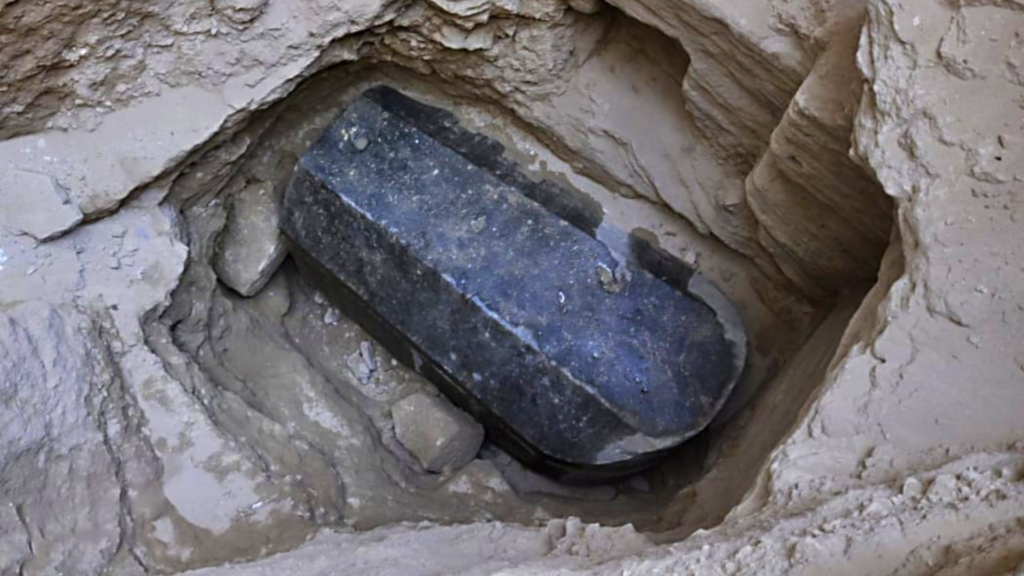
The opening of the massive sealed black sarcophagus in Alexandria has resolved some mysteries while leaving others open, transforming speculation into concrete evidence about ancient lives. While it did not reveal royal treasures or a dramatic pharaoh’s curse, the discovery of three skeletons and ancient burial context remains a rare glimpse into a long‑buried past. This find deepens understanding of funerary traditions and offers future opportunities for scientific inquiry into one of Egypt’s most fascinating archaeological discoveries.
The careful study and preservation of these remains and any associated materials will help archaeologists piece together the story of these individuals and the time in which they lived, contributing valuable data to the history of the Mediterranean world. As research progresses, experts hope to unravel more details about the sarcophagus’s origins and the people interred within it, providing fresh perspectives on ancient burial practices.
Ultimately, the mystery of the 27‑ton sealed black sarcophagus highlights both the enduring allure of ancient Egypt and the rigorous methods modern archaeologists use to separate myth from evidence, reinforcing how discoveries like this continue to enrich our understanding of human history.
PetsFanatic Team
Pet Care Expert & Content Creator
Passionate about sharing knowledge and tips for better pet care. Writing about everything from pet health to training techniques.