
The 10 Largest Animals in the World

Our planet is home to creatures that defy easy comparison. Defining “largest” isn’t simple, as size can be measured by weight, length, height, or body mass, and each metric tells a different story. Yet some animals clearly stand apart. The Goliath beetle can lift 850 times its own weight. The blue whale weighs 180 tons. Between insects that rival small birds and whales that dwarf ocean vessels, this collection spans the full spectrum of extreme size across the animal kingdom.
Blue Whale

The blue whale holds the record as the largest animal to have ever lived, reaching weights approaching 180 tons and stretching to 30 meters in length. Its tongue matches an elephant in weight, its heart rivals a car, yet this enormous creature sustains itself on krill, tiny shrimp-like crustaceans distributed throughout Earth’s oceans. According to the Natural History Museum, blue whales can consume up to four tonnes of krill daily, submerging to depths around 500 meters to capture their food through filtration. Sharks, killer whales, and ship collisions remain significant threats, with many individuals perishing annually from vessel impacts.
African Elephant
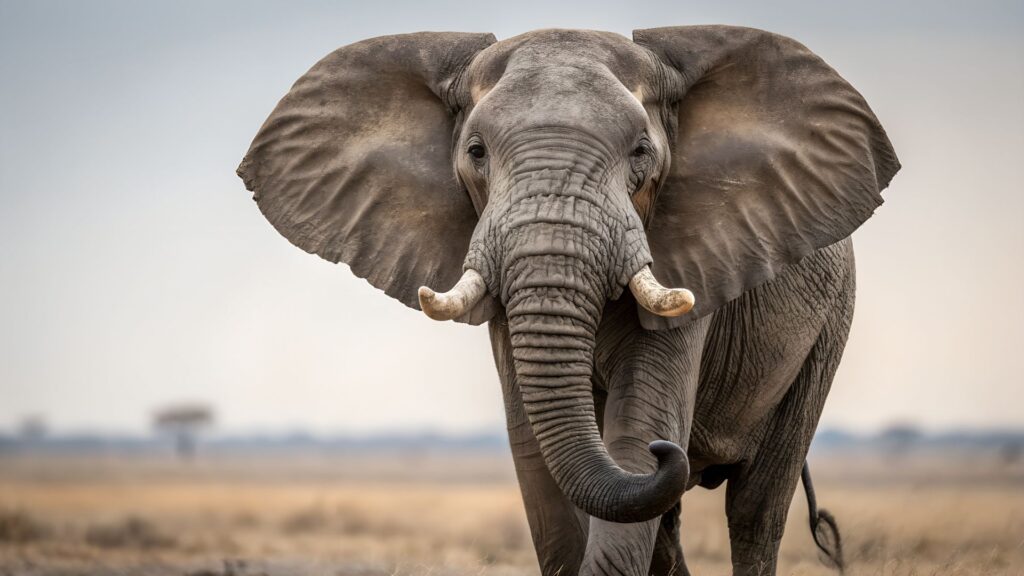
Standing as the largest terrestrial animal on Earth, the African elephant weighs up to 7 tons and measures 4.2 meters tall at the shoulder. From trunk tip to tail, an adult spans over 10 meters in length. The species claims another distinction: the longest pregnancy of any land mammal at 22 months, with calves born weighing around 90 kilograms and standing approximately a meter tall. Elephants organize into family units led by matriarchs, maintaining powerful emotional bonds throughout their lifespans through exceptional memory and deep social connections.
Giraffe

Giraffes dominate the East African grasslands as the world’s tallest mammals, standing between 4.8 and 6 meters high with necks alone measuring 1.8 meters. Newborns enter the world already 2 meters tall after a 15-month gestation. Their 50 to 53-centimeter tongues are perfectly adapted for reaching leaves that other animals cannot access on tall trees. Among mammals, giraffes rank among the lightest sleepers, averaging just four hours nightly, often resting with necks curved across their bodies or dozing while upright.
Whale Shark

At approximately 12 meters long and weighing up to 22 tons, the whale shark reigns as Earth’s largest living fish. These gentle filter feeders can live 100 years, migrating annually across the Atlantic, Pacific, and Indian oceans, with Mexico serving as a notable pit stop along their route. Despite their size, they’re harmless to humans, subsisting entirely on plankton. Their feeding strategy is ingenious: they gulp enormous mouthfuls of seawater and filter out prey, processing more than 1,400 gallons per hour through specialized structures called baleen.
Polar Bear

Polar bears reign as the largest land carnivores, their dimensions shifting based on stance. On all fours at the shoulder, they stand 1 to 1.5 meters tall; rising on hind legs pushes males past 3 meters. Head to rump they stretch 2.2 to 2.5 meters, with tails adding another 7.5 to 12.5 centimeters. Beyond sheer size, they possess intelligence that surpasses most land animals. Their navigation abilities outpace human capacity, memories span years, and they employ tools strategically, from play to hunting to problem-solving.
Saltwater Crocodile

Saltwater crocodiles, also called estuary crocodiles, reign as the largest living reptiles on Earth. Average males measure around 5 meters in length and weigh approximately 500 kilograms, while females are considerably smaller, typically measuring just under 3 meters and weighing less than 100 kilograms. The largest saltwater crocodile ever recorded stretched 6.3 meters long, though historical specimens may have exceeded 7 meters in length. These massive individuals likely weighed between 1,500 and 2,000 kilograms, though such giants rarely exist today due to intensive hunting pressure on the largest specimens.
Ostrich

Flightless yet unmatched among birds, the ostrich towers at 2.7 meters and weighs up to 145 kilograms. Their eyes dominate: at 5 centimeters in diameter, they’re the largest of any land animal. The eggs are equally outsized, measuring 15 centimeters long and weighing as much as two dozen chicken eggs. Paradoxically, ostrich eggs are the smallest relative to adult body size of any bird species. Their legendary running speed stems partly from an unusual adaptation: two-toed feet resembling hooves, streamlined for ground sprinting rather than the three or four toes typical of other birds.
Giant Chinese Salamander

The giant Chinese salamander reigns as the world’s largest amphibian, reaching lengths up to 1.80 meters and weighing up to 50 kilograms. Unlike other salamander species, this animal is entirely aquatic, dwelling exclusively in the rivers and mountain streams of China. Primarily nocturnal with poor vision, they rely on sensory nodules throughout their bodies to detect prey. Their vocalizations bear such resemblance to a child’s cry that their Chinese name translates literally to “baby fish.” Conservation efforts are urgent, as their population has declined approximately 80 percent since the 1950s due to habitat destruction, contamination, and excessive hunting for culinary purposes.
Colossal Squid

Deep below the surface at depths exceeding 1,000 meters, colossal squid remain among Earth’s most elusive creatures. Online speculation frequently inflates their size, with exaggerated claims of 18 to 27 meters in length. Scientific specimens document lengths of around 14 meters and weights of nearly 500 kilograms. Their most striking feature, enormous eyes spanning 25 centimeters in diameter, rank among the largest in the animal kingdom. These creatures hunt large fish and smaller squid species. Sperm whales represent their primary known predator, though other deep-diving marine mammals also feed on juveniles and young adults in Antarctic waters.
PetsFanatic Team
Pet Care Expert & Content Creator
Passionate about sharing knowledge and tips for better pet care. Writing about everything from pet health to training techniques.