
Study Finally Reveals Why Orange Cats Are Genetically Different From Every Other Mammal

About 80% of orange house cats are males, a mystery that has baffled scientists for over a century. Among all mammals that come in orange shades, domestic cats are the only ones whose coloring is so tightly bound to sex. Chris Kaelin, a geneticist at Stanford Medicine, believes he has the answer. In a 2025 study, Kaelin and colleagues report they’ve pinpointed a peculiar genetic mutation behind the orange coat, and it’s unlike anything seen in any other mammal.
A Gene Never Linked to Coat Color Holds the Answer

Kaelin’s team found a tiny deletion on the X chromosome that causes a gene named Arhgap36 to turn on in pigment cells. This gene had never been associated with coat color in any species. In humans, Arhgap36 is linked to certain neuroendocrine tumors and plays a role in cell signaling during development. Its unexpected activation in cat pigment cells blocks a late step in the melanin production pathway, effectively flipping the fur’s palette from dark to bright orange.
Only 20% of Orange Cats Are Female

“The orange mutation affects a gene on the X chromosome,” Kaelin told ZME Science. “In mammals, males have a single X chromosome and therefore one copy of the orange gene, whereas females have two X chromosomes and two copies.” Females need both copies to appear fully orange, which is rare. Most end up displaying a mosaic of orange and black fur, the patchwork patterns commonly referred to as tortoiseshell or calico, caused by random X inactivation.
Orange Fur in Other Species Uses Different Genes Entirely

In most mammals, orange or yellowish fur results from mutations in one of two specific pigment genes, but these genes aren’t sex-linked and show up in both males and females alike. “In a number of species that have yellow or orange pigment, those mutations almost exclusively occur in one of two genes, and neither of those genes are sex-linked,” Kaelin said. Domestic cats break this pattern entirely, operating through a mechanism unique among all mammals.
Advanced Tools Cracked the Century-Old Mystery

To find the mutation, Kaelin’s team combed through the genomes of orange cats using DNA samples from spay and neuter clinics. They relied on advanced genomic tools that weren’t available just a decade ago. Scientists had known they were chasing a mutation unique to the feline X chromosome, but until now, the exact spot remained elusive. The breakthrough came from technology that allowed researchers to identify the precise deletion causing Arhgap36 activation in pigment cells.
The Mutation Dates Back to Medieval Times

The mutation isn’t recent but ancient enough that medieval paintings from the 12th century already depict calico cats lounging in the margins. This suggests the mutation emerged early in the history of feline domestication and perhaps flourished under human influence. “Although we discovered the mutation years ago, the challenge was understanding how it affects coat color,” Kaelin said. “The mutation alters gene activity instead of disrupting the gene itself.”
The Gene Activates in the Wrong Tissue Type

“Certainly, this is a very unusual mechanism where you get misexpression of a gene in a specific cell type,” Kaelin noted in a press release. Instead of directly affecting pigment genes, the mutation causes Arhgap36 to activate in cells where it normally wouldn’t appear. The mutation alters gene activity rather than disrupting the gene itself, and the affected gene codes for a protein that functions differently from what researchers could infer without experimentation.
The Mutation Appears Specific to Pigment Cells
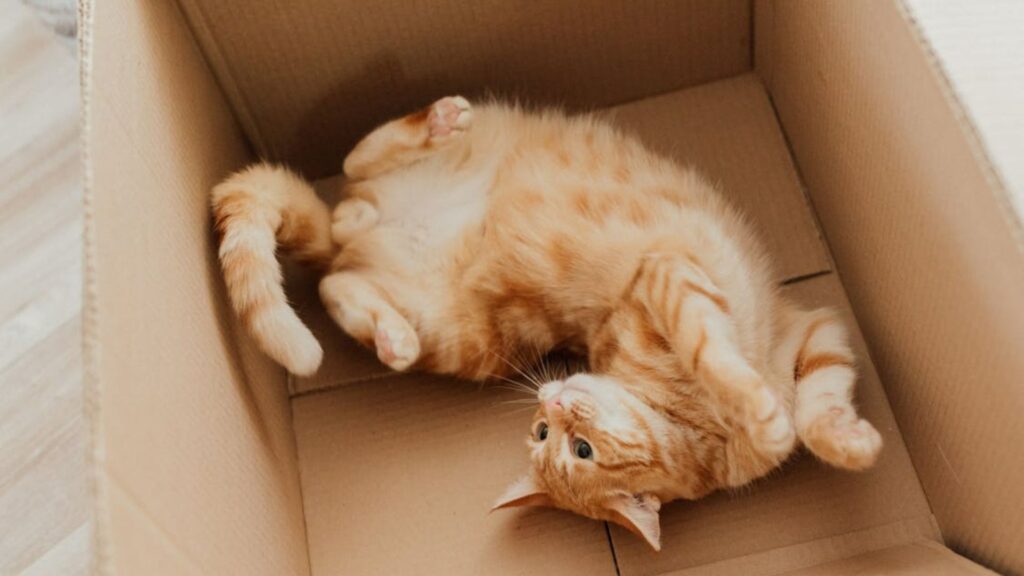
Owners often describe their orange cats as having bold, lively personalities, but researchers explored whether the genes behind their hue do more than affect coat color. The team scanned non-skin tissues, including the kidney, heart, brain, and adrenal gland, and found no difference in Arhgap36 expression between orange and non-orange cats. “The expectation, based on our observations, is this is highly specific to pigment cells,” Kaelin said. Orange cats’ alleged mischievousness might be more about who gets the gene than what it does.
Behavioral Effects Can’t Be Ruled Out

While tissue analysis showed the mutation affects only pigment cells, Kaelin noted they haven’t tested all tissues. “I don’t think we can exclude the possibility that there is altered expression of the gene in some tissue we haven’t tested that might affect behavior,” he added. “However, our survey of gene activity was limited to specific tissues.” The findings offer a textbook example of how new biological traits can arise through unexpected pathways and molecular hiccups.
How a Molecular Mistake Made Orange Cats

Misexpression of a gene, a switch flipped in the wrong tissue, a molecular hiccup gave rise to the beloved orange coat. The discovery reveals how new biological traits can emerge through unexpected mechanisms. “Color traits in mammals are a useful scientific tool for understanding how genes function and interact,” Kaelin said, “and also a great vehicle for communicating scientific concepts to non-scientists.”
PetsFanatic Team
Pet Care Expert & Content Creator
Passionate about sharing knowledge and tips for better pet care. Writing about everything from pet health to training techniques.