
Study Finds Solar Eclipses Change Bird Behavior in a Surprising Way

On April 8, 2024, scientists used a total solar eclipse stretching 2,500 miles across North America to study how birds react when darkness suddenly falls. Fourteen recording units around Bloomington, Indiana, captured more than 100,000 bird vocalizations, while nearly 1,700 citizen scientists submitted over 11,000 observations through a smartphone app called SolarBird. The results showed that most bird species experienced disruption in their daily rhythm during the brief period of totality, when the moon covered the sun’s face.
The Eclipse Created a Four-Minute ‘Night’ Across North America

The total solar eclipse traversed from Mexico’s Pacific Coast through Texas and across 14 other U.S. states into Canada, creating a unique opportunity for researchers. The period of totality lasted about four minutes depending on location. While crowds gazed skyward at the spectacle, scientists focused on documenting vocal behavior changes in birds during the lead-up to spring reproduction. An artificial neural network model called BirdNET analyzed the recordings to identify individual species making specific songs and calls.
Light Controls Bird Behavior More Powerfully Than Expected
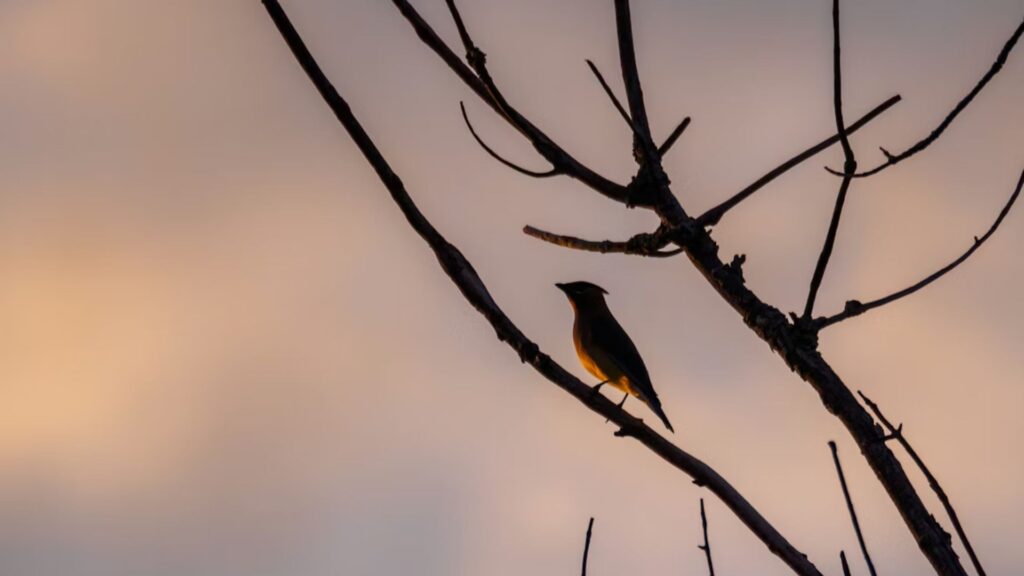
“Light is one of the most powerful forces shaping bird behavior, and even a four-minute ‘night’ was enough for many species to act as if it were morning again,” said Liz Aguilar, a doctoral student in evolution, ecology and behavior at Indiana University and lead author of the study published in the journal Science. The research revealed just how sensitive some birds are to changes in light. According to study co-author Dustin Reichard, a biology professor at Ohio Wesleyan University, these shifts trigger changes in hormone levels and gene expression that alter behavior.
Birds Sang Dawn Chorus When Sunlight Returned

When the sunlight began to return after totality, some species produced their customary dawn chorus, as if greeting a new day. The study offered the most comprehensive look yet at bird behavior during an eclipse, combining high-tech recording equipment with crowdsourced observations. While there had been anecdotal evidence and some research on individual species, this study captured multiple species simultaneously, revealing patterns that smaller-scale research never could.
29 Out of 52 Species Changed Their Vocal Patterns

A total of 52 species were documented around Bloomington, with 29 exhibiting significant changes in their vocal behavior as the eclipse occurred compared to a normal April afternoon. The researchers found that species known for the most intense dawn choruses were also the ones most likely to react to the eclipse. “Different bird species greet the dawn in very different ways. Some have loud, elaborate dawn choruses, while others are much quieter,” Aguilar explained. Those with the boldest morning songs proved most affected by the sudden darkness.
American Robins Increased Vocalizations Six Times Normal Levels

American robins, known for singing very early in the morning while it is still dark, had one of the largest increases in vocalizations during and just after totality. Their vocal activity jumped six times higher than on a non-eclipse afternoon. The researchers compared eclipse-day recordings to typical April afternoon patterns to measure these shifts. Robins naturally sing in low light conditions, which may explain why they reacted so strongly when darkness briefly fell and then lifted.
Barred Owls Became Four Times More Vocal After Totality

Barred owls vocalized four times as much as on a non-eclipse afternoon just after totality ended, when light levels resembled the dawn or dusk periods when their activity normally increases. The owls became active as the sun reemerged and conditions looked like twilight. While some birds reacted during the darkness itself, barred owls showed their strongest activity during the return to daylight, matching the transitional lighting when they naturally become more vocal.
Not All Birds Reacted to the Sudden Darkness

While most species showed changes in vocal behavior, not all birds were affected by the eclipse. Some species fell silent during totality, while others did not change their behavior compared to a normal day. The study captured how each species behaved differently during the same event. The varied reactions revealed that not every bird has the same sensitivity to sudden shifts in lighting, with some barely noticing the four-minute darkness at all.
Citizen Scientists Tracked Birds Across the Continent

The researchers created an app called SolarBird that lets anyone with a smartphone contribute data during the eclipse. Nearly 1,700 people across North America submitted observations through the app. Combined with professional recording units stationed around Bloomington, the approach created a study covering both detailed local patterns and continent-wide trends. Together, observers documented bird behavior from Mexico all the way to Canada during the celestial event.
Birds Proved Highly Sensitive to Environmental Shifts

“Based on previous research, most of which was collected in the lab, we know that changes in light are the most important cues used by living organisms to time their daily rhythms,” Reichard said. When day shifts to night and back again, hormone levels and gene expression change in the body, altering behavior. The findings have implications for understanding how artificial light pollution affects birds, showing that even brief light disruptions can trigger robust behavioral changes in wild populations.
PetsFanatic Team
Pet Care Expert & Content Creator
Passionate about sharing knowledge and tips for better pet care. Writing about everything from pet health to training techniques.