
Study Finds Bumblebees Can Solve Complex Problems Without Training

A new scientific study is challenging long-held assumptions about insect intelligence after researchers discovered that bumblebees can solve surprisingly complex tasks without prior training. The findings suggest that these small pollinators are capable of flexible thinking and problem-solving behaviors that were once believed to be limited to animals with much larger brains. Scientists say the research adds to growing evidence that insect cognition may be far more sophisticated than previously understood.
The study focused on whether bumblebees could independently complete a task requiring multiple steps to reach a reward. Rather than relying on learned instructions, many of the bees were able to figure out the solution through exploration and experimentation. Researchers were surprised by how quickly some individuals adapted to the challenge and achieved success.
The discovery has important implications for understanding how intelligence evolves in nature. It also raises questions about how creatures with tiny brains can process information and make decisions. Scientists believe the findings could influence future research into animal cognition, learning, and behavior.
Researchers Observe Unexpected Problem-Solving Skills
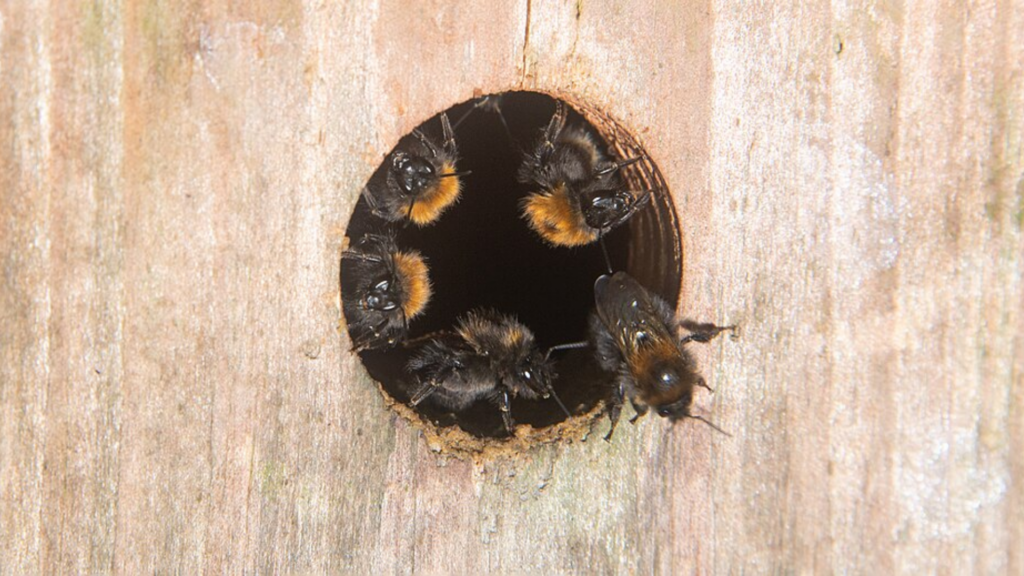
During the experiments, researchers presented bumblebees with tasks that required them to manipulate objects and perform a sequence of actions to access a food reward. Unlike previous studies that relied heavily on training, the bees in this research were given opportunities to discover solutions on their own. Many individuals successfully completed the challenges without being shown exactly how to do so.
The results demonstrated that the insects could adapt their behavior when faced with unfamiliar situations. Rather than relying solely on instinct, the bees appeared to experiment with different approaches until they found one that worked. This type of trial-and-error learning is often associated with more advanced forms of cognition.
Scientists noted considerable variation among individual bees, with some solving the tasks much faster than others. These differences suggest that individual personality traits or cognitive abilities may influence problem-solving success. The findings provide further evidence that insect behavior can be more flexible and innovative than once believed.
What the Findings Mean for Animal Intelligence

Researchers say the study contributes to a growing body of evidence showing that intelligence does not necessarily depend on brain size alone. Despite possessing brains far smaller than those of mammals or birds, bumblebees appear capable of learning, remembering information, and adapting to new challenges. These abilities may help them survive in constantly changing environments.
The findings also highlight the importance of pollinators beyond their ecological role. Bumblebees are essential for the reproduction of many wild plants and agricultural crops, and understanding their behavior can help conservation efforts. Scientists argue that recognizing the cognitive complexity of these insects may strengthen support for protecting their populations.
Experts believe the research could inspire new studies into how simple nervous systems accomplish sophisticated tasks. Insights gained from insect cognition may even contribute to advances in robotics and artificial intelligence. By examining how bumblebees solve problems efficiently, researchers hope to uncover principles that apply across multiple scientific fields.
Tiny Brains, Remarkable Abilities

The new study provides compelling evidence that bumblebees can solve complex tasks without prior training, demonstrating levels of adaptability that continue to surprise scientists. Their ability to independently discover solutions suggests that sophisticated problem-solving is not limited to animals with large brains. Instead, intelligence may emerge in a variety of forms throughout the natural world.
Researchers believe the findings challenge traditional assumptions about insect cognition and highlight the need for further investigation into how these animals think and learn. The results also emphasize the remarkable capabilities hidden within creatures that are often overlooked. Bumblebees may be small, but their cognitive abilities are proving to be far more impressive than many people realized.
As scientists continue exploring the minds of insects, discoveries like this are reshaping our understanding of intelligence itself. The study serves as a reminder that even some of nature’s smallest creatures can display unexpectedly complex behaviors. For bumblebees, it appears that problem-solving comes more naturally than anyone once imagined.
PetsFanatic Team
Pet Care Expert & Content Creator
Passionate about sharing knowledge and tips for better pet care. Writing about everything from pet health to training techniques.