
Student Discovers First-Ever Velvet Worm Species from the Arid Karoo Terrain

While searching for ants and reptiles on a farm in the Swartberg Mountains, a third-year Conservation Ecology student from Stellenbosch University stumbled upon something unexpected: a slate-black velvet worm hidden beneath a rock.
What seemed like an ordinary find quickly turned into a groundbreaking discovery: the first velvet worm species ever recorded in South Africa’s dry Karoo region. This rare creature not only expands our knowledge of biodiversity but also hints at a greener, more forested past.
Let’s dive into why this find matters, both for science and our understanding of climate history.
What Are Velvet Worms?

Before we zoom in on the new species, let’s talk about velvet worms in general—because these critters are anything but ordinary.
Often dubbed “living fossils,” velvet worms are soft-bodied invertebrates with stubby, unjointed legs and an ancient lineage dating back over 500 million years. They’re best known for their unique hunting style: shooting a sticky slime from their oral papillae to trap prey before chewing it up.
Beyond their sci-fi tactics, they play a key role in maintaining ecological balance as small predators and serve as valuable indicators of habitat health. Their limited geographic distribution also helps scientists trace continental drift and biogeographic patterns.
Discovery of the New Species

In March 2022, while flipping rocks on a farm in South Africa’s Swartberg Mountains, third-year Stellenbosch University student Rohan Barnard stumbled upon something remarkable.
Nestled beneath a stone was a slate-black velvet worm, later confirmed as a previously undocumented species. Named Peripatopsis barnardi in his honor, this find marks the first velvet worm ever discovered in the Little Karoo.
It wasn’t the only breakthrough—seven other new species were also identified in the nearby Cape Fold Mountains. But P. barnardi stood out, not just for its location, but for having diverged from its closest known relative around 15.2 million years ago, opening new doors into the evolutionary story of this elusive group.
Unique Traits of P. barnardi

Slate-black in color, P. barnardi blends easily into its rocky surroundings—a helpful trait for a nocturnal predator.
Like other velvet worms, it thrives in moist microhabitats and uses a fascinating hunting method: ejecting a sticky slime from glands near its head to immobilize prey.
Though small and soft-bodied, this worm is a skilled predator, likely feeding on tiny invertebrates that share its hidden, humid refuge.
Why This New Discovery Matters

What makes P. barnardi truly exciting is where it was found. The Karoo is known for its dry, unforgiving conditions—not the kind of place you’d expect to find a forest-dwelling species like a velvet worm.
The velvet worms’ presence suggests that this region was once far more humid and forested, providing valuable clues about ancient climates and shifting ecosystems.
This discovery adds to a growing list of recent finds that are reshaping scientists’ understanding of South Africa’s biodiversity and environmental history.
The Importance of Biodiversity Research (Especially Now)

Findings like this highlight just how much we still have to learn about the planet, especially in biodiversity-rich countries like South Africa.
Discoveries of “hidden” species not only help fill in the gaps in evolutionary history, but they can also guide conservation strategies. As habitats shrink or shift due to human activity and climate change, understanding what’s there to protect becomes even more critical.
And sometimes, all it takes is a curious student with a rock to flip.
Climate Clues and What’s Still Out There

Climate change doesn’t just affect the future. It also reshapes how we look at the past.
The discovery of P. barnardi in such an arid environment raises questions about long-lost ecosystems and how species have adapted (or vanished) over time. Ongoing fieldwork and climate studies can help connect those dots.
Who knows what else is out there—hidden in a crack, under a stone, waiting to teach us something new?
A Tiny Creature with Big Implications
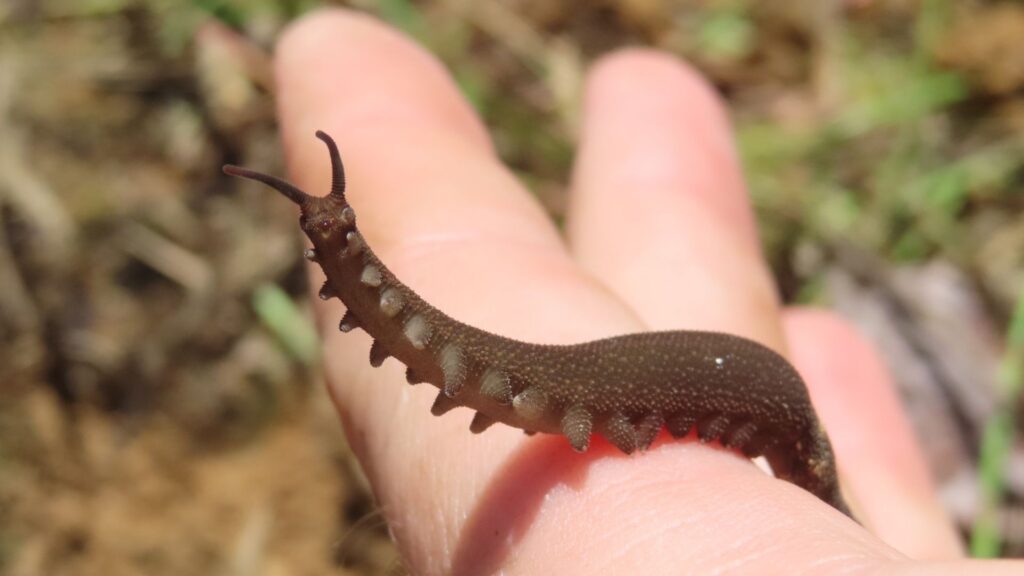
The discovery of Peripatopsis barnardi and seven other new species is more than just a cool find—it’s a reminder that Earth still holds mysteries in the least likely places.
These tiny velvet worms tell a story of ancient ecosystems, evolutionary quirks, and the power of curiosity.
As climate shifts and biodiversity faces new threats, each new species we uncover deepens our understanding of what we stand to lose, and why protecting it matters.
PetsFanatic Team
Pet Care Expert & Content Creator
Passionate about sharing knowledge and tips for better pet care. Writing about everything from pet health to training techniques.