
Showers and Golf Courses Aren’t Draining the Colorado River, and It’s This One Crop That Uses Nearly Half the Water

Tens of millions of Americans depend on the Colorado River for drinking water and daily use, yet the river has been shrinking for decades under persistent drought. Household water use, golf courses, and car washes have taken most of the blame. But those are largely the wrong targets. The real culprit is something most people never think about when they turn on the tap.
Agriculture Is Consuming Three-Quarters of the River’s Water

Farming accounts for roughly 75 percent of annual Colorado River water usage, according to a 2024 paper published in the journal Nature Communications Earth & Environment. That figure dwarfs every other category of use combined, including all residential, commercial, and industrial consumption across the seven states in the Colorado River Compact: California, Arizona, Colorado, Utah, Nevada, New Mexico, and Wyoming.
Nearly Half of All Colorado River Water Goes to Feed Livestock

Of all the water pulled from the Colorado River, at least 47 percent goes to growing alfalfa and other hay, nearly all of it destined for beef and dairy cattle. A portion of other crops irrigated by the river, including wheat, corn, cotton, sorghum, and oats, likely ends up as livestock feed as well. Animal feed, taken together, represents the single largest use of the river by a wide margin.
Alfalfa Uses More Water Than It’s Worth for the Region
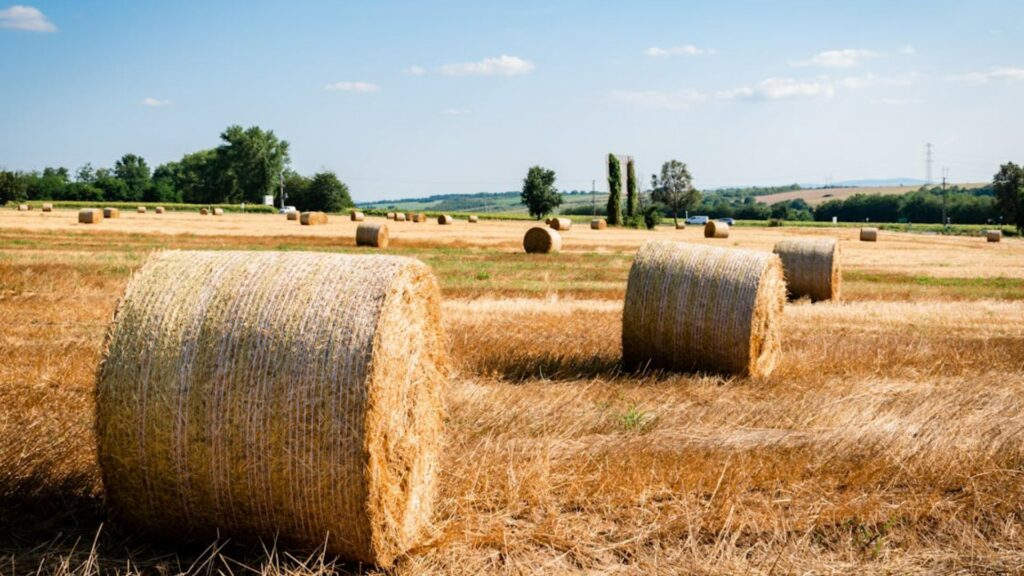
Alfalfa generates little economic return for the water it consumes. In Utah, nearly 70 percent of the state’s water goes to growing alfalfa, yet the crop accounts for just 0.2 percent of the state’s GDP. A single California irrigation district centered on alfalfa production for cattle uses more water than the entire state of Colorado consumes across all purposes.
A 19th-Century Law Gives Farmers First Claim to the Water, Forever

Much of this traces back to a legal framework called the “prior appropriation” doctrine, which grants water rights to whoever used the water first, indefinitely. California farmers began claiming these rights following the 1862 Homestead Act, which opened Western land for cultivation. Senior rights holders are protected by law, making it nearly impossible to redirect water even as the river shrinks.
The Law That Gives Water to Farmers Has No Easy Off Switch

“It is a stupid system, but the problem is that people are really heavily invested in that system,” John Matthews, executive director of the nonprofit Alliance for Global Water Adaptation, previously told Vox. Potential workarounds exist, including paying farmers to fallow their fields or allowing water rights to be sold or leased to municipalities.
Seven States Missed a Deadline, and a Deal Remains Elusive

The seven Colorado River Compact states failed to reach a Feb. 14 deadline to negotiate how water would be apportioned over the next two decades, with the existing framework due to expire this fall. The Lower Basin states of California, Arizona, and Nevada have committed to significant cuts. Still, the Upper Basin states of Colorado, Utah, New Mexico, and Wyoming have refused, arguing that California and Arizona have long overconsumed the river’s water.
The Cows Consuming the River Are Also Making the Drought Worse

The problem runs in a damaging loop: the millions of cows in the American West emit methane that contributes to climate change, which in turn worsens drought and tightens water supplies across the region. The livestock industry, already responsible for the river’s single largest category of water use, is also a factor in the conditions making the shortage worse.
Federal Intervention May Be Coming If States Can’t Agree

If the states fail to reach a deal, the federal government could unilaterally step in. Last year, the U.S. Department of the Interior published a proposal outlining five options for the river’s future, most built around some combination of voluntary and required cuts. One option is taking no action at all, which Torrella described as “fairly dire,” with record-low snowfall this winter adding to the pressure.
Lasting Solutions Will Require Confronting Agriculture, Not Just Lawns

Fixing lawns and recycling water can only go so far. Vox’s Kenny Torrella argues that until policymakers, food companies, and consumers are willing to challenge the meat- and dairy-centric status quo, residents will keep absorbing the burden of conservation while the industry responsible for the river’s biggest draw faces little scrutiny. The river’s long-term survival may depend on that conversation finally happening.
PetsFanatic Team
Pet Care Expert & Content Creator
Passionate about sharing knowledge and tips for better pet care. Writing about everything from pet health to training techniques.