
Several Antarctic Glaciers Are Collapsing Significantly and Scientists Aren’t Sure Why

For decades, Antarctica was often described as a frozen giant, slow to change and largely insulated from rapid climate swings. But new continent-wide satellite records tell a more complicated story. Much of the coastline remains stable, yet certain regions are retreating in concentrated, dramatic bursts.
A sweeping 30-year analysis led by glaciologists at the University of California, Irvine mapped grounding line movement across the entire continent for the first time. The grounding line is where ice resting on land begins to float as it meets the ocean. Since 1996, 77 percent of Antarctica’s coastline has shown no measurable grounding line migration. However, in other regions, retreat has removed about 12,820 square kilometers of grounded ice, an area nearly 5,000 square miles .
That uneven pattern is key. Scientists describe Antarctica as punctured in specific places rather than collapsing everywhere at once. The biggest retreats have occurred in West Antarctica, parts of East Antarctica, and along the Antarctic Peninsula. Yet it is on the northeastern Antarctic Peninsula where the retreat becomes more puzzling.
The Northeast Antarctic Peninsula Puzzle
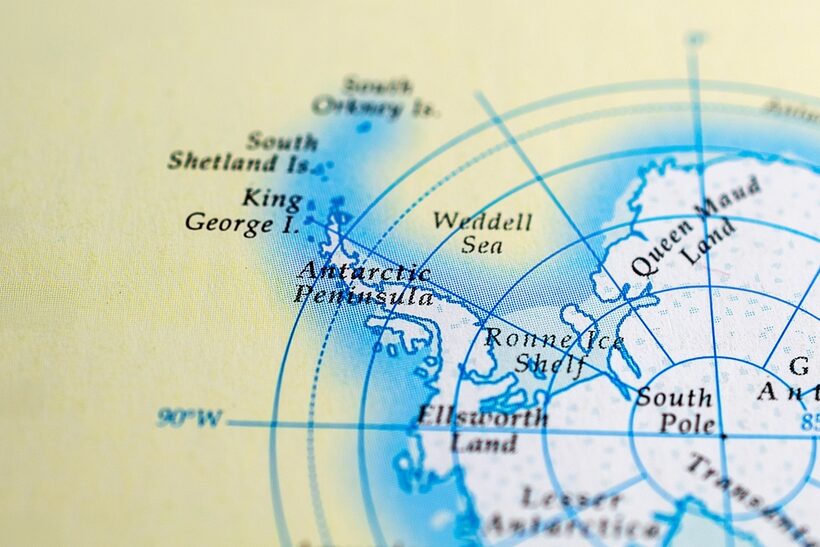
In most hotspots, scientists can link glacier retreat to relatively warm ocean water flowing beneath floating ice shelves. That water thins the ice from below and destabilizes the grounding line. But the northeastern Antarctic Peninsula does not fit neatly into that explanation.
Eric Rignot, the study’s lead author, said that while many retreating areas sit near warm ocean water, “on the east coast of the peninsula, there’s substantial retreat, and we don’t have evidence for warm water. Something else is acting — it’s still a question mark”. That uncertainty is what makes this region stand out.
Several glaciers there have already undergone major retreat. Edgeworth Glacier retreated 16 kilometers. Boydell, Sjogren, Bombardier, and Dinsmoor have also shrunk significantly. Hektoria Glacier retreated 21 kilometers, Green Glacier 16 kilometers, and Evans Glacier 9 kilometers beyond their 1996 grounding line positions . These are not subtle shifts. They are sustained withdrawals that signal instability, even without the usual warm-water culprit.
The Sudden Collapse That Caught Scientists Off Guard
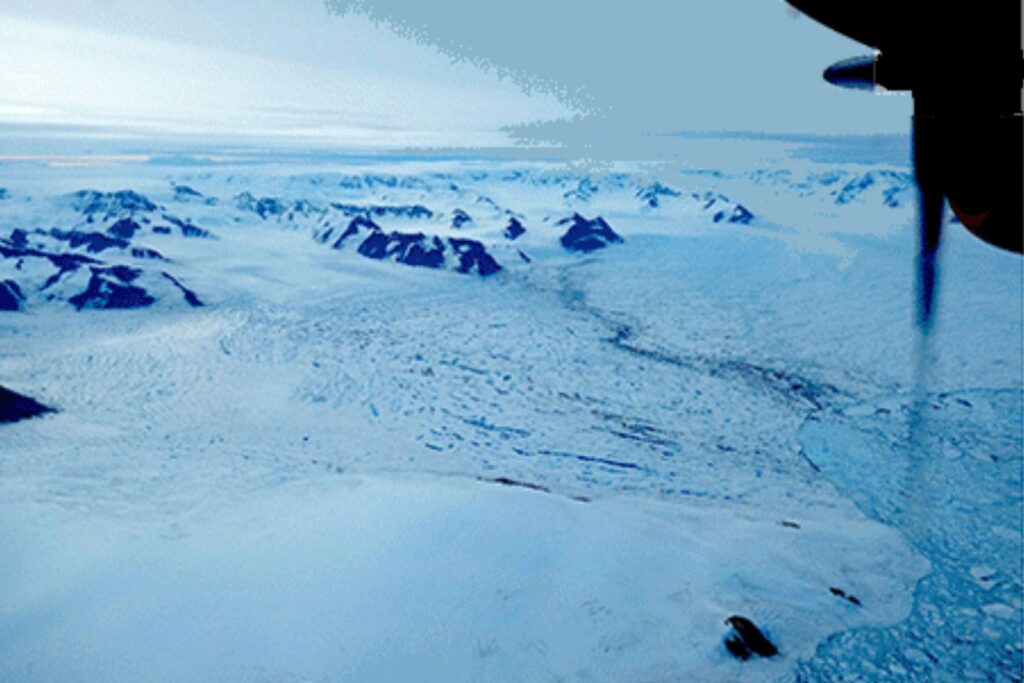
Hektoria Glacier has drawn particular attention. In late 2022, it retreated more than 8 kilometers in just two months, an unusually fast shift for a glacier that may have been grounded on the seabed. Some researchers suggest this could be one of the first modern examples of a glacier front rapidly destabilizing after losing support.
The story traces back to the collapse of the Larsen B ice shelf in 2002, which had acted as a buttress holding Hektoria back. After Larsen B disintegrated, Hektoria sped up and thinned. Sea ice temporarily stabilized the area, but when that sea ice broke up in 2022, the glacier’s front began to change rapidly .
One proposed explanation involves an “ice plain,” a relatively flat patch of seabed where the glacier rests lightly. As thinning ice is lifted by ocean forces, it can destabilize quickly, allowing large sections to break off in a short time. However, not all scientists agree. Some argue the glacier front may have already been floating, meaning the retreat, while dramatic, might not represent a new or unprecedented process . The disagreement highlights how difficult it can be to pinpoint exactly where grounded ice ends and floating ice begins.
Why This Mystery Matters
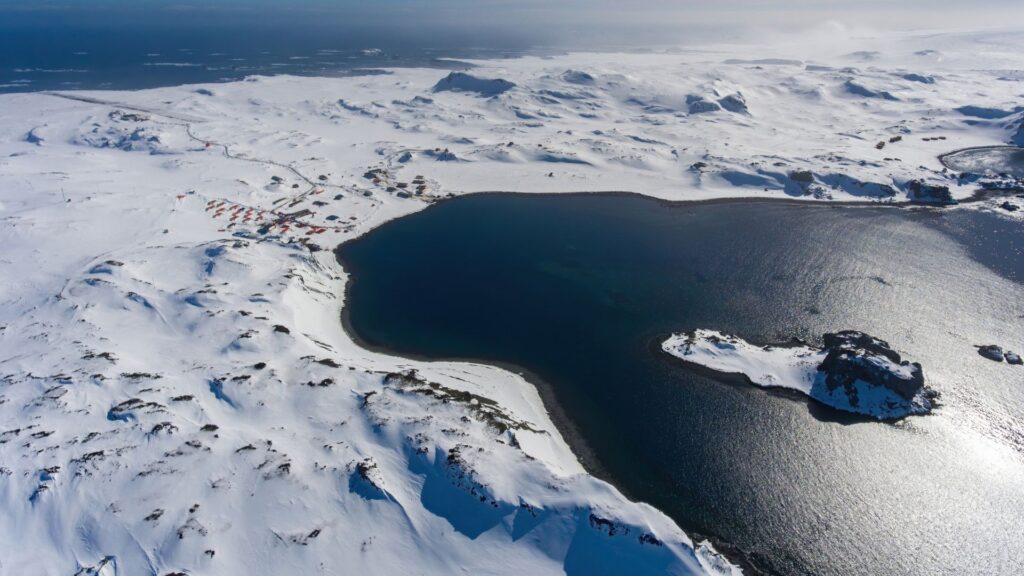
The uncertainty is not just academic. Grounding lines act like anchors for ice sheets. When they retreat inland, glaciers can lose grip on the continent, making further loss easier. Across Antarctica as a whole, the average retreat at grounding lines has equated to about 442 square kilometers per year over the past three decades .
Most of those retreats line up with the warm-water explanation. But the northeastern Antarctic Peninsula suggests that other forces may be at work. If glaciers can destabilize without obvious warm water intrusion, models may be missing key processes. Rignot has emphasized that ice sheet models must reproduce the observed 30-year record to be credible for future projections.
For now, scientists describe the situation as uneven rather than catastrophic. More than three-quarters of Antarctica’s coastline remains stable. Yet the concentrated “wounds” in places like the northeastern Antarctic Peninsula show that some glaciers are responding in ways researchers still do not fully understand. And in climate science, unresolved mechanisms often signal areas where future change could unfold faster than expected.
PetsFanatic Team
Pet Care Expert & Content Creator
Passionate about sharing knowledge and tips for better pet care. Writing about everything from pet health to training techniques.