
Scientists Just Unearthed 505-Million-Year-Old Grand Canyon Fossils

A remarkable collection of fossils uncovered in the Grand Canyon is offering scientists a rare glimpse into a time when life on Earth was rapidly evolving and diversifying, the remains found in the Bright Angel Formation and dated to more than 505 million years ago capture a dynamic ecosystem that thrived not long after the Cambrian explosion, a period marked by creativity, adaptation, and experimentation in the history of life.
A Window Into Ancient Seas

The fossils were preserved in what was once the seafloor of a shallow marine environment, over millions of years, layers of sediment gently encased these tiny creatures, protecting even their most delicate structures. When researchers began examining the rocks, they discovered they had stumbled upon an extraordinary time capsule that recorded the intricate anatomy of life in the Cambrian seas.
A Discovery of Unusual Scale

More than 1,500 fossils were extracted from the site, each one adding a small piece to the grand puzzle of early evolution, the sheer number of specimens allows scientists to study not only individual organisms but also how these creatures interacted within their ecosystem. The diversity and quality of preservation make this one of the most informative fossil collections ever found in this region.
The Bright Angel Formation’s Hidden Record

The Bright Angel Formation, a geological layer within the Grand Canyon’s Tonto Group, has long intrigued paleontologists, it represents a period when rising seas flooded ancient continents, leaving behind sediments that captured traces of early marine life. This discovery confirms the formation’s potential to preserve soft-bodied species, organisms that rarely fossilize but hold key insights into evolutionary history.
The Worm with an Ingenious Design
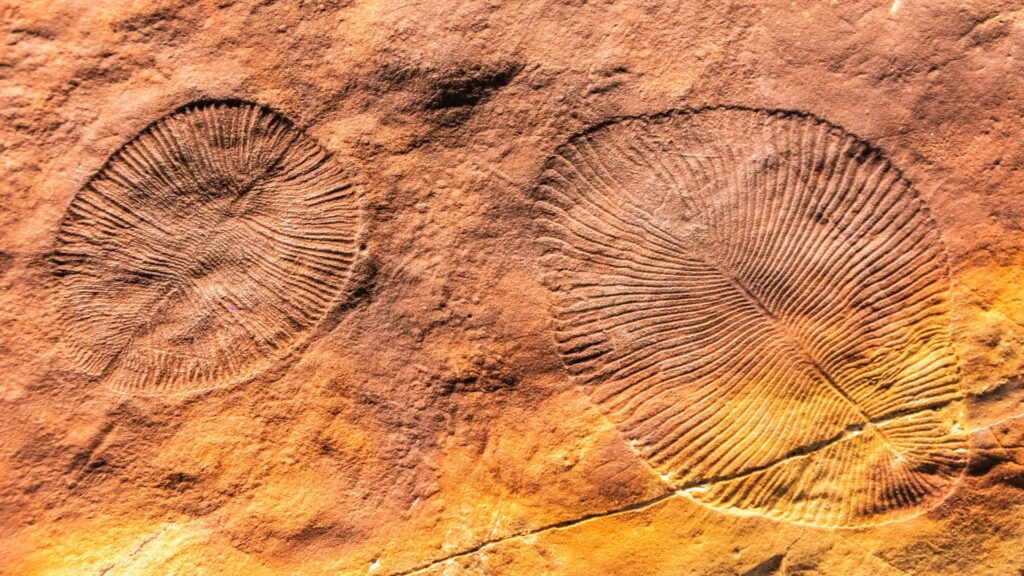
Among the standout finds is a small creature named Kraytdraco spectatus, a worm covered in rows of tiny, tooth-like structures, some were hard and pointed, while others were fine and flexible. This mix of features suggests a sophisticated feeding system, the tougher elements likely helped it scrape surfaces for food, while the filaments filtered microscopic particles from the water.
Two Feeding Styles in One Creatur

This dual strategy is remarkable because it shows that even in Earth’s early oceans, evolution was fostering versatility, a single organism capable of switching between scraping and filtering had a clear survival advantage in a world where resources were becoming more limited. It’s an early example of evolutionary innovation at work.
Small Crustaceans with Big Adaptations
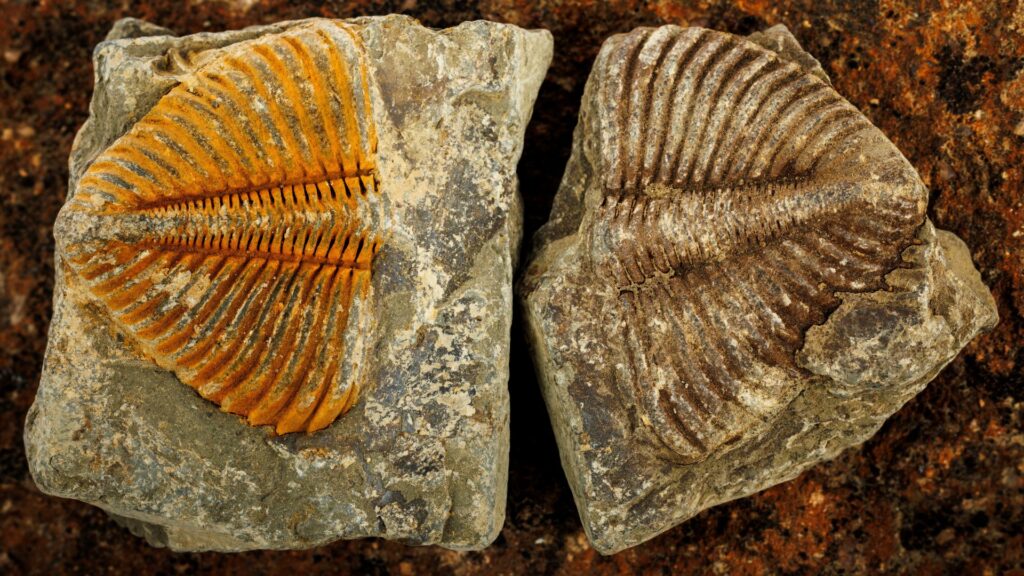
Other fossils, including ancient crustaceans, reveal complex feeding mechanisms of their own, these tiny animals possessed hair-like structures that swept food toward their mouths, where molar-shaped parts ground it down, a biological version of a food processor. Their anatomy reflects how species were adapting to occupy specific ecological roles.
Mollusks Built for Efficiency

The mollusks discovered in the same layers carried rows of shovel-shaped teeth designed to scrape algae and microbes off rocks, their specialized mouthparts demonstrate how different groups evolved unique ways of feeding, allowing them to coexist in increasingly competitive marine environments without overlapping niches.
Evolution’s Smarter Second Act

The Cambrian explosion may have set the stage for complex life, but what followed was equally important, the fossils from the Bright Angel Formation reveal a stage where evolution began to refine its early experiments, shifting from simply creating new species to optimizing their survival strategies. It was a time when life became more efficient, adaptable, and intelligent in its design.
The Continuing Story of Early Life

These findings not only fill a crucial gap in the fossil record but also remind us that evolution didn’t stop after the Cambrian burst of diversity, it continued to sharpen and perfect the mechanisms that still define animal life today, from arthropods to chordates, including humans. The Grand Canyon’s ancient rocks, silent for hundreds of millions of years, have once again spoken, telling us more about how life learned to thrive on Earth.
PetsFanatic Team
Pet Care Expert & Content Creator
Passionate about sharing knowledge and tips for better pet care. Writing about everything from pet health to training techniques.