
Scientists Found a Giant 68-Million-Year-Old Egg and The ‘Thing’ Inside Could Rewrite Prehistoric Life

Chilean researchers unearthed something strange on Seymour Island near Antarctica. The object resembled a deflated football, leathery and wrinkled. They nicknamed it “The Thing.” Measuring roughly 11 by 8 inches, this puzzling specimen sat unstudied for years. What could produce such an unusual structure? Scientists were about to uncover something extraordinary.
The Decade-Long Mystery Finally Solved
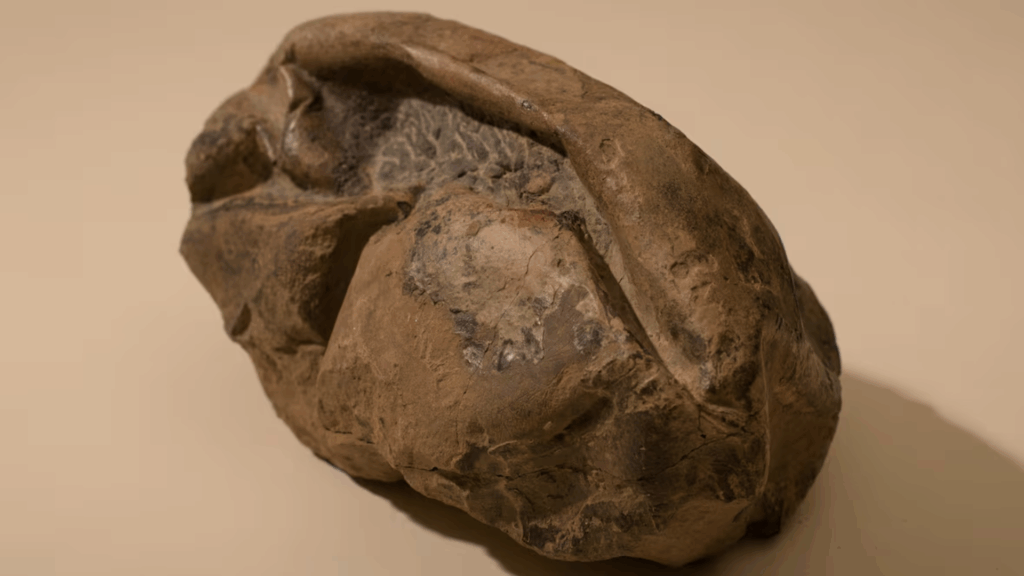
After nearly ten years of analysis, scientists confirmed the truth. This was a soft-shelled egg from 68 million years ago, named Antarcticoolithus bradyi. The discovery stunned paleontologists worldwide. It became the largest soft-shelled egg ever found and the second-largest egg of any known species. But size wasn’t the only surprise waiting to shake prehistoric science.
A Shell That Rewrites Marine Reptile History

Unlike hard dinosaur eggs, this specimen had a thin, flexible shell resembling modern snake eggs. Lead researcher Lucas Legendre explained the egg is “from an animal the size of a large dinosaur, but it is completely unlike a dinosaur egg.” This challenged everything scientists believed about ancient marine reptile reproduction. The egg revealed an unexpected story.
Meet the Likely Mother: A Giant Mosasaur

Near the egg, researchers discovered skeletal remains of Kaikaifilu hervei, a massive mosasaur dominating Antarctic waters during the Late Cretaceous. Scientists estimated the mother measured at least 23 feet long, excluding the tail. These extinct marine reptiles were apex predators and relatives of today’s monitor lizards. Could one have laid this remarkable egg?
Evidence of an Ancient Nursery

The site yielded more than one egg. Paleontologists found fossilized remains of juvenile mosasaurs and plesiosaurs alongside adults, suggesting the area functioned as a prehistoric nursery. Julia Clarke, a vertebrate paleontologist at UT Austin, called the discovery “exceptional in both size and structure.” The concentration of young fossils painted a vivid picture of ancient parenting.
The Soft Shell Revolution in Paleontology

This Antarctic egg joined recent discoveries challenging old assumptions. Soft-shelled eggs from Protoceratops and Mussaurus dinosaurs revealed that flexible shells were far more common than believed. Paleobiologist Darla Zelenitsky called the Antarctic find “pretty spectacular.” Mark Norell confirmed hard shells weren’t ancestral—they evolved independently. The revolution in understanding prehistoric reproduction had begun.
How Did Giant Marine Reptiles Reproduce?

The discovery raises fascinating questions. Did mosasaurs lay eggs directly in the ocean, hatching almost immediately like modern sea snakes? Or did they deposit eggs on beaches? However, massive mosasaur size and weight makes beach nesting unlikely. The debate continues, reshaping our understanding of how these ocean giants brought new life into their underwater world.
Antarctica’s Hidden Fossil Treasure Trove

Most remarkable is that such delicate structure fossilized at all in Antarctica’s harsh conditions. The egg’s preservation suggests ideal sediment and climate for fossilizing soft tissues, which typically degrade rapidly. Antarctica is increasingly important for paleontological research. The continent may hold countless fragile fossils revealing secrets about ancient life that have eluded scientists for generations.
The Future of Prehistoric Marine Research

Scientists are planning further Antarctic expeditions. They hope to determine how widespread this reproductive behavior was among marine reptiles. Did plesiosaurs use similar strategies? How many soft-shelled eggs await discovery beneath the ice? Each new find assembles a more complete picture. The Antarctic egg opened doors to understanding reptilian reproduction evolution surprisingly.
A New Chapter in Understanding Ancient Life

“The Thing” transformed from mystery into groundbreaking discovery, rewriting scientific understanding of marine reptile reproduction. This single fossilized egg challenged assumptions held for generations, revealing soft-shelled eggs played crucial roles in prehistoric ocean life. As researchers explore Antarctica’s fossil-rich sediments, each discovery brings us closer to understanding the diverse reproductive strategies dominating Earth’s ancient oceans.
PetsFanatic Team
Pet Care Expert & Content Creator
Passionate about sharing knowledge and tips for better pet care. Writing about everything from pet health to training techniques.