
Scientists Find Massive Coral Colony the Size of a Football Field

Somewhere beneath the surface of the Great Barrier Reef, a single coral colony stretches 364 feet end to end, roughly the length of a football field. It covers an approximate footprint of 42,765 square feet, making it the largest documented and mapped coral colony in the world, according to Citizens of the Reef, the conservation organization behind the discovery.
What makes the find even more remarkable is that neither scientist had ever seen a coral colony this large before. The colony was discovered late last year by Jan Pope, an experienced diver and underwater photographer, and her daughter Sophie Kalkowski-Pope, marine operations coordinator at Citizens of the Reef. The pair were out on their family boat conducting reef surveys as part of the Great Reef Census, a collaborative effort involving more than 100 vessels.
Pope, who had dived at the site a week before, said she had never seen coral growing that way before. “It looked like a meadow of coral,” she said in a statement. “It just went on and on.” Kalkowski-Pope, similarly struck, later said it took a three-minute video just to swim from one side of the J-shaped colony to the other, according to Citizens of the Reef.
A Colony Far Larger Than Any Previously Recorded

The colony belongs to the species Pavona clavus. Individual colonies of this species have typically been recorded in the 100 to 115-foot range, according to Newsweek, making this discovery more than three times larger than what scientists had previously recorded. Citizens of the Reef called it “among the most significant coral structures ever recorded on the Great Barrier Reef.”
Verifying a structure of this scale required more than a single dive. The team used manual underwater measurements alongside high-resolution imagery captured from the water’s surface, according to Citizens of the Reef. That data was then handed off to researchers at the Queensland University of Technology’s Centre for Robotics, who used it to build a detailed 3D model of the colony.
Research engineer Serena Mou explained why that model matters beyond the initial discovery. “It means we can return in future months and years and make direct, one-to-one comparisons to understand how the coral changes over time,” she said in a statement. Scientists are now examining whether strong tidal currents and the site’s relatively low exposure to cyclonic wave activity played a role in the colony’s growth at this scale.
A Discovery Rooted in Broader Reef Struggles

The Great Barrier Reef, the largest living structure on Earth, has endured a series of devastating mass bleaching events in recent years. Globally, more than 80% of the world’s reefs have been affected by an ongoing bleaching event that began in 2023, driven by record-high ocean temperatures. Bleaching strips corals of the algae that sustain them, and can be fatal.
Against that backdrop, researchers were careful to frame this discovery in context. The colony’s survival, they noted, should not be read as a sign that reefs are recovering or that climate pressures are easing. Instead, scientists said it highlights that reef systems do not respond to environmental stress uniformly, and that identifying resilient strongholds, sites that may also serve as key spawning sources, is so important.
Michael Sweet, professor of molecular ecology at the University of Derby, told CNN the colony is bigger than any coral he has personally seen. “What makes this discovery even more special is that in a time where many corals are really struggling due to disease, bleaching, physical destruction from land reclamation and pollution, that individual genetic entities like this Pavona colony surpass all expectations and not only survive but flourish,” he said.
Citizen Scientists and the Reef’s Unknown Future
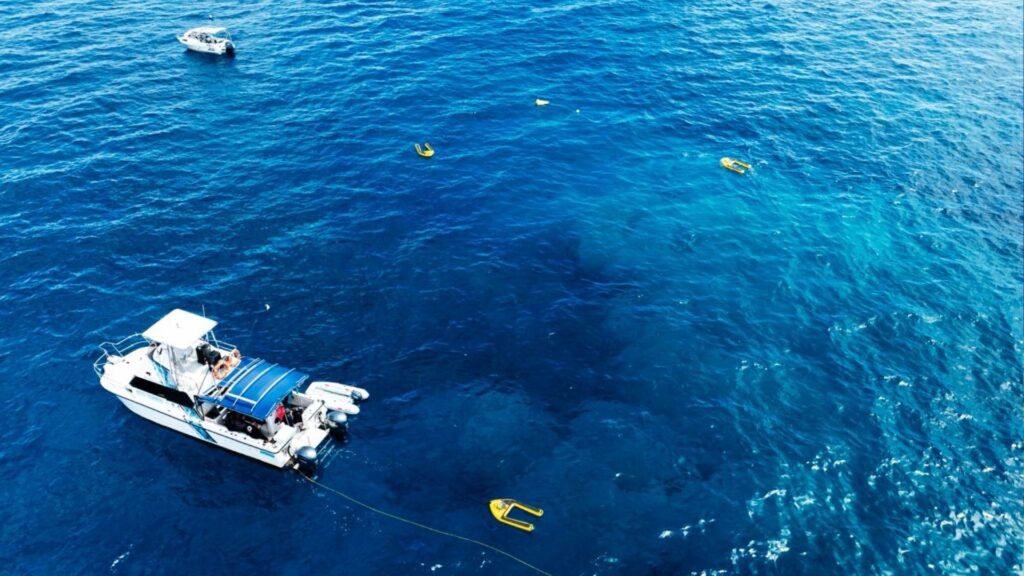
The exact location of the colony is being withheld to reduce the risk of unintended impacts, according to Citizens of the Reef. Its discovery came through the Great Reef Census, which relies on people already on the water to gather reef imagery at scale. “This is made possible by people already out on the water, like Sophie and Jan, and thousands of citizen scientists around the world,” said Andy Ridley, CEO of Citizens of the Reef.
Pete Mumby of the Marine Spatial Ecology Lab at the University of Queensland noted that the Census helps scientists and reef managers identify the most important sites for reef recovery and protection. Sweet also pointed to the broader significance of who made the discovery, saying it shows “that everyone can play a part in not only conserving our planet but also monitoring and documenting cool things like a colony at an unprecedented scale.”
For Kalkowski-Pope, the colony is a reminder of how much the reef still holds in secret. “Discoveries like this are significant because the reef still holds so many unknowns, and we don’t know what we stand to lose,” she said, according to Newsweek. With coral reefs under sustained global pressure, finding and protecting structures like this one may prove critical to understanding and preserving the reef’s future.
PetsFanatic Team
Pet Care Expert & Content Creator
Passionate about sharing knowledge and tips for better pet care. Writing about everything from pet health to training techniques.