
Scientists Find a Massive Fossilized Dinosaur Footprint, And Something Doesn’t Add Up

The windswept plains of the Gobi Desert have once again surprised the scientific world. During a collaborative expedition between Japanese and Mongolian researchers, an enormous fossilized footprint was uncovered, offering new clues about one of the largest creatures to ever walk the planet. While the discovery is extraordinary on its own, it also raises fresh questions about what might still be hidden beneath the desert sands.
A Discovery in the Heart of the Gobi

An international team working in Mongolia’s Gobi Desert identified a remarkably preserved dinosaur footprint believed to belong to a titanosaur, a giant herbivorous species from the Late Cretaceous period. The region is famous for extreme temperatures and rich fossil deposits, making it a key location for paleontological research. This find strengthens Mongolia’s reputation as one of the world’s most important windows into prehistoric life.
A Footprint of Astonishing Scale

The fossilized impression measures approximately 1.06 meters long and 0.77 meters wide, dimensions that immediately signal the immense size of the animal that left it behind. Such a footprint suggests a creature of staggering proportions, far exceeding the size of most land animals known today. The clarity of the imprint, including visible claw marks, makes it particularly valuable for researchers studying dinosaur anatomy.
Estimating the Size of the Ancient Giant

Based on the footprint’s scale, paleontologists estimate the dinosaur may have stretched at least 30 meters in length and stood close to 20 meters tall. To visualize that height, imagine stacking large structures on top of one another, it would have towered over most modern buildings. These proportions place the animal among the largest terrestrial organisms in Earth’s history.
Meet the Titanosaurs
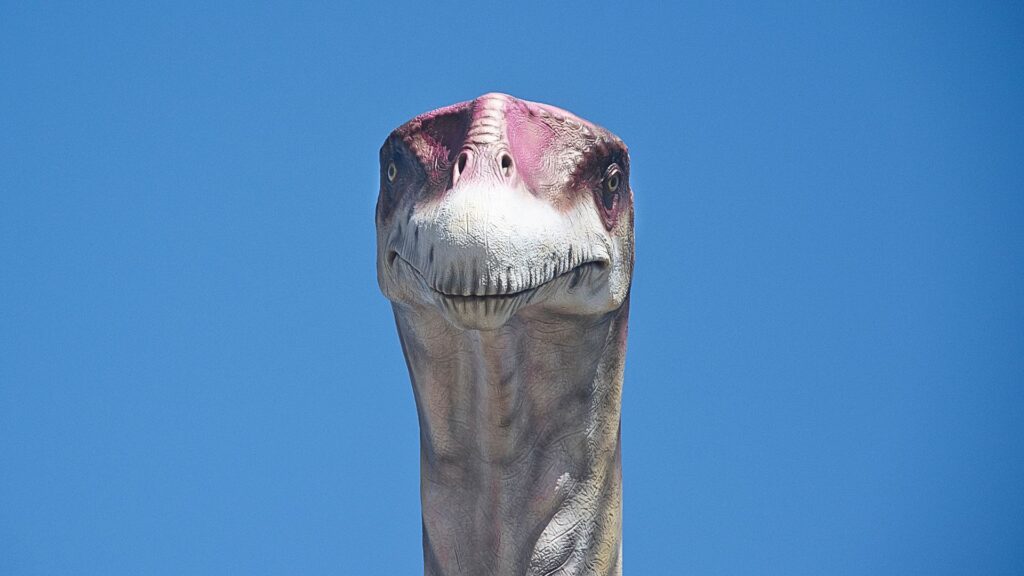
Titanosaurs were a diverse group of long-necked sauropods that thrived between 90 and 70 million years ago. As plant-eaters, they relied on their size for survival, using their massive bodies to deter predators and reach vegetation high above the ground. Some species are believed to have grown up to 40 meters long and weighed as much as 80 tons.
Heavier Than a T. rex
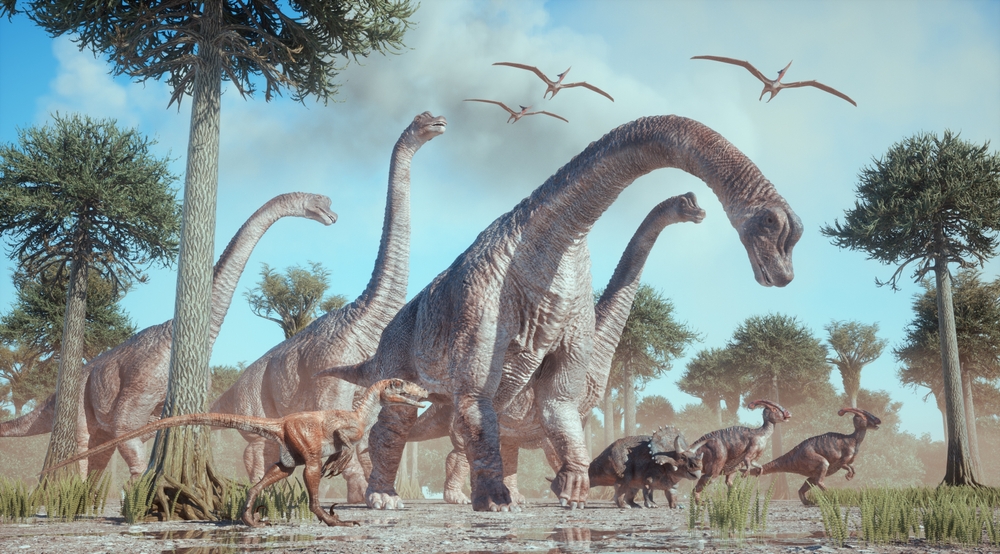
The titanosaur responsible for this footprint likely weighed around 70 tons, making it roughly ten times heavier than a Tyrannosaurus rex. While the T. rex is often portrayed as the ultimate symbol of dinosaur power, titanosaurs surpassed it in sheer mass and physical scale. Their dominance came not from sharp teeth, but from overwhelming size.
Why This Footprint Matters

Well-preserved dinosaur tracks over a meter long are exceptionally rare, which is why this discovery has drawn significant attention. Unlike scattered bone fragments, footprints capture a direct moment in time, preserving how an animal moved and interacted with its environment. The detailed claw impressions offer researchers valuable insight into posture and locomotion.
The Challenge of Fragmentary Fossils
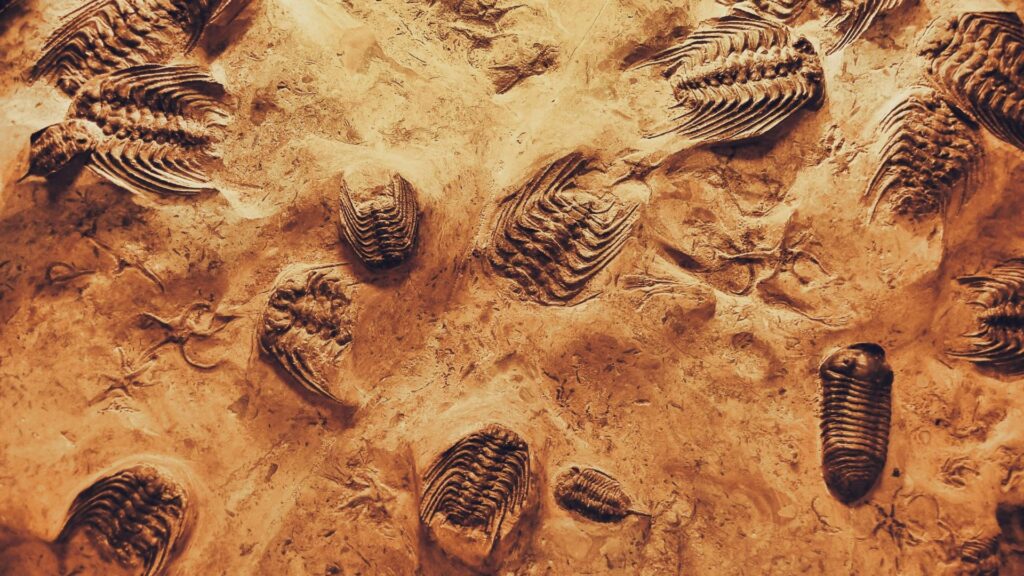
Despite their immense size, titanosaurs are often known only from incomplete remains. Many of their bones have been found in isolated pieces, making it difficult to reconstruct their full anatomy or behavior. This scarcity adds to the scientific importance of any well-preserved trace, including footprints like this one.
The Role of Japanese Researchers

The discovery was led by a team from Okayama University of Science, whose researchers are continuing to survey the surrounding area. Their goal is to determine whether additional traces, or even skeletal remains, may be buried nearby. Each new fragment could help piece together a clearer picture of this ancient ecosystem.
Hopes for a Complete Skeleton

Scientists remain optimistic that further excavation could reveal a more complete skeleton of the giant dinosaur. Mongolia has produced important fossil discoveries in the past, yet a fully preserved titanosaur skeleton of this magnitude has not yet been uncovered in the region. Finding one would represent a landmark achievement for paleontology.
What Still Doesn’t Add Up

The footprint confirms the presence of a colossal animal, yet the absence of accompanying bones leaves unanswered questions. How did such a massive creature leave behind so few remains, and what conditions allowed this single track to endure for millions of years? Until further evidence emerges, the Gobi Desert continues to guard its secrets, inviting scientists to keep searching beneath its shifting sands.
PetsFanatic Team
Pet Care Expert & Content Creator
Passionate about sharing knowledge and tips for better pet care. Writing about everything from pet health to training techniques.