
Scientists Explain Why Modern Human Faces Grow Differently From Neanderthals

Human evolution is written across our features, specifically in the way our faces take shape during development. While our extinct Neanderthal relatives were defined by prominent brows and forward-thrusting jaws, modern humans possess a flatter, more retracted profile. Understanding this divergence requires looking into the cellular and genetic processes that dictated these two very different biological paths.
The visual gap between ancient and modern profiles

When comparing a modern skull to that of a Neanderthal, the most immediate observation is the degree of facial projection. Our ancient cousins possessed a midface that thrust forward, creating a sturdy ledge of bone that supported wide nasal openings and robust upper jaws. In contrast, the modern human face is tucked neatly beneath the braincase, resulting in a flatter silhouette that marks a significant departure from our shared ancestral patterns.
Prolonged growth cycles in the Neanderthal lineage

Advanced imaging reveals that Neanderthal faces continued to expand well into early adulthood. While modern human facial development slows significantly after puberty, the biological machinery of our relatives stayed active throughout their teenage years. This extended growth cycle is a primary reason their features remained so prominent, as the bone-building processes stayed engaged for a much longer duration than in our own species.
Distinct patterns of midfacial development

Research suggests that we do not simply grow less than our ancestors, we grow differently. Modern human faces utilize a remodeling process that pulls features inward toward the skull during development. Conversely, Neanderthal growth focused on adding bone to the front of the face, maintaining the forward-thrusting structure seen in the fossil record through a process that favored expansion over retraction.
Biomechanical needs and environmental adaptation

The robust architecture of the Neanderthal face was likely an adaptation to the physical demands of a harsh lifestyle. A larger facial structure provided the necessary support for high bite forces, allowing them to process tough diets or use their teeth as tools. Furthermore, their expansive nasal cavities may have helped warm frigid air, whereas our smaller jaws are optimized for the precision required for complex speech.
Cellular mechanisms of bone remodeling

At the microscopic level, the shape of a face is determined by a quiet balance between cells that add bone and those that remove it. Neanderthals predominantly deposited bone across the facial front, steadily building a projecting profile over time. Humans evolved a different developmental switch that favors bone resorption, where tissue is removed from the surface to create the flatter appearance that distinguishes us today.
Genetic regulatory switches in the dark genome

Specific regulatory regions in our DNA, often called the dark genome, act as instructions for bone growth. Changes in these genetic elements helped produce the heavy, powerful jaws of Neanderthals while leading to the smaller, more delicate faces of Homo sapiens. These subtle genetic shifts orchestrated the transition toward the more gracile structures we see in the mirror, affecting the timing and intensity of facial development.
Tracing ancient signatures in current populations

Even though Neanderthals are extinct, their genetic legacy continues to influence the appearance of many people today. Certain inherited DNA fragments still affect modern facial traits, such as the width of the nose or the angle of the jaw. These ancient echoes demonstrate how the Neanderthal blueprint continues to nudge the diversity of modern human features, serving as a subtle reminder of our shared history.
Direct insights from the fossil record
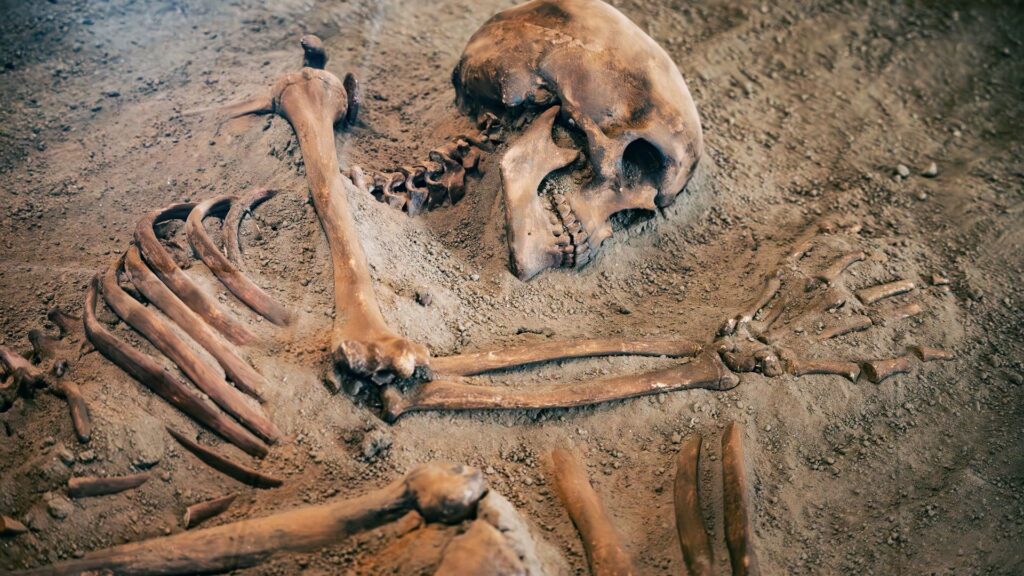
Fossilized skulls provide a tangible window into the specialized biology of Homo neanderthalensis. These remains showcase elongated braincases and massive brow ridges that were perfectly suited for their specific environments in Europe and Asia. By studying these specimens, researchers can ground their genetic theories in the physical reality of three dimensional bone, confirming the unique anatomical path taken by our closest relatives.
Divergent developmental paths from birth

From infancy through adulthood, modern humans and Neanderthals follow separate developmental paths. Neanderthal jaws grew forward without ever forming a true chin, maintaining a receding lower profile. In contrast, modern human jaws rotate and retract slightly as they grow, which results in the emergence of a prominent chin and a smaller lower face relative to the rest of the skull.
How cultural innovations reshaped our features

Cultural shifts, such as the mastery of fire and tools, played a significant role in the shrinking of the human face. As our ancestors began to cook and process food, the mechanical demand for massive chewing muscles and heavy jaws diminished. This shift allowed for a lighter, more expressive facial structure to emerge, favoring social communication and vocal nuance over the brute strength required for a raw diet.
PetsFanatic Team
Pet Care Expert & Content Creator
Passionate about sharing knowledge and tips for better pet care. Writing about everything from pet health to training techniques.