
Scientists Document Rare Chimp “Civil War” After Community Splits in Uganda

Picture a community of 200 chimpanzees living together in one of Africa’s richest forests, sharing food, raising infants side by side, and greeting each other with the kind of warmth that had defined the group for two decades. Then, in a single afternoon, something broke. Researchers watched close companions suddenly treat one another like enemies. What they were witnessing, though they didn’t know it yet, was the start of a chimpanzee “civil war,” an event so rare that scientists estimate it happens only once every 500 years. Here’s how it unfolded, and what it reveals about conflict itself.
This article was created with the assistance of AI and reviewed by our editorial team for accuracy and clarity.
Researchers Watched the Breakdown Happen in Real Time

According to CNN, on June 24, 2015, primatologist Aaron Sandel was doing routine fieldwork when the chimps around him fell eerily silent. Several began grimacing, a telltale sign of chimp anxiety, while others clung to each other for comfort. Then more chimps emerged from the trees, and instead of the usual joyful reunion, of loud calls, hugs, and hand holding, the group scattered. Sandel turned to his colleague, veteran researcher John Mitani, who had studied these chimps for 20 years. Even he had no explanation. As CNN reported, neither of them realized they’d just watched the first crack in a community about to fall apart.
A Family Divided: How One Group Became Two
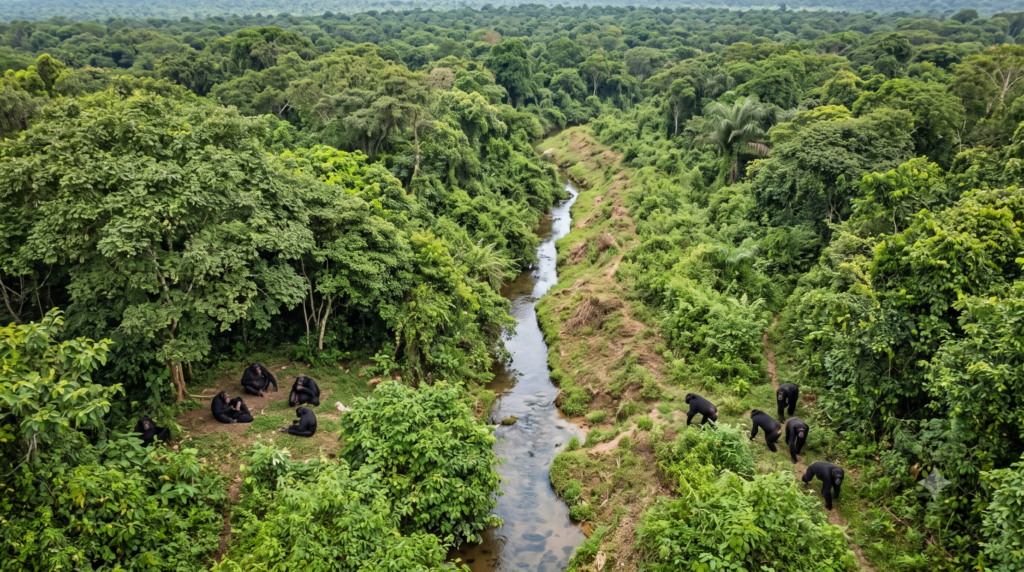
That strange, silent day turned out to be a tipping point. Slowly but unmistakably, the once unified community split into two rival factions, later named the Western and Central chimps for the territories they claimed. What began as awkward tension escalated fast. Within a few years, the two groups weren’t just avoiding each other, they were actively patrolling to keep rivals off their land. Researchers now believe this early fracture set the stage for the bloodshed that followed. It’s a chilling reminder that even the closest social bonds can unravel with startling speed.
Only the Second Chimp Civil War Ever Recorded
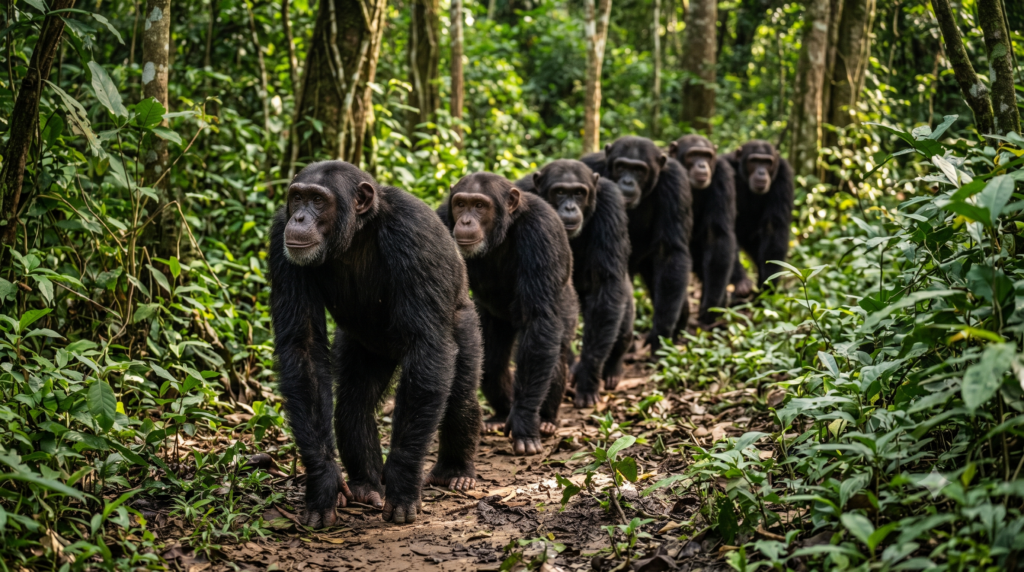
Here’s what makes this story extraordinary: chimps patrol their borders and fight rival troops all the time, that’s normal chimp behavior. But this wasn’t rival troops. This was one family turning on itself. Scientists published their findings in the journal Science, calling it just the second documented chimpanzee civil war in history. The first was recorded by legendary primatologist Jane Goodall decades earlier, an event so violent it became known as Gombe’s darkest chapter. Because this kind of internal collapse is so rare, researchers are treating it as a once in a career opportunity to understand it.
One Side Is Winning, and the Numbers Prove It

This isn’t an even fight. Between 2018 and 2024, the Western chimps launched as many as 15 organized patrols every four months, and the results were deadly, killing an average of one adult and two infants from the Central group each year. Researchers believe the Western faction’s early unity gave them a decisive military like advantage over their rivals. The consequence? A shifting battle line. The border between the two territories keeps moving, and the Western chimps are steadily pushing east, claiming more ground as the Central group struggles to hold on.
The First Victim Was a Chimp Researchers Had Watched Grow Up

The violence turned lethal in 2018, and the victim wasn’t a stranger to the research team. Errol, a young adult male, was ambushed near a fig tree by five Western males and killed. Years earlier, Errol had been the subject of Aaron Sandel’s entire doctoral dissertation, meaning Sandel had tracked this particular chimp’s life since he was roughly 10 years old. His death wasn’t just data for the study. It was personal. And it confirmed the researchers’ worst fear: the tension that began in 2015 had crossed a line that couldn’t be uncrossed.
Chaos in the Trees: A Killing Researchers Saw Up Close

In 2019, the researchers got a front row seat to the violence they’d been documenting from a distance. While observing chimps feeding in a tree, a group of Western males burst in without warning. Panic broke out as the Central chimps scattered, but three attackers cornered a 33 year old male named Basie and closed in. One brave female tried to shield him from the assault before being driven off herself. When it was finally over, an older male escorted the badly injured Basie home. He died the next day, one of the war’s most devastating losses.
The Death Toll Is Staggering, and Still Climbing

The scale of this conflict becomes clear in the numbers. So far, seven adult and 17 infant chimps from the Central group have been confirmed killed, and 14 more are missing, likely additional casualties. Lead researcher Aaron Sandel has compared the experience to reporting from an active war zone, watching chimps he’s known for years die one by one. But it isn’t only violence he’s documenting. Amid the chaos, his team has also captured rare moments of chimp empathy, loyalty, and courage, glimpses of a side of chimp nature rarely seen so vividly.
What Actually Triggered This Collapse?

So what turns a peaceful 200 member community into a warzone? Researchers point to a cluster of destabilizing events: unexplained deaths within the group in 2014, a change in alpha male leadership in 2015, and a respiratory disease outbreak in 2017. Any one of these might have been survivable alone. Together, they may have quietly eroded the social bonds holding the community together until it finally gave way. It’s strikingly similar to what Jane Goodall observed decades ago, when a shift in hierarchy also preceded her group’s descent into violence.
What Chimps Can Teach Us About Human Conflict

Here’s the most unsettling part. Chimpanzees don’t have religion, ethnicity, or ideology, the forces we usually blame for human wars. Yet they still turned on each other with startling brutality, suggesting relationship breakdown alone can be enough to spark conflict. Researchers see two likely endings: the Central chimps could regroup and stabilize the border, or, as happened in Goodall’s study, the stronger faction could wipe out the weaker one entirely. A peaceful reunion seems almost impossible. Then again, as Sandel himself admits, chimps have a way of defying every expectation.
PetsFanatic Team
Pet Care Expert & Content Creator
Passionate about sharing knowledge and tips for better pet care. Writing about everything from pet health to training techniques.