
Scientist Thinks Aliens Kick‑Started Life on Earth, and It’s Sparking Debate

A scientist stirred fresh conversation after sharing a bold idea about how life began on Earth. He built mathematical models to trace early conditions and saw outcomes that didn’t match what many expected. That pushed him to consider a different path. He suggested life could have arrived through directed panspermia, a concept where another civilization sends organisms to new planets. His take caught attention fast and pulled more eyes toward the origin-of-life puzzle.
Early Earth’s Violent Beginnings

Earth formed around 4.5 billion years ago and started out as a hot planet covered in magma. Asteroids slammed into the surface and left deep craters. The crust cooled and an ocean spread over it, so hydrothermal vents pushed out superheated water. Scientists use this scene to picture the environment where early life may have emerged. The planet carried intense heat and constant activity that shaped its earliest conditions.
Ancient Fossils From Australia and Canada
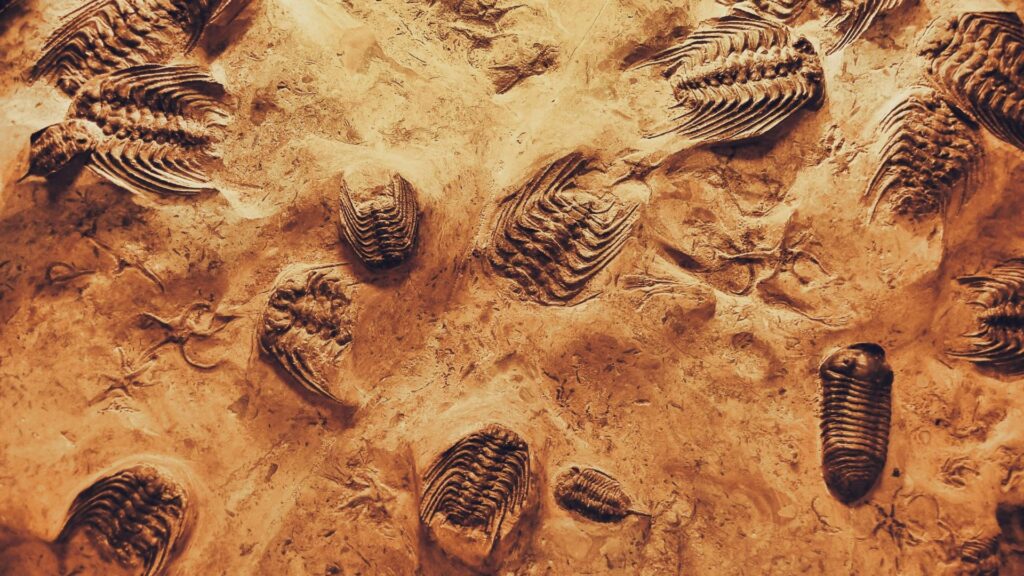
Scientists found ancient microbial fossils in Australia in 2013, and they drew attention fast because they dated back almost 3.5 billion years. More discoveries came from Canada four years later and pushed the timeline even farther. Those microfossils came from an ancient hydrothermal vent, so they offered a look at early conditions on the ocean floor. Researchers point to these finds as some of the strongest windows into Earth’s earliest known life.
Questions Raised by Prebiotic Chemistry

Scientists study how simple elements may have formed prebiotic molecules, and the questions keep piling up. The oldest fossils and ancient carbon samples point to life appearing very early, so researchers keep asking how those first molecular steps happened quickly enough. Those tiny building blocks also break down fast, and that adds more uncertainty. Many scientists still examine chemical pathways, and they look for ways those reactions could have moved toward something that counted as early life.
Robert Endres Challenges Abiogenesis
Robert Endres studies how life may have emerged, and he questions whether abiogenesis explains the timing seen in early fossils. He stays open to it, and he also points out that other possibilities deserve attention. He looks at early Earth conditions and asks how molecules could have formed fast enough. His work shows how scientists keep testing ideas, and he adds his voice to a growing discussion about where the earliest organisms actually came from.
Mathematical Models of Early Life

Robert Endres built mathematical models to see how fast early molecules had to form for life to appear. He found that many of those molecules break down quickly, so they would need to link together at a pace that feels hard to justify. He also tested a scenario where catalysts pushed reactions forward, but the timing still raised questions. His models gave him more reason to keep looking at alternate paths for life’s earliest beginnings.
Possibility of Directed Panspermia

Robert Endres also looks at directed panspermia, so he leaves room for the idea that life may have arrived from another civilization. He points to earlier work from Francis Crick and Leslie Orgel, who suggested that a group facing extinction might seed life on distant planets. He treats the idea as speculative, but he keeps it on the table. He encourages scientists to stay open to possibilities that reach beyond standard origin-of-life models.
Terraforming Concepts in Modern Science

Scientists talk about terraforming more often now, and the idea shows up in research on Mars and Venus. Endres points out that if humans study ways to reshape other planets, an older civilization could have done something similar long ago. He connects that thought to early Earth and leaves space for questions about outside intervention. The concept appears in science fiction, and it also sits in real scientific discussions about shaping habitable environments.
Crick and Orgel’s Alien Seeding Idea

Francis Crick and Leslie Orgel introduced the idea of directed panspermia in the 1970s, and it gained attention because they treated it as a real scientific proposal. They suggested that an advanced group facing extinction might send life to other planets, so Earth could have been one of those targets. Endres brings their idea back into conversation and uses it to show how origin theories sometimes stretch beyond standard chemistry and geology.
Where the Debate Heads Next

Scientists keep digging into how life began, and Endres adds a bold angle that gets people talking. His ideas sit alongside ongoing research, so they push more eyes toward the bigger question. Researchers want clearer answers, and they turn to new tools to get there. The origin story of life keeps growing as fresh theories enter the mix, and the conversation stays wide open for anyone following the science.
PetsFanatic Team
Pet Care Expert & Content Creator
Passionate about sharing knowledge and tips for better pet care. Writing about everything from pet health to training techniques.