
Scholars Deciphered a 3,800-Year-Old Egyptian Mine Inscription, and the Text Literally Says “It’s From Moses”

A simple rock carving hidden inside a dusty Egyptian mine might just be the most explosive archaeological find of the century. For decades, historians have searched for any physical proof that the biblical figure of Moses actually existed. Now, a controversial new study of ancient markings suggests that the name of the great leader was etched into stone nearly four millennia ago. This discovery challenges everything we thought we knew about the origins of the Exodus story.
Researcher Michael Bar-Ron spent eight years meticulously analyzing high-resolution images and 3D scans of the Sinai Peninsula. His focus was on a specific site called Serabit el-Khadim, where turquoise was once pulled from the earth. Deep within these tunnels, he identified a short phrase in an ancient script that translates to “This is from Moses.” This stunning claim places a person with that specific name directly at the scene of ancient Semitic labor long ago.
The markings are written in Proto-Sinaitic, which is recognized as the world’s earliest known alphabetic script. These letters were created by workers who spoke a Semitic language closely related to biblical Hebrew. By using modern technology to see details invisible to the naked eye, Bar-Ron believes he has unlocked a message left behind by a literate leader. This finding suggests that the biblical narrative may have a much firmer footing in physical reality than skeptics ever previously imagined.
Voices From the Turquoise Mines

These inscriptions date back to approximately 1800 BC, during the reign of Pharaoh Amenemhat III. During this period, the Egyptian mines were filled with laborers from the Levant who brought their own culture and language. While the workers served the Egyptian crown, they left behind a trail of graffiti that reveals their private thoughts and beliefs. This collection of over two dozen texts provides a rare window into the lives of people living on the fringes of Egyptian society.
The specific carving mentioning Moses was found near a location known as Mine L. It is not a lone piece of evidence but rather part of a complex web of writings. Some of these stones mention “El,” a name for God used by early Israelites, while others focus on Egyptian deities. The presence of these different names indicates a diverse workforce where various religious ideas were constantly clashing as people struggled to maintain their identity under harsh conditions.
Mainstream experts have traditionally been very cautious about these types of interpretations. Deciphering such old characters is notoriously difficult because the letters often look like simple pictures or symbols. However, Bar-Ron’s academic advisor, Dr. Pieter van der Veen, has supported the reading, claiming the text is clearly visible and not a product of imagination. This professional backing has added significant weight to a theory that initially seemed too good to be true for biblical archaeology.
A Religious War Written in Stone
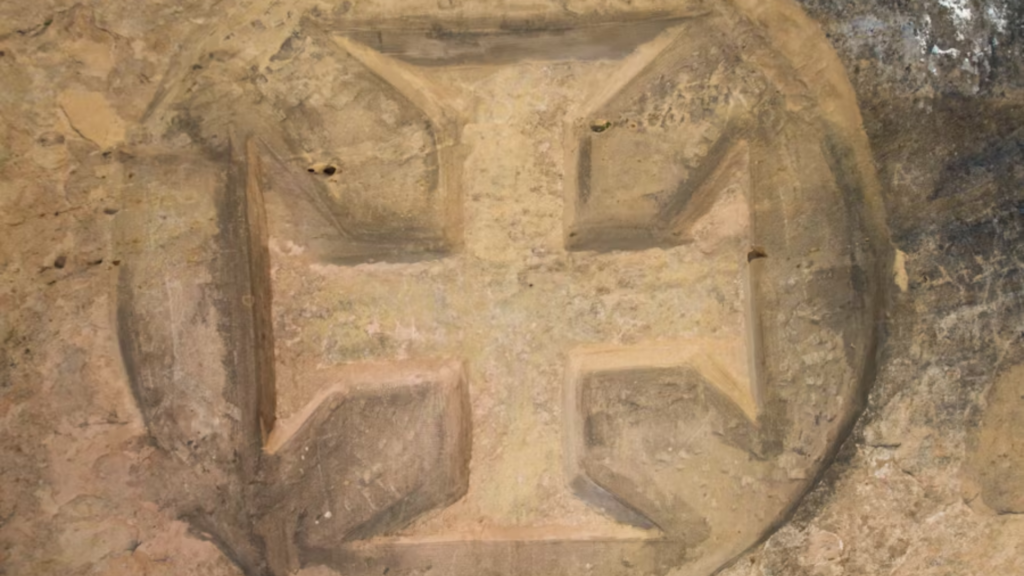
The mines reveal more than just names; they tell a story of a violent religious power struggle. Bar-Ron identified instances where inscriptions honoring the goddess Baʿalat were intentionally scratched out or modified. It appears that scribes who worshipped the Hebrew God were trying to cancel out pagan messages. This deliberate defacement suggests a growing tension between those following Egyptian customs and those who remained loyal to their Semitic roots during their long period of service.
This cultural friction aligns closely with the atmosphere described in the Bible before the Israelites departed from Egypt. Evidence of a burned temple and references to the “Gate of the Accursed One” hint at a period of open rebellion. Scholars suggest that the workers may have staged a dramatic rejection of the local cults, leading to a purge of Egyptian symbols. These clues point toward a community that was ready to break away from their powerful overseers forever.
The evidence also mentions slavery and harsh supervisors, mirroring the conditions of the Exodus story. Other nearby artifacts, like the Stele of Reniseneb, prove that high-ranking Semitic officials held power in the Egyptian court during this era. This presence of influential foreigners supports the idea that figures like Joseph could have paved the way for their people. If Moses was among these workers, he was likely leading a group that was already reaching its breaking point.
The Search for a Lost Prophet

Finding the name “Moses” twice in these carvings has sent shockwaves through the historical community. While Michael Bar-Ron admits he tried to find alternative explanations to avoid being sensationalist, the linguistic evidence kept pointing back to the same conclusion. He believes this site is ground zero for the conflict that eventually defined the Israelite nation. If these markings are truly authentic, they represent the first time the prophet’s name has appeared in a contemporary archaeological context.
Despite the excitement, many Egyptologists remain skeptical of the findings. Dr. Thomas Schneider warns that arbitrary identification of letters can distort history and lead to misleading conclusions. Because the study has not yet appeared in a peer-reviewed journal, the debate over the “Moses” inscription is far from over. Science requires rigorous testing and consensus, especially when the subject matter is as significant as the foundations of a major world religion and its most famous leader.
Whether this stone truly bears the signature of a prophet or is simply a coincidental name, it has reopened a cold case thousands of years old. The sands of the Sinai Peninsula continue to shift, slowly revealing secrets that were buried for millennia. As technology improves, we may soon find more definitive proof of who these mine workers were and where they went. For now, the world is left wondering if a simple rock has finally validated the ancient stories.
PetsFanatic Team
Pet Care Expert & Content Creator
Passionate about sharing knowledge and tips for better pet care. Writing about everything from pet health to training techniques.