
Roman Artifact Discovered in the Americas Raises New Questions About History

A mysterious ancient artifact discovered in the Americas is reigniting debate among historians and archaeologists about whether the Old World may have reached the New World long before Christopher Columbus. The object, a small terracotta head with strikingly Roman features, has puzzled experts for decades and is once again drawing attention.
Known as the Tecaxic-Calixtlahuaca Head, the artifact was originally uncovered in 1933 at a burial site in central Mexico, where it was found among pre-Hispanic remains. Its presence in such a context has raised questions about how a seemingly Roman object could end up in the Americas centuries before European contact.
Recent renewed interest in the discovery has fueled speculation that it could challenge long-held assumptions about early transatlantic contact, though experts remain divided on its true origin.
What the Artifact Reveals and Why It Matters
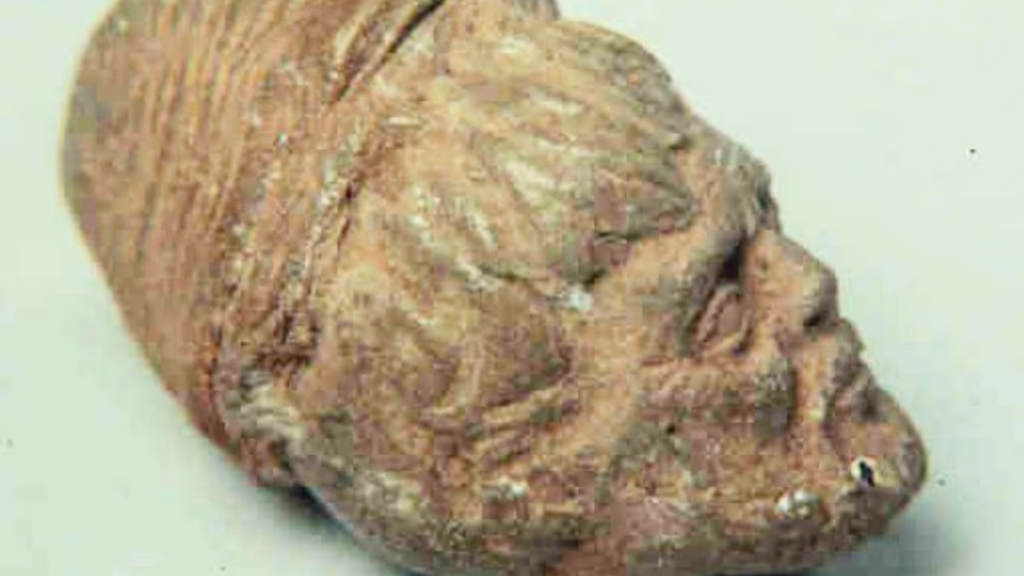
The artifact depicts a bearded figure whose facial features and artistic style closely resemble Roman works from around the second century AD. Some scholars have argued that its design is consistent with objects from the Roman Empire, making it highly unusual for a pre-Columbian American site.
Scientific testing, including thermoluminescence analysis, suggests the object was created sometime between the 9th century BC and the 13th century AD, placing it well before the arrival of Spanish explorers in the region
If authentic and properly placed within the burial, the artifact could indicate some form of contact between distant civilizations, whether through accidental ocean crossings or unknown trade routes.
Ongoing Debate and Alternative Explanations

Despite its intriguing characteristics, many experts remain skeptical. One theory suggests the artifact may have been introduced to the site after its original burial, possibly during excavation or through later contamination.
Others propose that the object could have arrived in the Americas through indirect means, such as being transported on later European ships or carried via trade networks, rather than through direct Roman exploration.
There is also the possibility that the artifact is an “out-of-place object,” a category that includes unusual finds that do not fit neatly into established historical timelines and often remain unexplained.
A Mystery That Challenges History

The discovery of a Roman-style artifact in the Americas continues to challenge conventional narratives about early exploration and cultural exchange. While it has not definitively rewritten history, it has opened the door to new questions about what might still be unknown.
Whether the object represents evidence of ancient contact, a later intrusion, or even a misunderstanding, it underscores how a single discovery can reshape scientific debate and inspire further investigation.
As research continues, the artifact serves as a reminder that history is not always fixed, and that new findings can force scholars to reconsider even the most widely accepted timelines.
PetsFanatic Team
Pet Care Expert & Content Creator
Passionate about sharing knowledge and tips for better pet care. Writing about everything from pet health to training techniques.