
Robotic Crab ‘Wavey Davey’ Attacked in Claw Waving Showdown

Wavey Davey isn’t your average crab. It’s a robot built to mimic the claw-waving moves of real fiddler crabs. Researchers set it loose on a muddy shoreline in southern Portugal to see how the locals would react. Male crabs watched, waved back, and sometimes even got aggressive. One bold crab ripped off the robot’s claw. The encounter gave scientists a close look at how these tiny creatures size up rivals in their natural habitat.x
Fiddler Crab Courtship Signaling

Male fiddler crabs have one oversized claw that works like a flashy billboard. They wave it to get the attention of females, so the bigger and more noticeable the wave, the better their chances.
The motion isn’t random either. Each wave has a rhythm that other crabs can pick up on. It’s their way of showing off strength and health without getting into a fight. That simple claw movement can set the stage for who wins a mate.
Robot Rival in the Wild

Researchers took Wavey Davey to the muddy flats of southern Portugal, right into the middle of fiddler crab territory. The robot had a 3D-printed body and a Bluetooth-controlled claw that could mimic a real crab’s wave. It didn’t just sit there either. It moved and signaled like the rest so that nearby males couldn’t ignore it. The setup gave scientists a way to see how wild crabs react when a new “competitor” shows up in their space.
Behavioral Responses to Waving

When Wavey Davey started waving, the local males reacted fast. They waved back and kept it going for longer than usual. Many stayed outside their burrows, watching and matching the robot’s moves. The waving didn’t make them change their pace, but it kept them locked in on the newcomer. Their focus showed how much attention a waving claw can grab when it appears in the middle of a busy crab territory.
Effect of Claw Size on Crab Strategy

When Wavey Davey waved a smaller claw, male crabs stuck around longer, almost like they felt more confident. A bigger claw from the robot got a different reaction. Some males kept their distance and avoided getting too close.
The size of that claw seemed to guide whether they stayed or backed off. It gave researchers a clear look at how claw size can shift a crab’s approach when it comes to dealing with a possible rival.
Crab Aggression and Robot Damage

Some crabs waved at Wavey Davey and then attacked. One male grabbed the robot’s claw and ripped it off. The strike forced the team to repair the damage before continuing. The quick turn from display to aggression showed how intense these encounters can get. Even a mechanical rival can spark a fight when it steps into the territory of a determined fiddler crab.
Origins and Significance of Wavy Dave
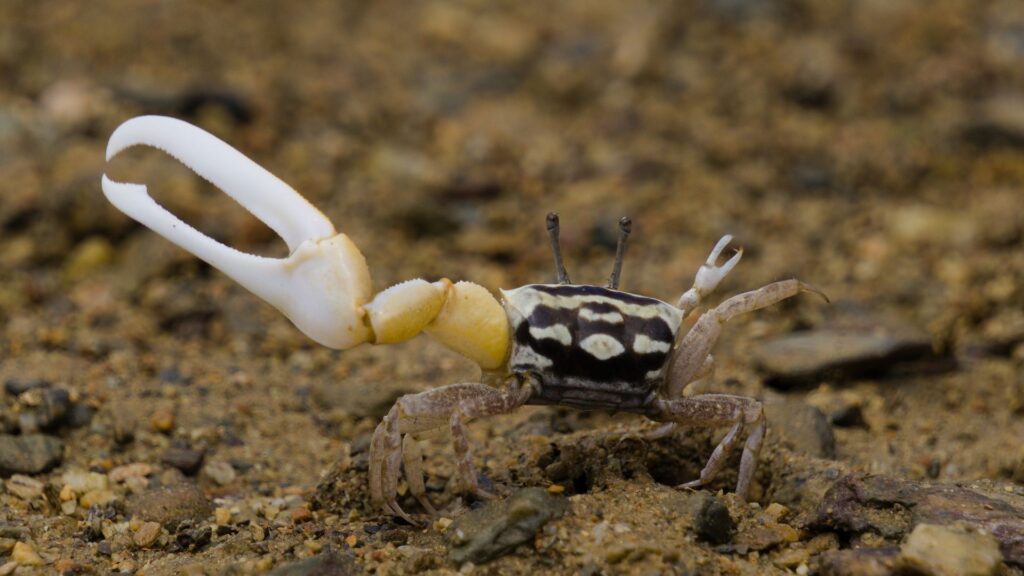
Wavey Davey started as a lockdown idea from a researcher who wanted to test fiddler crab behavior in a new way. He 3D-printed the parts, learned how to build the electronics, and set it up to run through a Bluetooth app.
The result was a lifelike, claw-waving robot that could join real crabs in their habitat. The project showed how a homemade creation can become a valuable tool for studying animal interactions in their natural habitats.
PetsFanatic Team
Pet Care Expert & Content Creator
Passionate about sharing knowledge and tips for better pet care. Writing about everything from pet health to training techniques.