
Resurrecting This Ancient Animal Could Do More Harm, Experts Warn

The science behind reviving extinct animals is advancing quickly, fueled by breakthroughs in gene editing and synthetic biology. What once sounded impossible is now being discussed as an achievable goal, with biotech companies claiming they can bring back creatures that vanished centuries ago.
One of the most striking examples is the giant moa, a towering, flightless bird that lived in New Zealand until humans hunted it to extinction roughly 600 years ago. According to reporting by Live Science, Colossal Biosciences has identified the moa as a potential de-extinction target, calling the effort a way to restore lost ecosystems.
But many scientists say the excitement around innovation is racing ahead of ethical reflection. As conservation ecologist Stuart Pimm told TIME, creating animals that only resemble extinct species is “straight out of Frankenstein,” raising serious questions about responsibility, welfare, and unintended consequences.
What “Resurrecting” Really Involves

Despite the language of resurrection, de-extinction does not mean cloning an exact copy of an ancient animal. As Live Science explains, DNA recovered from bones is incomplete, requiring scientists to rely on the genomes of living relatives to reconstruct missing genetic information.
For the moa, researchers would compare ancient DNA fragments with modern birds such as emus or tinamous, then use CRISPR to edit those genomes. The result would be an animal engineered to express moa-like traits, not a genetically identical species.
That distinction matters deeply to experts. Philip Seddon, a zoologist at the University of Otago, told New Zealand’s Science Media Centre that “any end result will not, cannot be, a moa — a unique treasure created through millennia of adaptation and change.” In ethical terms, critics argue innovation is being framed as revival when it is closer to approximation.
Why Ethics Are Driving the Pushback
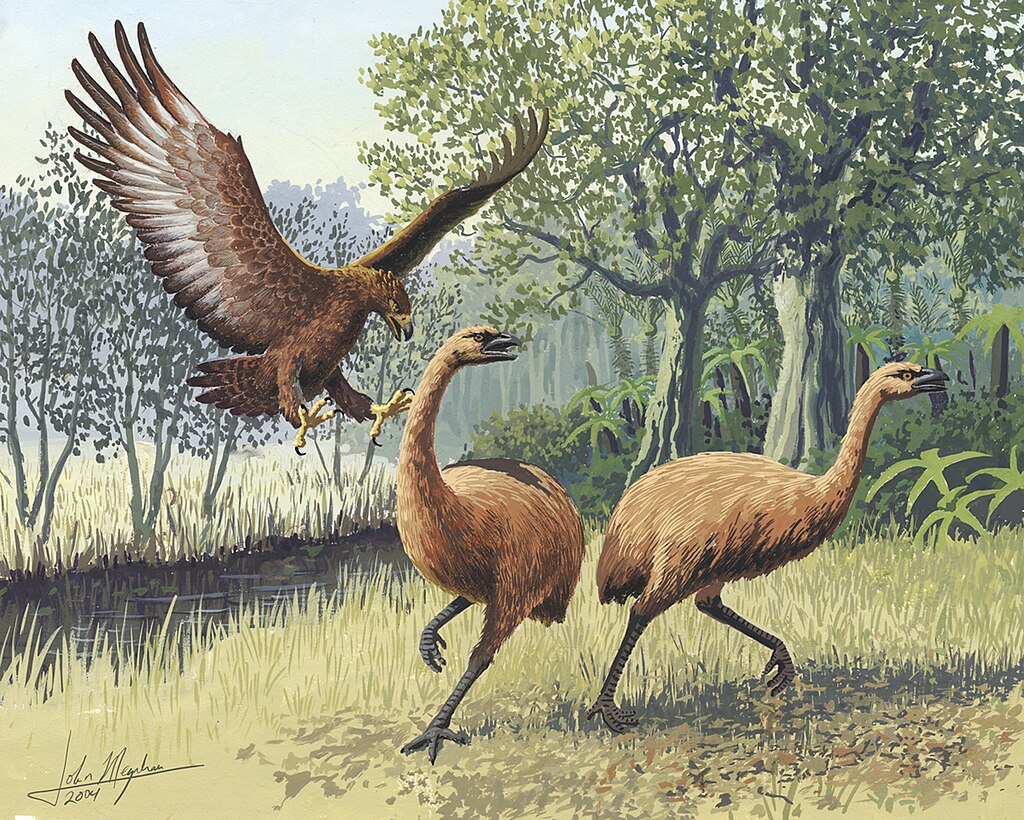
One ethical concern centers on ecological risk. Moas evolved in an environment that no longer exists, and experts warn their reintroduction could disrupt modern ecosystems. Vertebrate paleontologist Trevor Worthy told Live Science that removing animals from their evolutionary context makes it impossible to predict how they would interact with today’s landscapes.
Another issue is conservation priorities. In an essay published by Yale Environment 360, researchers argue that de-extinction risks sending the message that extinction is reversible. Worthy echoed this concern, saying, “We have numerous taxa going extinct now so it is unacceptable that this is seen as okay just because it may be possible to regenerate an animal in the future.”
Animal welfare also looms large. Critics question whether resurrected animals would live meaningful lives or spend them confined to fenced reserves or laboratories. Seddon warned that focusing on functionality over authenticity reduces species to genetic experiments, rather than living beings shaped by long evolutionary histories.
Innovation Has Value, But So Do Limits

Many scientists stress that opposing de-extinction does not mean opposing innovation. Gene-editing tools developed through these projects may help endangered species adapt to disease or climate stress. As Live Science reports, similar technologies are already being explored to support species on the brink of extinction.
The ethical debate hinges on intent and tradeoffs. As Yale Environment 360 notes, biotechnology cannot replace habitat protection, climate action, or traditional conservation. Without addressing those root causes, resurrecting extinct animals risks becoming a distraction rather than a solution.
The growing consensus among experts is not that de-extinction should never happen, but that it demands restraint. Innovation may make resurrection possible, but ethics determine whether it should move forward at all.
PetsFanatic Team
Pet Care Expert & Content Creator
Passionate about sharing knowledge and tips for better pet care. Writing about everything from pet health to training techniques.