
Researchers Named a Bizarre New Cavefish After a Monster From a Netflix Show

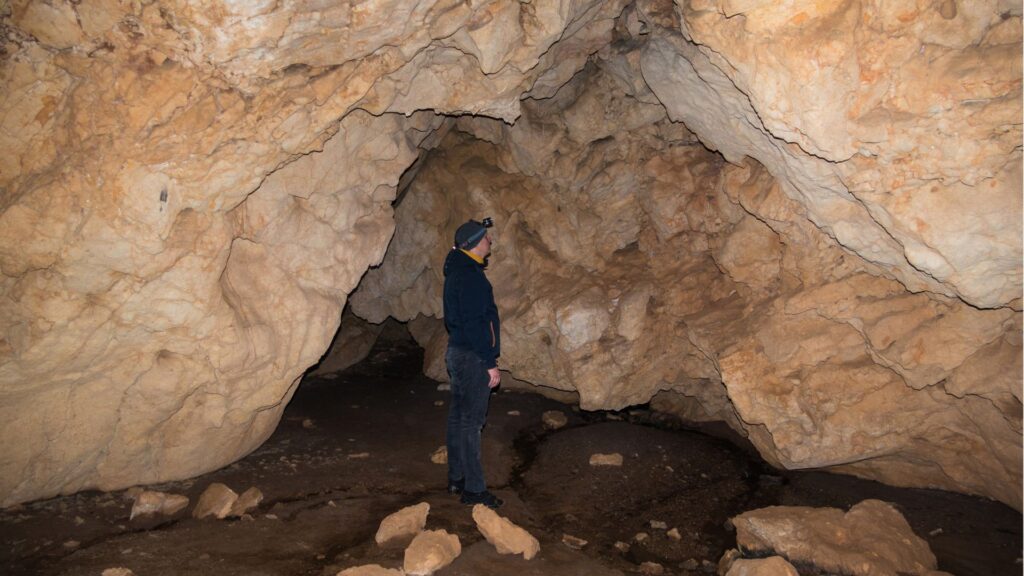
Cave biologists in Alabama have identified a fish species new to science, and its name comes straight from Netflix’s “Stranger Things.” Matthew Niemiller of the University of Alabama in Huntsville found the eyeless, hunchbacked creature while surveying Bobcat Cave, a system beneath the US Army’s Redstone Arsenal. Researchers now call it the demon cavefish, though how it survives and how rare it truly is still isn’t fully understood.
A Slip in the Mud Led to the Discovery

Niemiller wasn’t looking for a new species when he found one. He told Live Science he lost his footing at the back of the cave’s Shrimp Room chamber and fell into a deeper pool. “During my graceful plummet, I disturbed a cavefish and crayfish underneath a rock ledge,” he said. He snapped photos before silt clouded the water, then reviewed them several days later, noticing something wasn’t right.
The Fish Looks Like Nothing Else in the Cave

The newfound species is eyeless, with a pronounced hump behind its head and an elongated, flattened snout unlike any known cavefish, Niemiller told Live Science. Its fin rays are unbranched, and its skin carries no pigment at all, leaving its brain visible beneath the translucent surface. Auburn University fish curator Jonathan Armbruster told CNN that pale, see-through bodies often appear in smaller species living in open water.
Bobcat Cave Sits Beneath a Former Chemical Weapons Site

Beyond its unusual looks, the cavefish’s only known home carries a history of its own: Redstone Arsenal, an Army site once used to manufacture chemical weapons during World War II. When the war ended, large stores of munitions were buried there, including British mustard gas, nerve agents, and other toxic material recovered from Nazi Germany, according to Live Science. Researchers have since detected elevated trace metals in the cave, though Niemiller told Live Science the base’s restricted access has helped limit disturbance.
Genetic Testing Confirmed a New Species

Back when he first spotted the fish, Niemiller wondered if it was simply an odd-looking southern cavefish, a species already known from the cave. He told CNN he had been fooled before by animals that looked different but were genetically similar. After comparing specimens, running CT scans and genetic analysis with Armbruster and University of Alabama biologist Pamela Hart, the team confirmed the fish was skeletally distinct enough to represent a new genus and species. The findings were published July 6 in the journal Scientific Reports, CNN reported.
Its Genes Show It Lost Vision on Its Own

Genetic analysis found demon cavefish carry unique mutations disabling rhodopsin, the light-sensitive protein tied to dim-light vision, Niemiller told Live Science. “In total darkness, vision is useless, so natural selection stops maintaining the gene, and mutations simply accumulate,” he said. The mutations differ from those in the southern cavefish sharing its cave, suggesting the two species lost their sight independently rather than through a shared ancestor.
The Name Comes From Stranger Things and Greek Myth
Researchers settled on Demogorgonichthys arcanus, borrowing from the Demogorgon of Netflix’s “Stranger Things,” a name that itself traces back to an underworld figure in Greek mythology. Armbruster, a longtime fan of the show, pitched the idea. He told CNN that plain, eyeless, nondescript animals are hard to name descriptively, which is why many cave-dwelling species end up borrowing names from underground creatures in folklore.
The Fish May Be Among the Rarest on Earth

Demon cavefish appear restricted to a single cave system, and researchers still don’t know how many exist. Niemiller told CNN he once counted 27 individuals during a survey, though he noted that figure likely doesn’t reflect the full population. Live Science reported that much of their habitat lies in a water-filled aquifer beyond where scientists can observe them, and by IUCN criteria, the species would likely qualify as critically endangered.
Existing Water Protections May Help Save the Species

Despite that outlook, Bobcat Cave has been monitored since 1990 as part of efforts to protect the endangered Alabama cave shrimp, work that should also benefit the demon cavefish. “What protects the shrimp’s water protects the fish’s water too,” Niemiller told Live Science. Surface runoff from nearby Huntsville still reaches the cave’s groundwater, though Armbruster told CNN that existing water quality protections make extinction “pretty unlikely” for the newly discovered species.
The Discovery Hints at More Hidden Species

Researchers say the demon cavefish’s discovery, made in a site studied for decades, suggests other unidentified species may still be hiding in restricted or overlooked places, including military lands. University of Minnesota cavefish researcher Suzanne McGaugh told CNN that new North American vertebrate discoveries like this one are “exceedingly rare.” Armbruster added that understanding creatures such as the demon cavefish ultimately helps clarify what humans need to survive as well.
PetsFanatic Team
Pet Care Expert & Content Creator
Passionate about sharing knowledge and tips for better pet care. Writing about everything from pet health to training techniques.