
Real Creatures That Inspired Myths

Legends of monsters didn’t come out of thin air. Long before science stepped in, people stumbled on massive bones, odd fossils, and animals that looked unlike anything they knew. Their minds filled in the gaps with stories of dragons, one-eyed giants, and winged beasts. Some of those stories stuck around for centuries. Behind the myths sat very real creatures, many of which once walked, swam, or soared across the planet.
Okapi

The okapi almost looks stitched together from different animals, with a body like a horse, stripes like a zebra, and a long neck linked to giraffes. Living deep in the rainforests of Africa, it stayed hidden from most of the world until the early 1900s. Male okapis also have two horns so close together that they can look like one from the side, which likely helped fuel legends of the unicorn.
Giant Oarfish

The giant oarfish is sometimes called the king of herrings, and it earns the title with its size. It can stretch more than 30 feet long and lives far beneath the surface, where people rarely spot it. When one does drift upward, the long, silver body with a flowing red fin can look like something out of a sailor’s tale. So it makes sense that this fish likely inspired legends of sea serpents.
Manatee

Sailors out at sea often told stories of mermaids, but many of those sightings were likely manatees. These gentle marine mammals can lift their heads above the water, so from a distance, they might have looked humanlike. Even Christopher Columbus once thought he saw mermaids near Haiti, only to admit they weren’t as enchanting up close. Manatees, along with their relatives the dugongs, probably fueled countless tales that spread across oceans for centuries.
Giant Squid

Legends of the Kraken describe a sea monster so large it could be mistaken for an island. Tales like these likely came from encounters with the giant squid. These deep-ocean creatures can reach over 40 feet long, with tentacles lined with powerful, toothed suckers. Since they live far below the surface, people rarely see them. So when one did appear, it wasn’t hard for sailors to imagine a creature capable of pulling ships under.
Flamingo
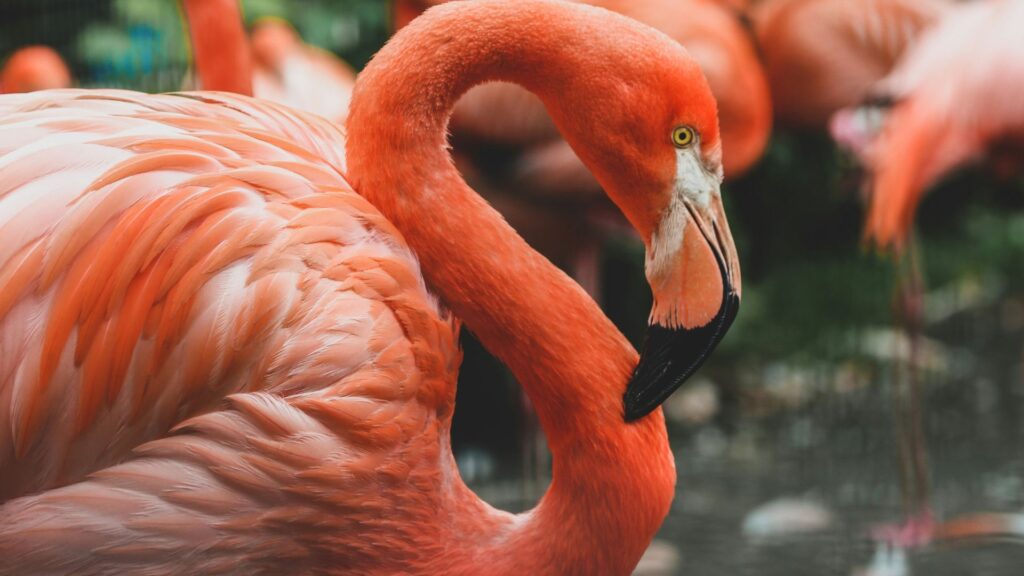
Flamingos stand out with their striking pink and red feathers, so it’s easy to see how they could inspire the idea of the phoenix. Ancient Egyptians described a firebird that rose from ashes, and large flamingos once lived along the Nile. Heat rising from the shore where they nested may have looked like flames around their bodies. Even the name flamingo connects to fire, coming from the Latin word flamma, which means flame.
Protoceratops

Protoceratops was a small dinosaur about the size of a sheep that lived in Mongolia. It had a large head with a sharp, parrot-like beak and walked on four legs. Early fossil hunters who found its skeletons may have thought they belonged to a griffin, the mythical creature with the body of a lion and the head of an eagle. Fossils still found in the Gobi Desert today make it easy to see the resemblance.
Dwarf Elephant

Dwarf elephants once lived on Mediterranean islands during the Ice Age, shrinking over time to adapt to their environment. They ended up no bigger than a Shetland pony, which is surprising when compared to their much larger relatives. What makes them especially interesting is their skulls. The large central nasal cavity, where the trunk attached, could look like a single eye socket. So early finds of these fossils may have inspired myths of the Cyclops.
Hobbit

In 2003, researchers found fossils of a small human species on the Indonesian island of Flores. They stood just over 3 feet tall, so scientists nicknamed them hobbits. Their unusual size and features have sparked debate about whether they were a unique species or closely related to early humans. Local stories tell of the Ebu Gogo, small, hairy cave-dwellers with limited speech. The similarities suggest these ancient people may have shaped those legends.
Keep Legends in Mind on Your Next Encounter

Many myths came from people trying to explain unusual creatures they saw or heard about. A giant squid surfacing, a flamingo glowing in the sun, or fossils sticking out of rock all had the power to spark imagination. Knowing the real animals behind those stories adds another layer of fascination. So when you read a legend or hear about a monster, think about the real creature that may have started it.
PetsFanatic Team
Pet Care Expert & Content Creator
Passionate about sharing knowledge and tips for better pet care. Writing about everything from pet health to training techniques.