
Rare Wolf Attack Leaves Woman Injured as Public Is Urged to Stay Alert

A wolf bit a woman on a busy Hamburg shopping street Monday evening in what German authorities are calling the first known wolf attack on a person since the animals returned to the country. The incident unfolded on Grosse Bergstrasse in the Altona district, near an inner-city Ikea store, drawing the attention of police and animal welfare officials across Germany.
The woman reportedly tried to guide the disoriented animal away from the crowded area before it bit her face, according to local reports cited by the BBC. She was taken to a Hamburg hospital and has since been discharged. Police received multiple alerts about the wolf’s presence in the area before the bite occurred, and were later called to the Binnenalster lake in downtown Hamburg, where the animal was spotted late that same evening.
Pulling the wolf from the lake took officers nearly an hour, with police using a rope to finally secure the animal after it put up considerable resistance. Local media reported the animal was transported to an enclosure on the outskirts of the city. Matthias Hilge, a spokesperson for Hamburg’s Ministry for the Environment, Climate, Energy and Agriculture, confirmed the wolf is receiving veterinary care, with the city’s environmental authority set to decide on its future in consultation with experts.
The First Attack of Its Kind in Nearly 30 Years

Germany’s Federal Agency for Nature Conservation told the German press agency dpa that no wolf attack on a person has been recorded since wolves began returning to Germany in 1998, a span of nearly three decades. Before that, wolves had been absent from the country for roughly 150 years, having disappeared following widespread hunting. Their return began after the fall of the Berlin Wall in 1989, when a small number of animals crossed over from Poland.
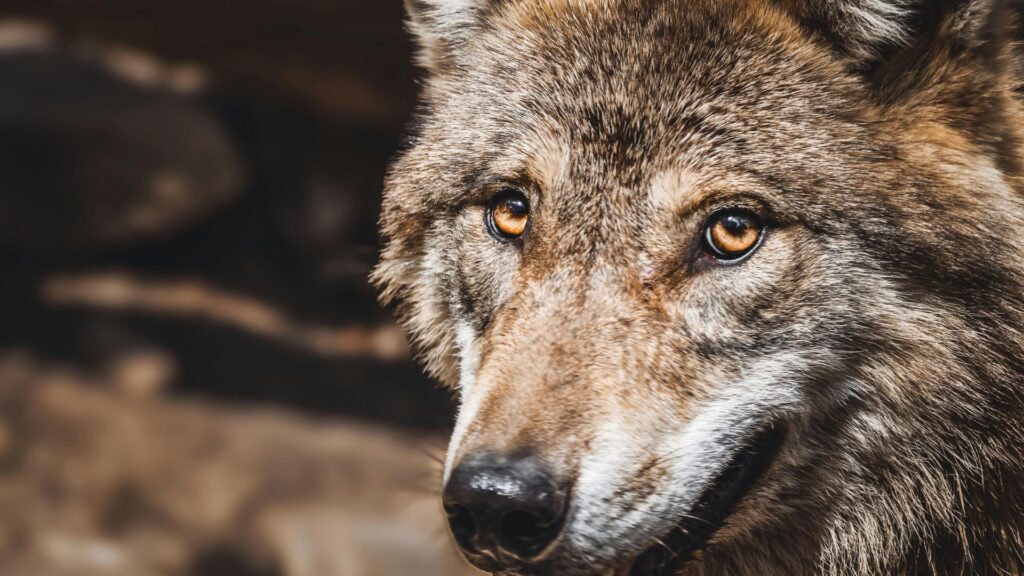
Officials believe the wolf involved in Monday’s attack is likely the same one spotted over the weekend in Blankenese, an outer suburb in the west of Hamburg. Experts assessed it as a young animal searching for its own territory that wandered into the city by accident. Hamburg’s regional government noted that wolves naturally avoid contact with people and dogs, and that an urban environment would have been highly disorienting and stressful for the animal, which may help explain its behavior.
Today, wolves roam forests across many German states, having gradually reestablished themselves over the past few decades. While attacks on people remain extraordinarily rare, wolf attacks on livestock across Europe have been a persistent and growing concern for farmers for years. The European Parliament voted last year to downgrade wolves’ protected status from “strictly protected” to “protected,” a shift that reflects the scale of the tension between conservation goals and agricultural losses.
New Legislation Shifts How Germany Manages Its Wolf Population

Just days before Monday’s attack, Germany’s upper house of parliament, the Bundesrat, approved measures making it easier to hunt wolves that kill or wound livestock. Under the updated Federal Hunting Law, wolf populations can now be managed through hunting, a significant policy change after years of strict protections. The move reflects mounting pressure from agricultural communities who have long argued that existing safeguards left farmers with little recourse against repeated livestock losses.
Federal Environment Minister Carsten Schneider was clear that the legislation is not intended to drive wolves out of Germany. “It is not a question of driving the wolf away again, but of finding viable ways to live peacefully alongside it,” according to the BBC. His framing positions the new law as a coexistence measure, one that comes after years of pressure from farmers who say existing protections left them with few options when wolves killed or wounded their livestock.
The timing of the Hamburg attack adds pressure to an already complicated national conversation. Germany is now weighing how to balance public safety, livestock protection, and the continued presence of a species that conservationists worked for decades to restore. The Federal Agency for Nature Conservation’s confirmation that this was the first human attack on record underscores just how rare the incident is, even as wolves continue to expand their range into areas closer to urban populations.
Authorities Urge Caution While Experts Weigh What Comes Next
The Hamburg attack is unlikely to remain an isolated talking point. With wolves now established across multiple German states and their populations growing, encounters in or near populated areas may become more frequent, even if serious incidents remain rare. Hamburg’s regional government noted that wolves generally avoid contact with people and dogs, though the urban environment the animal wandered into was far outside its natural range, making its behavior difficult to predict.
Hilge confirmed to the BBC that Bukea, Hamburg’s environmental authority, will determine the wolf’s future arrangements after consulting with experts, though no timeline was given. Whether the animal will be released, relocated, or kept in an enclosure remains an open question. The decision is expected to inform how German authorities respond as wolves continue establishing themselves across more German states.
Schneider said wolves “must be allowed to stay,” adding that the goal is not to drive them away but to find ways to live alongside them. That balance will now be tested under new federal hunting rules, with Germany managing a species that has gone from absent to established across multiple states in less than three decades.
PetsFanatic Team
Pet Care Expert & Content Creator
Passionate about sharing knowledge and tips for better pet care. Writing about everything from pet health to training techniques.