
New 9-Ton Prehistoric Species With Duck-Bill Face Discovered in New Mexico

A team of paleontologists in New Mexico has uncovered a gentle plant-eater that once roamed the land over 70 million years ago. With a broad duck-bill snout and a body weighing nearly nine tons, the newly identified Ahshislesaurus wimani adds fresh intrigue to the story of North America’s ancient giants. Its discovery from the dusty rocks of San Juan County sheds light on a long-misidentified fossil find from 1916.
Fossil Hunter’s 1916 Expedition in New Mexico

In 1916, fossil collector John B. Reeside Jr. set out across the rugged stretches of northern New Mexico. He found bones buried in San Juan County’s rocky ground, unaware of how significant they’d become decades later. The remains belonged to a duck-billed dinosaur later mistaken for another species. His early find sparked a scientific journey that would eventually reveal an entirely new prehistoric creature hidden in the desert for more than a century.
Early Misidentification of the Hadrosaur Bones

Two decades after John B. Reeside Jr. uncovered the dinosaur bones in New Mexico, scientists classified them as Kritosaurus navajovius. The name remained in records for years, leading many to assume the case was closed. Later research proved the fossils belonged to a completely different species. The early mix-up shows how long it can take for new evidence to reshape what scientists know about prehistoric life found deep in the deserts of the Southwest.
Study Reveals a New Dinosaur Species

A new study from the New Mexico Museum of Natural History and Science changed what scientists thought they knew about the fossils. Researchers took a closer look and found features that didn’t match any known species. The skull and neck bones showed clear differences from other duck-billed dinosaurs. So, the fossils were reclassified as a brand-new species named Ahshislesaurus wimani, honoring both the discovery site and Carl Wiman, the first paleontologist to study the bones.
Traits of the Hadrosauridae Family

The Hadrosauridae family included large plant-eating dinosaurs that lived across North America millions of years ago. They’re often called duck-billed dinosaurs because of their broad, flat snouts. Some had tall crests on their heads, while others had smaller bumps or even soft tissue features. They were social animals that likely moved in herds, so finding one species in New Mexico helps scientists understand how these dinosaurs adapted to their surroundings over time.
Unique Skull Features Among Duck-Billed Dinosaurs

Duck-billed dinosaurs stood out for their head shapes, and that’s what made each species unique. Some had long, tube-like crests rising from their skulls, while others carried short, solid ones. A few even had soft tissue structures instead of bone crests. These features likely helped them recognize one another or attract mates. So, studying those differences helps scientists learn how each species adapted and communicated within the vast herds that once roamed prehistoric North America.
Fossil Site in the Ah-shi-sle-pah Wilderness
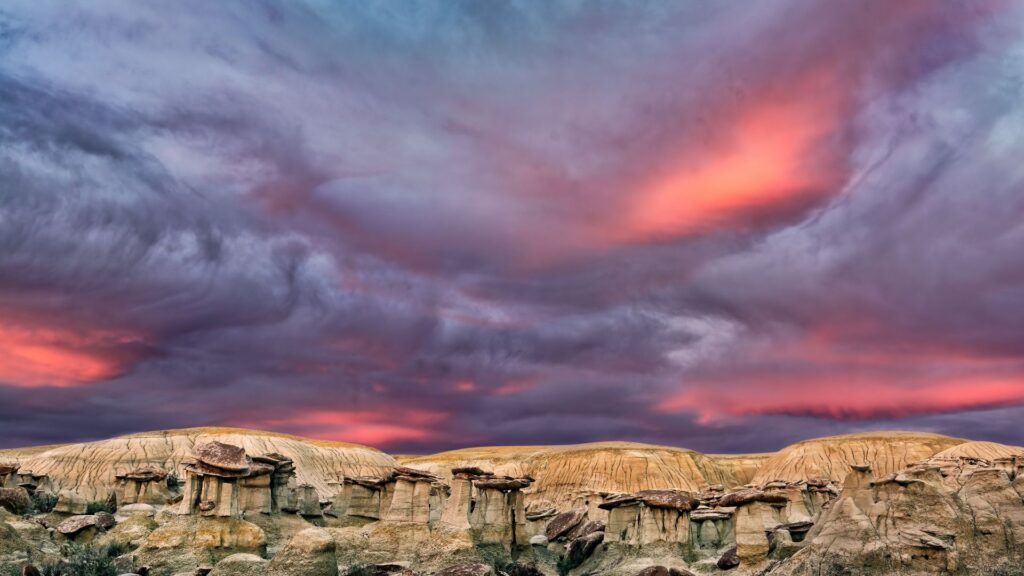
The Ah-shi-sle-pah Wilderness in northern New Mexico holds the discovery site for the new dinosaur. The name means “salt, it is gray” in Navajo, fitting for the area’s pale rock formations and barren stretches. Researchers uncovered the partial skull and neck bones there, surrounded by layers of ancient sediment. The quiet landscape, shaped by erosion and time, still protects traces of creatures that once roamed across the region’s wetlands more than 70 million years ago.
Distinct Physical Traits of the Newly Found Dinosaur
Researchers studying the fossils found clear differences in the skull and neck bones that set Ahshislesaurus wimani apart from other duck-billed dinosaurs. The bones showed a unique shape around the nasal area, hinting at a distinctive facial structure. The dinosaur likely stretched about 30 feet long and weighed close to nine tons. So, the discovery helps scientists better picture what kinds of plant-eating giants once wandered through ancient New Mexico millions of years ago.
Naming the Species Ahshislesaurus Wimani

Scientists named the new dinosaur Ahshislesaurus wimani to honor both its discovery site and the paleontologist who first studied the fossils. The name originates from the Ah-shi-sle-pah Wilderness, where the bones were unearthed. It is attributed to Carl Wiman, a Swedish researcher who examined them over a century ago. The combination connects the species to its roots in New Mexico’s landscape and to the early scientific curiosity that helped bring its story to light.
A New Chapter in Dinosaur History

The reexamination of the 1916 fossils turned a long-held assumption into a fresh discovery. The newly named Ahshislesaurus wimani adds to the growing picture of life in ancient New Mexico. Scientists now have another piece to study from the Late Cretaceous period, showing how discoveries can keep evolving through time. The desert continues to surprise researchers with traces of creatures that once shaped the region’s prehistoric past.
PetsFanatic Team
Pet Care Expert & Content Creator
Passionate about sharing knowledge and tips for better pet care. Writing about everything from pet health to training techniques.