
Paleontologists Discover Dinosaur Eggs the Size of Cannonballs With Massive Crystals Inside

Paleontologists in eastern China uncovered two almost perfectly round dinosaur eggs, each measuring about five inches across. Instead of ancient bones, scientists found hollow chambers packed with sparkling calcite crystals. The fossils, discovered in Anhui Province’s Qianshan Basin, belong to a newly identified species and offer fresh insights into dinosaur reproduction from millions of years ago.
How Crystals Formed Inside
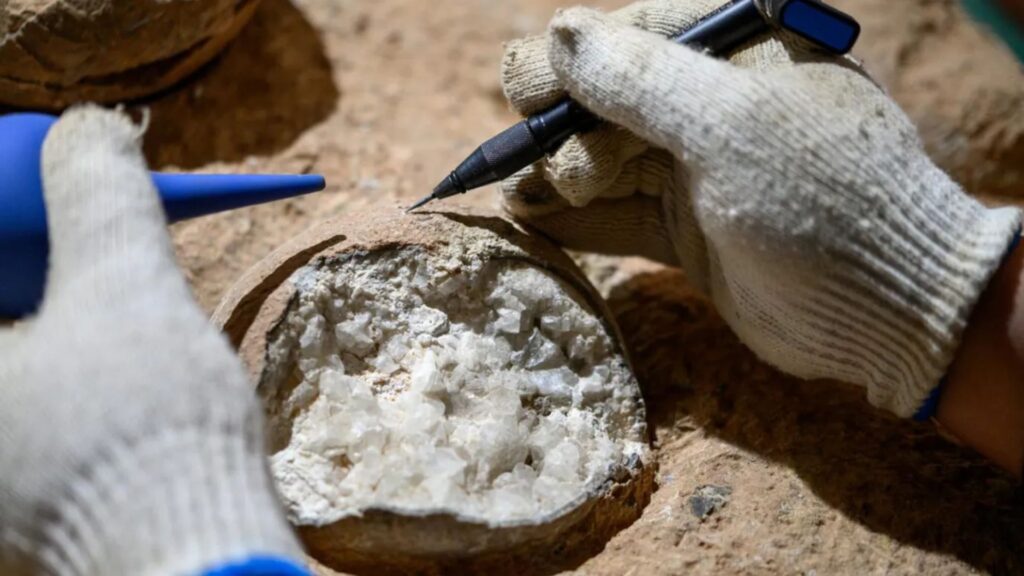
Over millions of years, groundwater carrying dissolved minerals seeped into the buried eggs after their original contents had decayed. Calcium carbonate slowly separated from the shell structure and crystallized inside the empty chambers. The result resembles a geode, with pale calcite clusters glittering against the ancient shell. This natural process preserved fine internal details that would otherwise have been lost.
A New Species From Eggs Alone

Researchers led by paleontologist Qing He named the discovery Shixingoolithus qianshanensis. The classification comes from egg characteristics alone rather than skeletal remains. Scientists use terms like oospecies and oofamilies for dinosaurs known only from eggs. Shell thickness and microscopic patterns helped place these specimens within the Stalicoolithidae family, marking the first such find in Qianshan Basin.
Mystery Parents

The spherical eggs lack clear embryonic remains, making parent identification impossible. However, shell size, shape, and microstructure suggest a plant-eating ornithopod laid them. These duck-billed, two-legged runners thrived from the Late Jurassic through the Late Cretaceous periods. They typically reached twenty to thirty feet long before vanishing in the asteroid impact that ended the dinosaur era sixty-six million years ago.
Cannonball-Sized Treasures

The eggs measure between four and five inches in length and width, roughly the size of small cannonballs. One egg remained complete while the other cracked naturally, exposing crystallized interiors. Originally, three eggs were discovered, but researchers noted the third was lost during collection. The two surviving specimens now reside at the Geological Museum of Tianzhu Mountain World Geological Park.
Embryos From Nearby Sites

In Jiangxi Province, construction workers uncovered eggs containing delicate hadrosauroid embryos. These rare fossils, nicknamed Baby Yang, captured early developmental stages of duck-billed dinosaurs. The embryos show tiny skulls, spines, and limbs curled within shells. Researcher Fion Waisum Ma noted the specimens preserve behavior and anatomy from life’s beginning, helping scientists trace growth from embryo to adult.
China’s Fossil Hotspot

Eastern China has become legendary among paleontologists for exceptionally preserved fossils. Ancient volcanic eruptions buried animals and plants in fine ash, creating oxygen-free conditions that slowed decay. Some specimens retain traces of feathers, skin, and stomach contents. The Qianshan Basin shares these volcanic and sedimentary conditions, explaining why eggs and embryos survive with such remarkable detail and clarity.
Expanding Dinosaur Knowledge

These crystal-filled eggs provide snapshots of reproduction near the end of dinosaur history. They reveal how eggshells evolved across different groups and document nesting patterns in ancient climates. When matched with volcanic ash layers and fossil plants, researchers can reconstruct entire ecosystems. Such findings help scientists understand how ancient animals adapted to environmental changes, offering lessons for modern climate challenges.
Windows Into Ancient Life
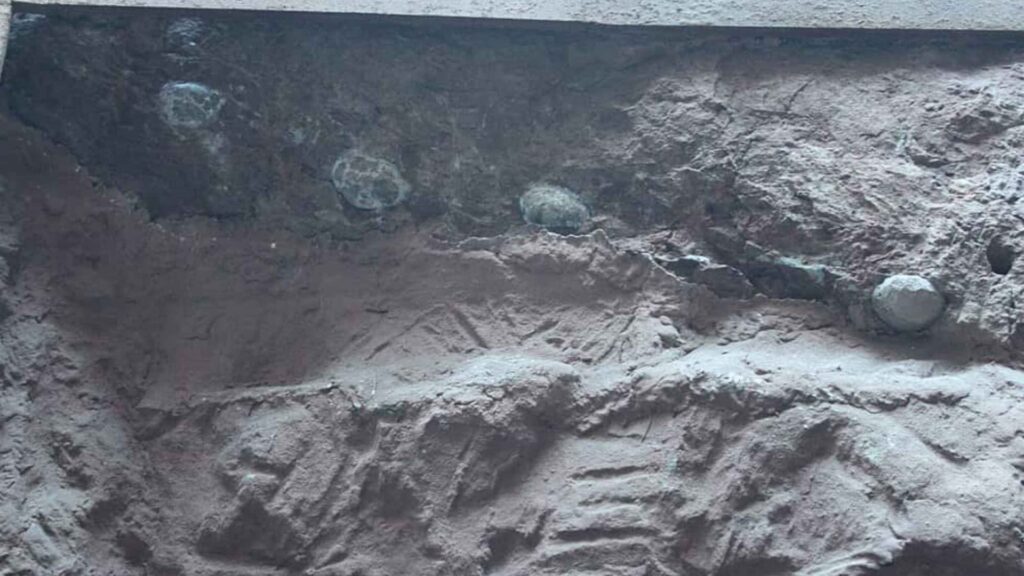
Decades ago, fossil eggs with embryos were extremely rare. Most dinosaur parenting theories relied on educated guesses from adult bones. Today, discoveries span multiple continents, with each new site refining our understanding. The Qianshan eggs, filled with glittering crystals instead of bones, add unique data points. They demonstrate how exceptional preservation transforms ordinary rocks into archives of vanished worlds.
A Precious Legacy

These cannonball-sized eggs represent more than beautiful fossils. They document reproduction, climate, and ecosystem dynamics from Earth’s distant past. Every discovery sharpens our picture of life before the mass extinction. As scientists continue exploring China’s fossil-rich basins, more treasures await. These glittering remnants quietly hold stories about dinosaur parents, vanished climates, and the ongoing conversation between life and our planet.
PetsFanatic Team
Pet Care Expert & Content Creator
Passionate about sharing knowledge and tips for better pet care. Writing about everything from pet health to training techniques.