
Officials Say These 20-Pound Rodents Are a Growing Problem in Several States

Louisiana officials are trying to remove 400,000 of them every year. Maryland spent two decades and $30 million hunting them down. California farmers are finding their almond orchards under siege. The culprit? A South American rodent that can weigh over 20 pounds, sports bright orange teeth, and breeds so prolifically that a single female can produce around 200 offspring in her lifetime.
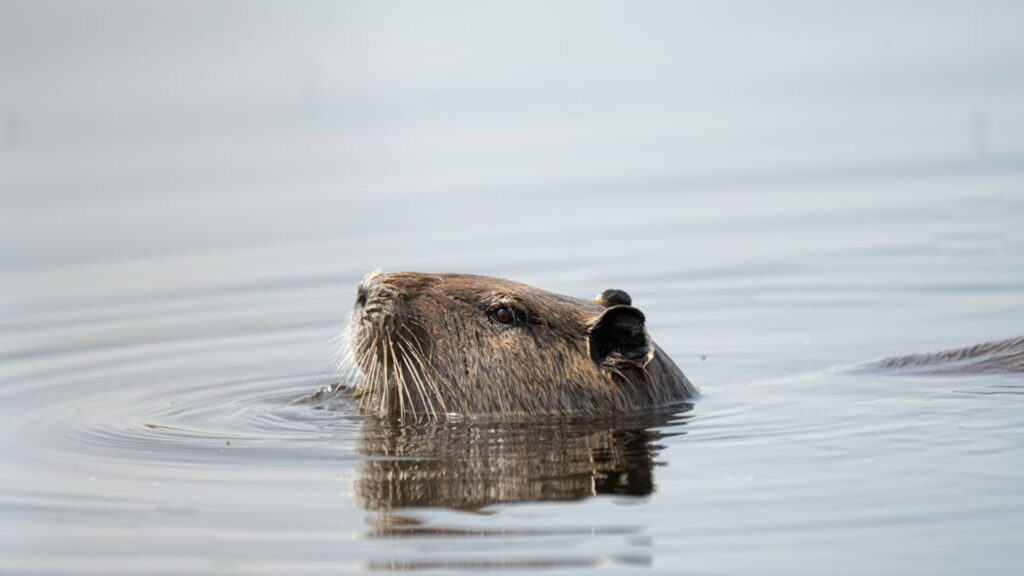
Nutria were originally brought to the United States in the late 1800s for their valuable fur. After escaping from fur farms and being released into the wild, those rodents found American wetlands perfectly suited to their needs. With few natural predators and the capacity to breed throughout the year in favorable climates, nutria populations exploded across coastal states and beyond.
According to the National Wildlife Research Center, nutria are a species of “major concern” because of “the significant threat they pose” to ecosystems. At least 20 states have confirmed nutria populations, with concentrations heaviest along the Gulf Coast. These semiaquatic mammals can eat up to a quarter of their body weight daily, devastating wetland vegetation that serves as a natural barrier against flooding.
Why a Fur Trade Import Became an Ecological Nightmare

Nutria aren’t picky eaters, which makes them particularly destructive. They’ll devour whatever’s available, from marsh grasses to commercial crops. California’s almond growers discovered this firsthand when nutria began damaging their trees. Golf courses in multiple states have reported extensive damage. In some Louisiana wetlands, the feeding has been so intense that marshy areas have completely transformed into open water.
The rodents’ reproductive capacity gives them a massive edge. Females can breed year-round in warm climates, and while many don’t survive past three years, those that do become breeding machines. Without the predators and diseases that controlled their numbers in South America, nutria populations in the U.S. face virtually no natural obstacles to continued expansion into suitable habitats across the country.
Virginia’s Department of Wildlife Resources even references them as “Rodents of Unusual Size” on its official website, acknowledging both their outsized impact and their somewhat fantastical appearance. The comparison isn’t far off—encountering a 20-pound rodent with vivid orange incisors lurking in marshland does seem like something from a storybook rather than a wildlife management crisis affecting multiple state budgets.
States Deploy Creative Tactics to Track Down the Invaders

Maryland’s successful eradication program took 20 years and captured nearly 14,000 nutria before officials felt confident declaring victory. According to the Wall Street Journal, the key was a systematic approach called “rolling thunder,” where teams created a grid to methodically trap and clear areas before moving forward. Trevor Michaels, who led the effort, told the Journal, “We really didn’t believe it” until a year or two passed without new sightings.
California is now adapting that playbook with some high-tech additions. The state plans to use scent-detecting dogs that proved successful in Chesapeake Bay to locate nutria in the Sacramento-San Joaquin River Delta. The Journal reports officials are also refining the “Judas nutria” strategy, where trapped animals are sterilized, fitted with tracking devices, and released to lead wildlife managers directly to other nutria hiding in dense vegetation.
The state offers a $6 bounty for every nutria tail turned in during hunting season. Since starting its Coastwide Nutria Control Program in 2002, Louisiana has paid out over $30 million in bounties for more than 6 million nutria. Even with those impressive numbers, the state still needs to remove 400,000 annually just to prevent further wetland destruction.
An Unconventional Solution Gets a Second Look
Wildlife officials have a suggestion that makes many people squeamish: eat them. Louisiana received grant funding in the late 1990s to research nutria as a food source, but the program failed to gain traction. Jennifer Hogue-Manuel, a Louisiana state biologist who has hunted and eaten nutria, told the Journal the effort “was really ahead of its time.” She compares the flavor to wild rabbit and notes growing interest from adventurous chefs.
Rick Boatner, an invasive species biologist with Oregon’s Department of Fish and Wildlife, recommends preparing nutria in a slow cooker like pulled pork. He acknowledges the challenge. “Most people think, something with a rat tail I am not going to eat.” Yet some locals have embraced the rodents unexpectedly. The Journal reported that a Louisiana couple made headlines when they successfully fought to keep Neuty, their rescued nutria turned social media celebrity.
Without their natural predators, nutria can devastate entire ecosystems. Maryland’s decades-long effort proved elimination is possible, but Louisiana and California show just how hard it is to control established populations. The answer might be traps, bounties, or changing minds about what’s edible. Whatever the solution, states aren’t giving up on protecting their wetlands and farmlands. The fight isn’t over.
PetsFanatic Team
Pet Care Expert & Content Creator
Passionate about sharing knowledge and tips for better pet care. Writing about everything from pet health to training techniques.