
Officials Found One of North America’s Rarest Fish Thriving in a River Where It Should Not Exist

This spring, Iowa DNR fisheries staff were running their routine annual sturgeon sampling on the lower Des Moines River, a stretch of water they had worked since 2014. They expected shovelnose sturgeon. They expected the occasional lake sturgeon. The fish they actually collected had never been officially documented in the Des Moines River and ranks among the rarest species on the continent.
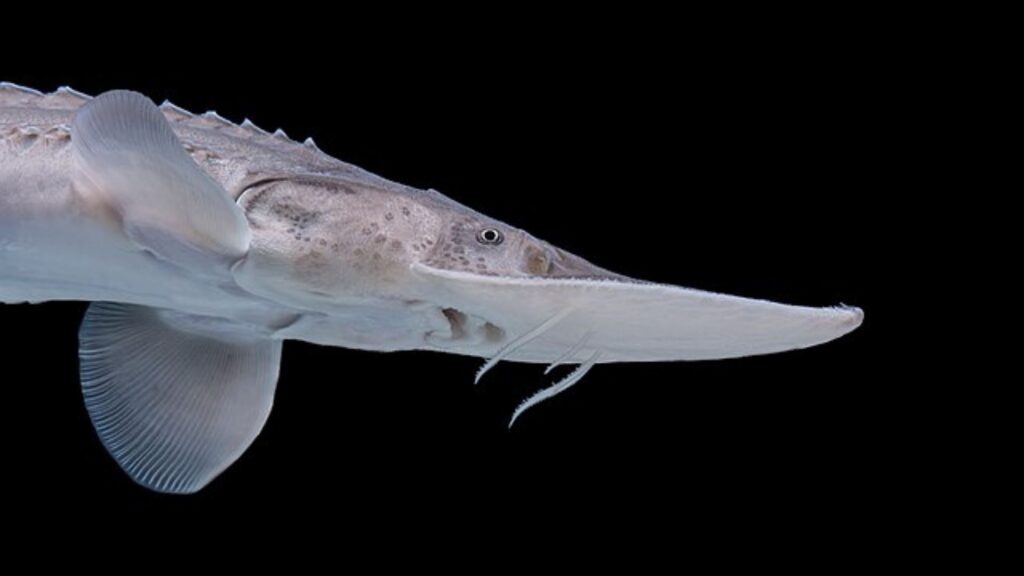
The fish was a pallid sturgeon, a federally endangered species listed under the Endangered Species Act since 1990. Two of them appeared within less than a week of each other, both collected near Ottumwa. Mark Flammang, a fisheries biologist with the Iowa DNR, noted that the pallid sturgeon was not even part of what his team was watching for. The species simply was not expected to turn up there.
What made the discovery even more striking was the condition of the fish. Both were healthy, described by Flammang as doing quite well at the time of collection. Sturgeon are built for longevity, with lifespans reaching up to 150 years according to the U.S. Fish and Wildlife Service, and these two were likely already decades old. They had survived in a river where, officially, their kind had never been recorded.
How the Pallid Sturgeon Ended Up on the Endangered List
According to the Iowa DNR, populations fell steadily across the Missouri and lower Mississippi River basins over decades, driven largely by habitat loss and the fragmentation caused by dams. Those structures blocked migration routes that spawning adults depended on and disrupted the river flows that larval sturgeon need to develop. By 1990, the losses were severe enough to warrant federal protection.
Pallid sturgeons are also slow to recover by nature. Females do not spawn until they are between 15 and 20 years old, according to the Iowa DNR, which means rebuilding a population takes generations, not seasons. The species is typically associated with the Missouri River and, according to Flammang, is not well known in the Mississippi north of St. Louis. Finding two in the Des Moines River was, by any measure, outside the expected range.
Recovery efforts have focused on the Missouri River for years, but the wild population remains critically small. Flammang noted that nearly nine out of ten pallid sturgeon collected from Iowa’s stretch of the Missouri River were originally stocked from a hatchery. Naturally reproduced individuals are exceedingly rare, which is precisely why the spring discovery carried so much weight for the Iowa DNR and its conservation partners.
Why These Two Fish Represent More Than a Surprising Catch

Neither of the two pallid sturgeons found this spring came from a hatchery. Both were naturally reproduced, a combination Flammang described to the Des Moines Register as a trifecta. “You can’t get rarer than that,” he said. Joe Larscheid, chief of the Iowa DNR’s Fisheries Bureau, said in the Iowa DNR news release that the back-to-back finds were “truly remarkable,” particularly given the eleven years of sampling that had never produced a result like this.
The lower Des Moines River stretch where both sturgeon were collected also held other native sturgeon species preparing to spawn at the same time, a detail Larscheid said reinforces the ecological value of that section of river. Flammang said the discovery is a game-changer for how the Iowa DNR and its partners manage the Des Moines River.
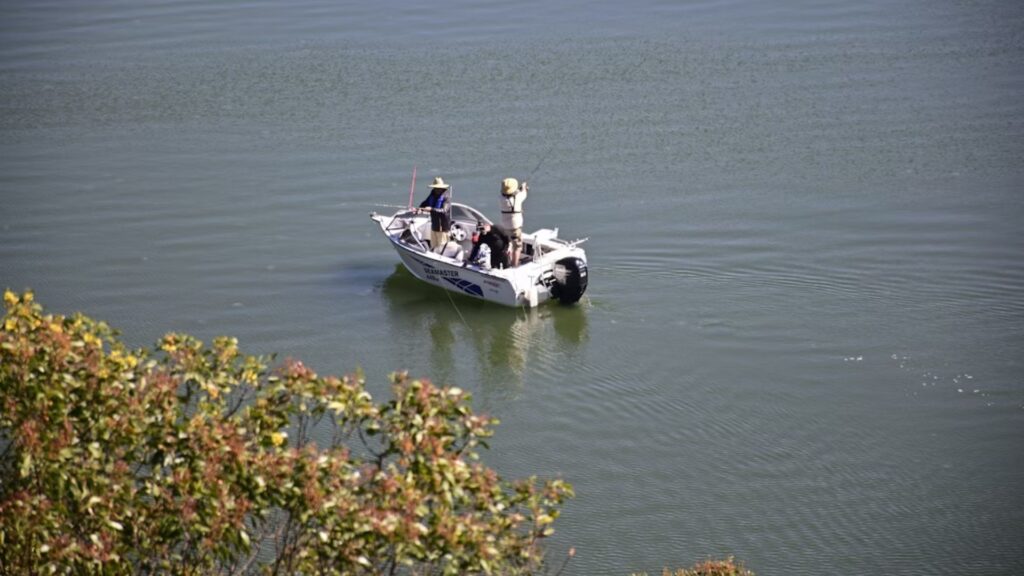
DNR staff collected tissue samples from both fish before releasing them back into the river. Flammang emphasized that anglers fishing that stretch of water need to know the rules before they cast a line. “It’s imperative that anglers know that they must release these fish back in the river immediately,” he told the Des Moines Register. Of Iowa’s three sturgeon species, only the shovelnose sturgeon may be kept. Both the lake sturgeon and the pallid sturgeon must be released unharmed.
A Milestone, but Not a Finish Line
Flammang acknowledged that while finding two naturally reproduced pallid sturgeons is a meaningful step forward, the wild population is still critically small and cannot sustain itself. “This is a positive milestone, but does not mean the species has recovered,” he said in the Iowa DNR news release.
For anglers on the lower Des Moines River, knowing how to identify a pallid sturgeon matters now more than ever. According to the Iowa DNR, the species can be distinguished by a smooth belly, outer barbels that are twice the length of the inner ones, and a U-shaped barbel base with the inner pair set slightly forward. These details are included in Iowa’s fishing regulations alongside identification guides for all three sturgeon species found in state waters.
What happened in the lower Des Moines River this spring was eleven years in the making, the product of consistent annual sampling that kept showing up even when the results were routine. This time, the routine produced something no one saw coming. Two ancient, naturally born fish in a river where their species had never officially been recorded were healthy and swimming. For Iowa’s fisheries team, it was confirmation that the Des Moines River holds more than anyone had documented.
PetsFanatic Team
Pet Care Expert & Content Creator
Passionate about sharing knowledge and tips for better pet care. Writing about everything from pet health to training techniques.