
‘Not the Work of Geology’Scientists Discover 2-Million-Year-Old Tunnels Spanning Two Continents

In the scorching deserts of Africa and the Middle East, scientists stumbled upon microscopic tunnels carved into solid rock. These structures, no wider than half a millimeter, appear across three continents. The discovery challenges everything researchers thought they knew about ancient life. What created them remains one of geology’s most puzzling mysteries today.
The Tunnels Span Thousands of Miles

These mysterious structures stretch across Namibia in Southern Africa, Oman on the Arabian Peninsula, and Saudi Arabia. The locations are separated by thousands of miles of desert and ocean. Yet the tunnels share identical characteristics everywhere they appear. This distribution suggests an ancient organism once thrived across these distant regions during a very different climate era.
First Discovery in Namibia

Professor Cees Passchier from Johannes Gutenberg University Mainz first noticed strange patterns in Namibian marble 15 years ago. He was conducting geological fieldwork to study how ancient continents formed. The rock surfaces showed unusual tube-like structures instead of smooth erosion patterns. Passchier recalled his surprise, stating the tubes were clearly not the result of any geological process.
The Tubes Look Deliberately Arranged

Each tunnel measures roughly half a millimeter wide and up to three centimeters long. They run in perfectly parallel arrangements through marble and limestone. The structures form bands stretching up to ten meters across rock outcrops. Their precision and organization suggest purposeful biological activity rather than random natural weathering or chemical reactions.
Dating Places Them in Deep Time

Scientists estimate that these structures formed between 1 and 2 million years ago. This timeframe places them in the Pleistocene epoch, alongside early human ancestors. The dating was established through analysis of the surrounding rock formations. The tunnels predate any known microbial fossil record in these arid desert environments by significant margins.
No Geological Process Explains Them

Researchers carefully examined every possible non-biological explanation for the tunnels. Chemical weathering, physical erosion, and mineral crystallization were all ruled out. The patterns were too organized and consistent for random geological forces. A study published in the Geomicrobiology Journal concluded that no known weathering mechanism could account for these formations.
Evidence Points to Life

When scientists analyzed the tunnels, they found traces of biological material inside. The tubes contained fine powder of pure calcium carbonate. Fluorescence microscopy revealed organic chemistry signatures at the edges of burrow fillings. Phosphorus and sulfur enrichment was detected, elements commonly found in living organisms’ nucleic acids and proteins.
The Identity Remains Unknown

Despite clear evidence of biological origin, researchers cannot identify what created these tunnels. No DNA or proteins were recovered from the structures. Professor Passchier expressed his fascination, asking whether this was a known form of life or a completely unknown organism. The absence of genetic material makes definitive classification impossible with current methods.
They Ate Through Solid Rock
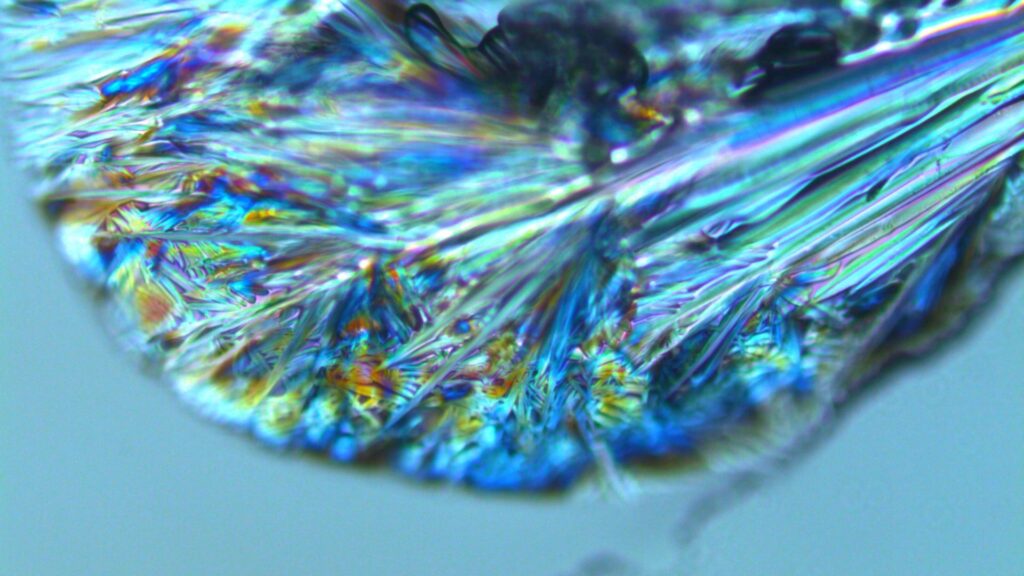
Scientists believe microorganisms bored through marble and limestone to access nutrients. Calcium carbonate, the main component of marble, may have provided essential elements for survival. The organisms likely secreted acid to dissolve rock as they tunneled deeper. The fine powder left behind represents waste material from this unusual feeding process.
Climate Was Different Then

When these organisms thrived, the regions were likely more humid than today’s deserts. Water flowing through rock fractures may have provided entry points for microbes. Marine sediments once covered these areas before tectonic forces lifted them above sea level. Organic material from ancient oceans probably seeded the rocks with nutrients that sustained these mysterious life forms.
Similar Structures in Different Rocks
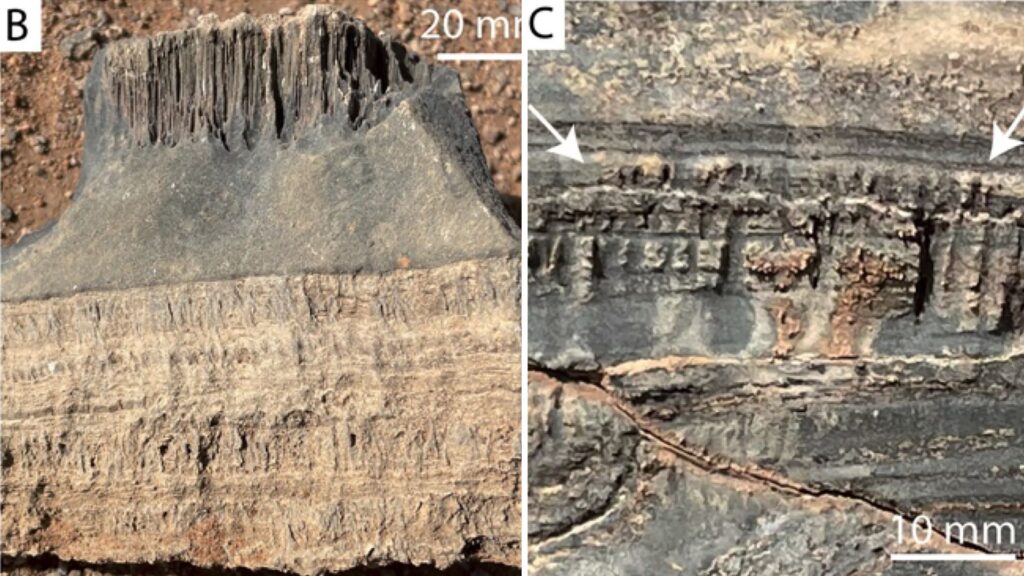
The tunnels appear in both marble in Namibia and Saudi Arabia, and limestone in Oman. In Saudi Arabia, formations appear only in black marble layers, but not in white marble from identical outcrops. This selectivity suggests the organisms preferred rocks with specific mineral compositions or nutrient availability for their survival and reproduction.
They Grew Downward From Fractures
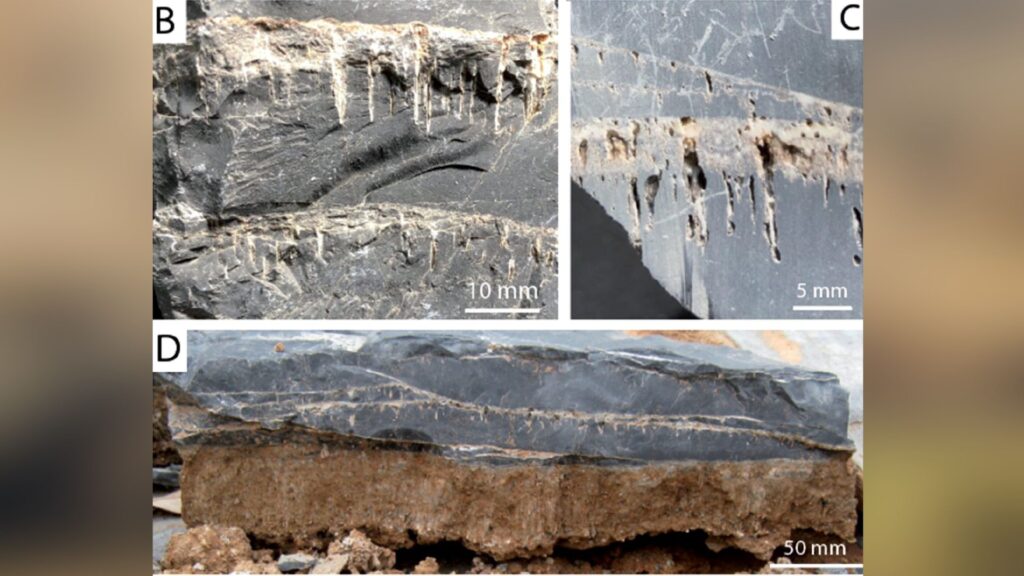
Analysis reveals the tunnels originate from rock fractures and grow downward in straight lines. Unlike fungal networks, these burrows never intersect or branch. The organisms multiplied as they fed, creating wider tubes than single cells could produce. As nutrients were depleted, colonies dug deeper, away from their entry points, in parallel arrangements.
Global Carbon Cycle Implications

If this organism still exists today, it could significantly impact Earth’s carbon cycle. Endolithic microbes break down rock through bioweathering, influencing carbon sequestration processes. Passchier noted this life form could be important for the global carbon cycle. Large-scale limestone consumption by such organisms would affect atmospheric carbon dioxide models.
Astrobiology Finds New Direction

The discovery opens possibilities for extraterrestrial life research. If organisms thrive deep inside rock without sunlight on Earth, similar life could exist on Mars or other planets. Subsurface rock formations on distant worlds might harbor comparable endolithic ecosystems. NASA now considers these findings when designing missions to search for ancient microbial life beyond Earth.
International Collaboration Begins

Following publication, scientists from multiple disciplines mobilized to investigate further. Universities in Germany, the United States, and Australia launched coordinated research programs. Specialists in geology, microbiology, paleontology, and astrobiology are pooling expertise. This rare international effort demonstrates how one discovery can unite the scientific community around profound questions.
Modern Searches Find Nothing

No living specimens of this organism have been found despite extensive fieldwork. Rock formations younger than one million years show no equivalent tunnel structures. This absence suggests possible extinction or migration to unexplored environments. The possibility that these organisms survive somewhere undetected adds urgency to continued exploration efforts.
The Paradox of Unknown Life

How can scientists prove something lived without identifying what it was? Traditional taxonomy requires DNA, observable behavior, or living examples. This discovery forces a revision of classification standards. The tubes represent biological activity, yet the architect remains anonymous. This paradox challenges fundamental assumptions about documenting and understanding ancient life.
What It Means for Science

The tunnels demonstrate how much remains unknown about Earth’s biological history. Life’s forms and survival strategies far exceed human comprehension. An organism thriving silently inside rock for millions of years symbolizes nature’s hidden complexity. As humanity explores space for alien life, this discovery reminds us that the most profound revelations may come from Earth itself.
The Mystery Endures

Professor Passchier’s 15-year investigation opened more questions than it answered. The organism’s identity, its modern fate, and its full impact remain unknown. Future researchers will hunt for living descendants and analyze chemical signatures. They will expand searches to other continents and deeper formations. The desert revealed its secret but withheld its source, leaving science with its most valuable gift: mystery.
A New Chapter in Microbiology

This discovery fundamentally changes how scientists approach ancient life. It proves organisms can leave lasting marks while remaining completely unidentifiable. The tubes challenge researchers to develop new methods for studying life that defies conventional analysis. Whether these microbes survive or vanish, they’ve secured their place in scientific history as one of Earth’s most enigmatic biological phenomena.
PetsFanatic Team
Pet Care Expert & Content Creator
Passionate about sharing knowledge and tips for better pet care. Writing about everything from pet health to training techniques.