
New Mexico Fossils Show Dinosaurs Were Thriving Moments Before the Asteroid Hit

A fossil-rich site in northwestern New Mexico has revealed that dinosaurs were flourishing right up to the catastrophic moment 66 million years ago when an asteroid struck Mexico’s Yucatan Peninsula. Paleontologists used two independent dating methods to establish that the Naashoibito site near Farmington holds fossils from 340,000 years before the extinction event that closed the Cretaceous Period. The discovery settles a long-standing scientific debate about whether dinosaurs were already in decline when the impact occurred.
Two Dating Methods Confirm the Age

Paleontologists ended decades of uncertainty using magnetostratigraphy and radioactive isotope analysis. The magnetostratigraphy technique examined patterns in Earth’s magnetic field preserved within rock formations at the site, while isotope analysis measured radioactive decay in sand grains embedded in the rock. According to Dan Peppe, a paleontologist at Baylor University and study author, previous estimates had ranged widely, from approximately 70 million years to the latest Cretaceous Period.
A Thriving Ecosystem at Naashoibito

The fossil assemblage reveals an array of species distributed across different ecological roles. The dominant plant-eater was Alamosaurus, a sauropod stretching roughly 100 feet long and weighing over 30 tons. One of the largest terrestrial animals ever documented, it shared the landscape with the predator Tyrannosaurus, the horned dinosaur Torosaurus, plus duckbilled dinosaurs, armored dinosaurs, and avian-like species. This diverse set of species indicates a vibrant ecosystem rather than a waning one.
The Last Sauropod of North America

Alamosaurus represents the final sauropod lineage found in North America before the mass extinction event. The species appears to have thrived in warm climates exclusively, with skeletal remains discovered in New Mexico, Texas, and Utah. Steve Brusatte, a paleontologist at the University of Edinburgh and co-author of the study, underscores Alamosaurus’s significance. Among all creatures to walk Earth throughout its history, few approached this herbivore’s immense proportions, yet it persisted until the asteroid’s arrival.
A Clear North-South Divide
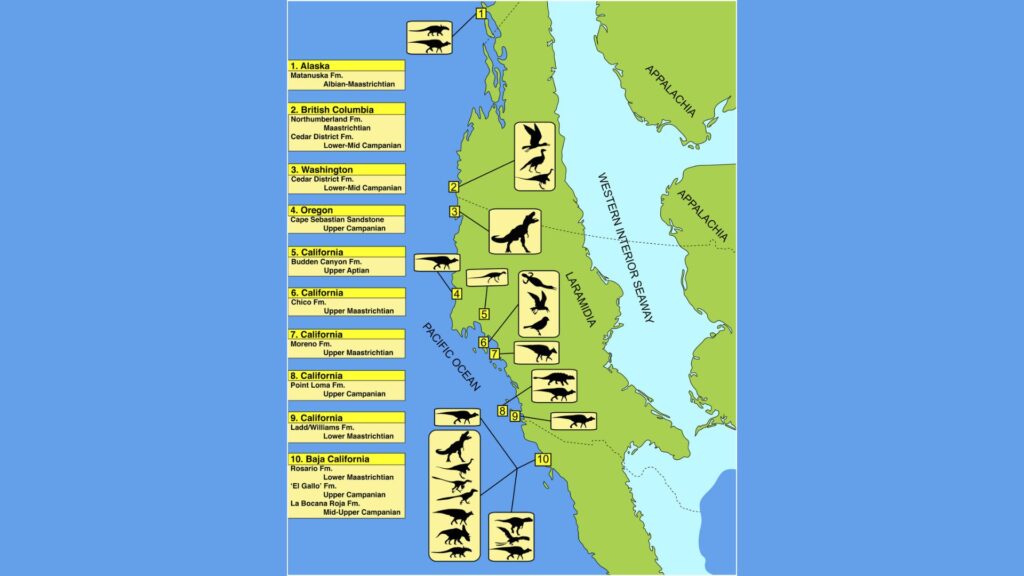
The Naashoibito assemblage differed markedly from coeval fossils found further north. When compared with remains from the Hell Creek formation spanning Montana, North Dakota, South Dakota, and Wyoming, important distinctions emerge. Both regions shared Tyrannosaurus and Torosaurus, yet diverged significantly elsewhere. Alamosaurus thrived in the southern territories but vanished entirely from northern ecosystems. The duckbilled dinosaur populations also showed regional variation, revealing that Late Cretaceous communities possessed distinct geographic character.
Diverse Communities Challenge the Decline Theory
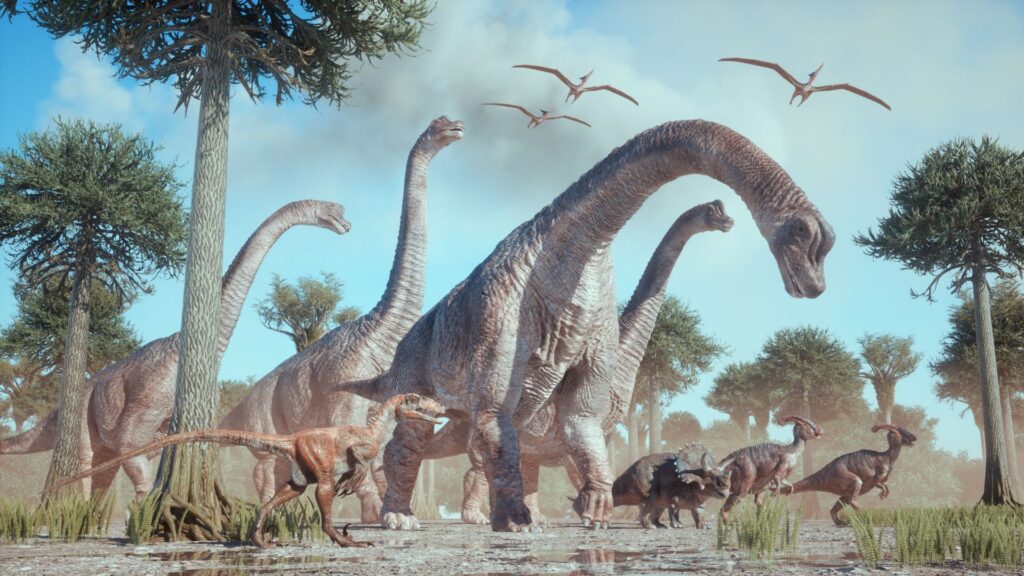
The regional data uncovered at Naashoibito directly refutes the hypothesis that dinosaurs faced universal decline before the asteroid’s impact. According to Dan Peppe, the evidence reveals that dinosaurs formed specialized communities with localized adaptations rather than a single imperiled population. The Naashoibito fauna supplies strong counter-evidence: these dinosaurs inhabited distinct ecological compartments across their landscape, responded to regional conditions, and exhibited patterns typical of thriving biological systems.
Still Evolving Until the End

The paleontological record indicates that dinosaurs remained engaged in evolutionary processes right up until the asteroid’s collision. Fossil evidence shows species originating while others disappeared, signaling active biological change rather than ecological stagnation. Certain major herbivore lineages were being superseded by expanded variety among medium-sized plant-eaters, indicating ecosystem transformation and increasing complexity. Steve Brusatte highlighted that the Naashoibito dinosaurs perpetuated patterns established over 150 million years, subdividing available resources, ranging across size spectra, and maintaining dietary variation.
No Signs of Trouble Ahead

Inspection of the Naashoibito assemblage surfaces no indicators that dinosaurs confronted imminent peril before the asteroid strike. Steve Brusatte emphasized that these creatures displayed no symptoms of crisis, aberrant environmental pressure, or protracted deterioration suggestive of underlying fragility. The dinosaurs’ ecological equilibrium, their maintained capacity to occupy specialized roles, and their perpetual evolutionary adjustment all testify to a thriving assemblage at the precipice of annihilation. The asteroid impact represented an abrupt, overwhelming disruption to otherwise functioning systems.
The Moment Before Everything Changed

Steve Brusatte renders a visceral picture of the final moments before annihilation: an Alamosaurus, proportioned like a jet aircraft, treading across terrain and shaking earth with each movement. Seconds later, the entire world convulsed with catastrophic energy released by the asteroid impact. The persistence of such enormous herbivores at the collision moment underscores that sauropods were not merely persisting but genuinely prospering. They were magnificent, formidable, and splendid inhabitants of a vigorous prehistoric realm.
The Asteroid Brought Sudden Death to a Thriving Biosphere
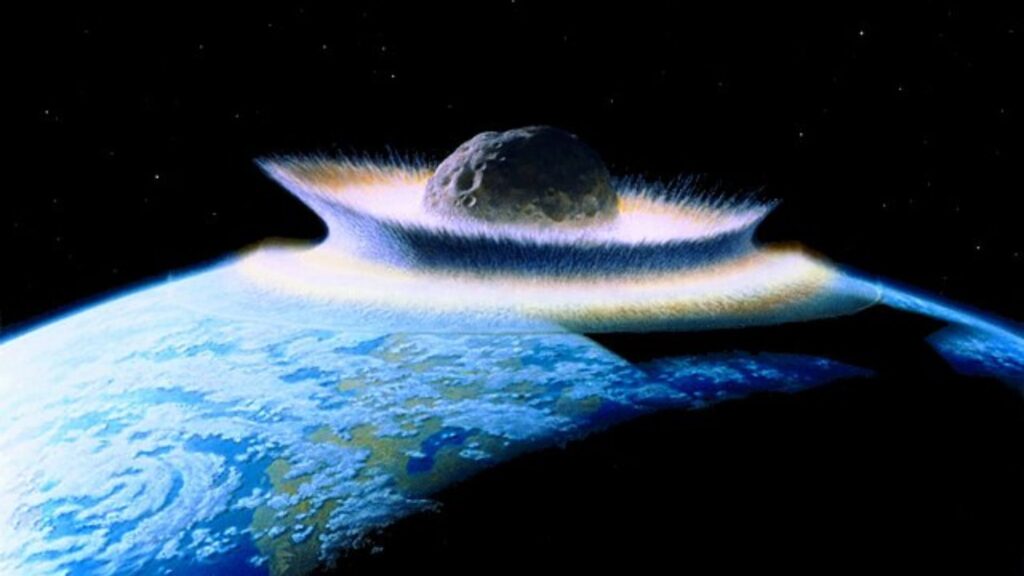
The Naashoibito study fundamentally reshapes understanding of the dinosaur era’s conclusion. Rather than a gradual fade, dinosaurs met instantaneous obliteration while occupying positions of ecological prominence, aside from their bird descendants, who would survive and diversify. The asteroid’s collision destabilized ecosystems that had maintained equilibrium for millions of years, with species perfectly adapted to conditions that suddenly became lethal. This research, published in Science, shows that dinosaurs were not vanquished through weakness or obsolescence, but through overwhelming catastrophe.
PetsFanatic Team
Pet Care Expert & Content Creator
Passionate about sharing knowledge and tips for better pet care. Writing about everything from pet health to training techniques.